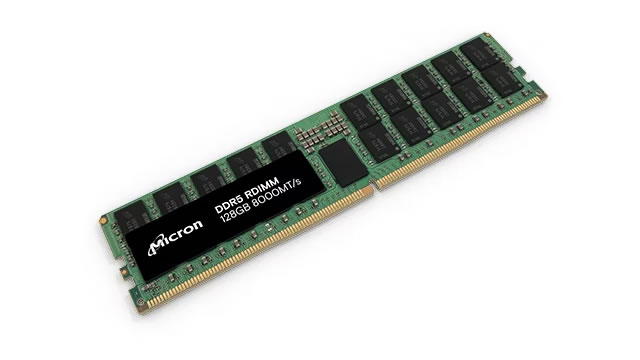
Micron’s Q3FY26 performance surged with revenue up 346% YoY, reaching record 85% gross margin, and generated $18.3B of adjusted free cash flow. The company is guiding similarly strong momentum into Q4 and has secured multi-year customer agreements supporting ~$100B in revenue backed by ~$22B in deposits, improving visibility. The setup (AI-driven data center demand plus a memory oligopoly) underpins the “strong buy under $1000” stance and a higher valuation multiple.
The market is likely underestimating how much of MU’s upside is coming from multiple expansion, not just EPS. If a historically cyclical memory name starts resembling a contracted cash-flow stream for the next 4-6 quarters, the equity should trade less on spot pricing and more on duration of visibility; that lowers perceived downside and can tighten both equity risk premium and credit spreads. In the next 1-3 months, the main catalyst is continued estimate revision and short covering as investors are forced to acknowledge that AI memory content is becoming a larger share of system cost.
Second-order, the winners are not just the memory vendors. Tight HBM/DRAM supply can push cost pressure downstream into server OEMs and AI system integrators, where gross margin assumptions are more fragile than the market admits; names like SMCI and DELL are the cleaner indirect losers if memory stays tight longer than expected. For AI accelerators, the effect is mixed: demand remains strong, but higher memory content can slow deployment velocity at the margin and make budgeting harder for hyperscalers.
The contrarian risk is that “visibility” is not the same as immunity. If Samsung or SK Hynix accelerate capacity, or if AI capex pauses, memory pricing can revert faster than consensus expects once contract windows roll. The thesis is falsified if gross margin stops expanding, customer deposit growth stalls, or inventory starts building faster than revenue in the next 1-2 quarters; over 6-18 months, the key question is whether MU can sustain discipline when supply eventually catches up.
AI-powered research, real-time alerts, and portfolio analytics for institutional investors.
Overall Sentiment
strongly positive
Sentiment Score
0.75
Ticker Sentiment
