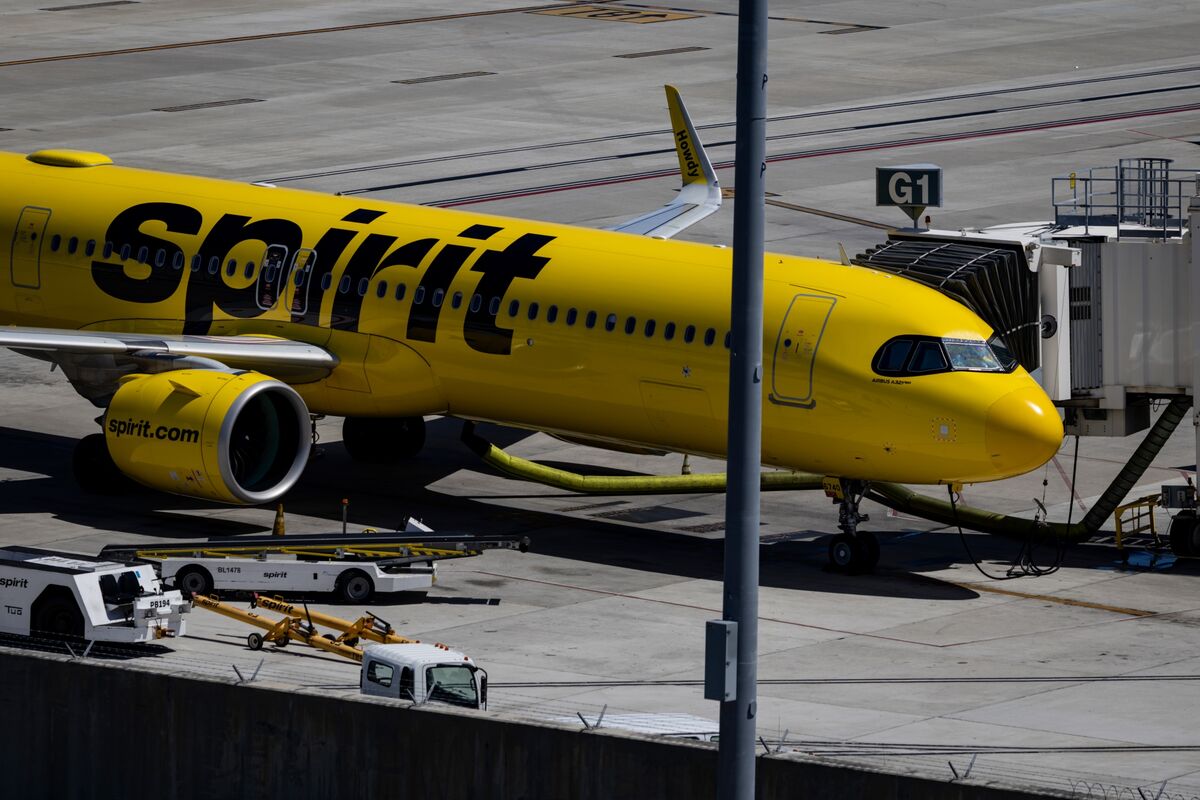
Spirit Aviation Holdings has begun an orderly wind-down of operations after failing to secure funding from the Trump administration, and all Spirit flights have been canceled. Passengers have been told not to go to the airport, indicating an immediate shutdown rather than a gradual reduction in service. The news is severely negative for Spirit and underscores liquidity stress and restructuring risk in the airline sector.
This is not just an idiosyncratic airline failure; it is a marginal capacity shock to the lowest-fare end of the domestic market, where pricing is most fragile and network carriers have the most room to selectively tighten. The first-order beneficiary is likely the entire domestic discount complex through higher fare realization, but the second-order effect is that legacy carriers can also lift basic-economy and baggage/seat-fee pricing without visible headline fare inflation. That matters because ancillary revenue is sticky and often re-rates faster than base fares when a low-cost competitor disappears.
The key timing issue is that the supply contraction will hit fastest on leisure-heavy routes and peak travel periods, but the earnings benefit to competitors compounds over several quarters as schedules are re-optimized and capacity gets reallocated. The most attractive setup is not “airlines up” broadly; it is the carriers with the cleanest balance sheets and the most overlap with Spirit’s leisure network, since they can absorb share without needing to chase price. Conversely, airports and local vendors in Spirit-heavy markets face a near-term utilization hit, but that is likely smaller than the revenue lift to competing airlines because air traffic tends to re-slot to other operators rather than disappear entirely.
The bigger systemic risk is contagion to credit and aircraft lessors: once one ultra-low-cost carrier enters wind-down, lenders and lessors will reprice the whole weak-credit segment, especially if lease releases and spare parts values come under pressure over the next 1-3 months. That can create a feedback loop where financing costs rise for other marginal operators, forcing further capacity cuts and strengthening the incumbents. The main reversal catalyst would be an external policy bridge or a private rescue package that keeps assets intact, but absent that, the unwind process usually benefits competitors for longer than markets expect.
The contrarian view is that investors may overestimate how much pricing power the surviving carriers actually keep, because consumer substitution can shift to driving, buses, or simply fewer trips if fares jump too quickly. So the best trade is not to extrapolate a full margin windfall, but to target carriers with disciplined capacity and avoid names that would be tempted to use this as an excuse to overgrow and destroy yields. Watch for route-level fare data over the next 2-6 weeks; if pricing rises without a matching load-factor drop, the profit impulse could be meaningful.
AI-powered research, real-time alerts, and portfolio analytics for institutional investors.
Request DemoOverall Sentiment
extremely negative
Sentiment Score
-0.95
