
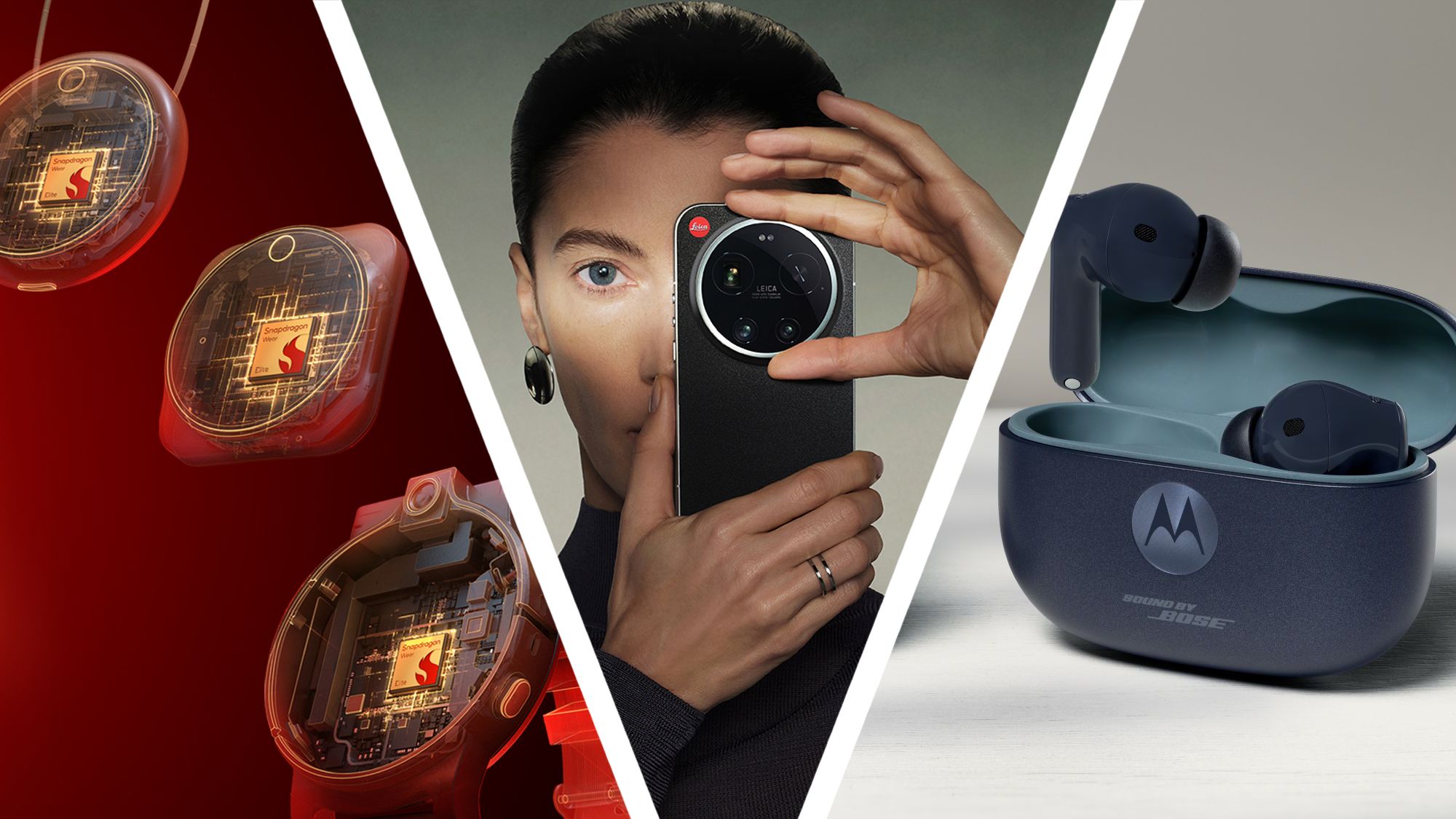
MWC 2026 featured multiple consumer hardware announcements and concepts that emphasize innovation and potential component content upside for suppliers. Key highlights include Qualcomm's new Snapdragon Wear Elite for on-device AI in wearables, Honor's Robot Phone with an extendable robotic camera arm, the thin, IP69-rated Honor Magic V6 with a 6,660mAh battery and Snapdragon 8 Elite Gen 5, Leica/Xiaomi's Leitzphone with a 50MP 1-inch sensor, Lenovo's folding Legion Go Fold and modular ThinkBook concepts, and Motorola's Moto Buds 2 (Plus tuned by Bose); these developments could modestly boost demand for chipmakers, camera-sensor suppliers and OEMs but are not likely to be immediately market-moving.
Market structure: MWC’s product slate reinforces a winner-takes-most dynamic for premium silicon, sensors and foundries — Qualcomm (QCOM), TSMC (TSM) and high-end component suppliers (e.g., RF/filter suppliers) gain pricing power as devices embed more on‑device AI and larger displays. OEMs that ship concept hardware (Lenovo, Xiaomi/Leica partnership) signal higher BOMs: expect incremental SoC+sensor ASP expansion of ~$15–$40/device over 12–24 months for premium lines, supporting revenue but compressing margins for low-cost OEMs unable to pass through. Cross-asset: tighter chip demand supports semiconductor credit spreads, buoying IG tech debt and weighting TSM/semicap equities; limited short-term FX impact, modest upside for copper/aluminum from device hardware demand over quarters.
Risk assessment: Tail risks include renewed US/China export controls on advanced packaging or AI accelerators, patent litigation from camera/sensor leaders, and foundry capacity shortfalls; any of these could reduce revenue by >10% for affected suppliers within 6–12 months. Immediate (days) effect is sentiment; short-term (1–6 months) is order flow and inventory adjustments; long-term (12–36 months) depends on software ecosystem and developer adoption of on‑device AI. Hidden dependency: handset feature success requires services/OS integration — hardware wins don’t guarantee consumer uptake.
Trade implications: Tactical overweight semiconductors/analog RF (QCOM, TSM, SWKS/QRVO) and audio chip partners; underweight small-cap handset OEMs and accessory retailers whose ASPs will be squeezed. Use calendar spreads for timing risk: buy 12–18 month calls on QCOM (10–20% OTM) sized 1–3% portfolio or buy shares 2–3% allocation for exposure to the Snapdragon Wear Elite cycle. Consider a pair: long TSM (1.5%) / short a mass-market OEM (1.5%) to capture foundry vs OEM margin divergence over 6–12 months.
Contrarian angles: The market may overvalue concept-product headlines — many foldable/modular concepts never scale; therefore hardware hype can create short-term multiple expansion that reverses when units shipped < expectations. Conversely, on‑device AI compute optionality is likely underpriced in QCOM and analog suppliers: if wearables and foldables convert 5–10% of smartphone volumes into higher-ASP SKUs, semiconductor earnings could surprise +8–15% year-over-year. Watch order books and OEM production announcements in the next 90 days for a definitive play-or-pass signal.
AI-powered research, real-time alerts, and portfolio analytics for institutional investors.
Request TrialOverall Sentiment
mildly positive
Sentiment Score
0.35
Ticker Sentiment
