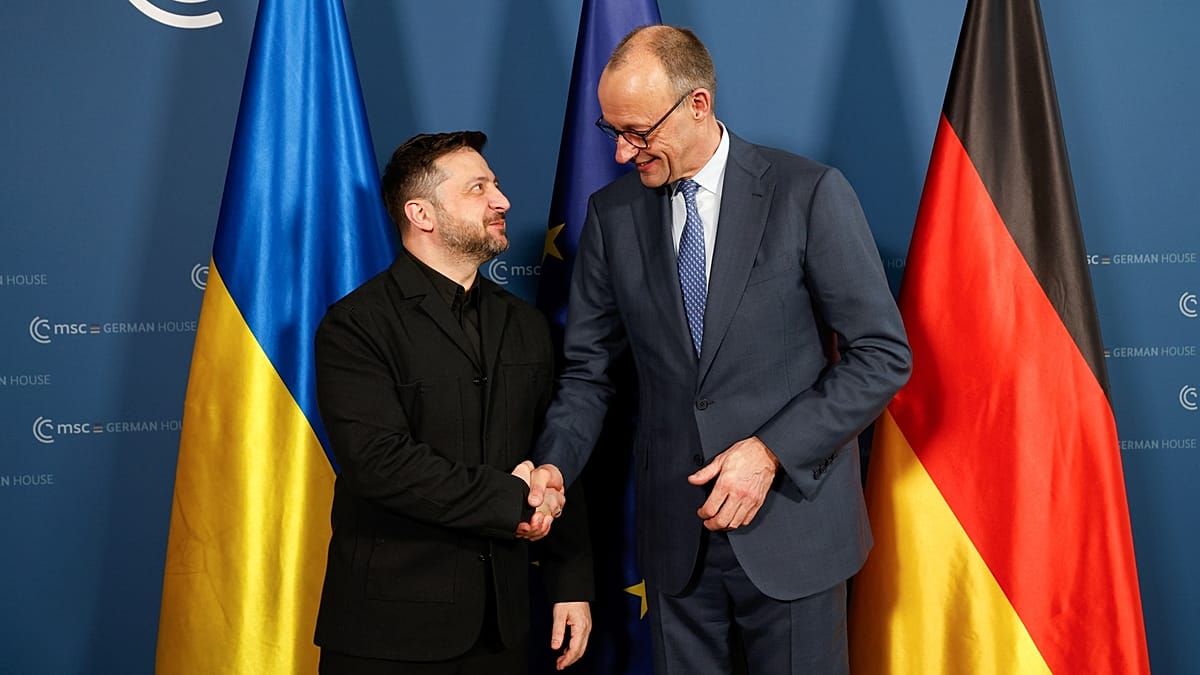
Friedrich Merz proposed an 'associate membership' path for Ukraine in the EU that would give Kyiv access to EU institutions, some funding, and potential assistance under Article 42.7 in the event of another Russian attack. The plan is presented as a stopgap while full accession remains blocked by ratification hurdles and political opposition, and it could be paired with a snap-back mechanism if Ukraine backtracks on reforms. The proposal may modestly affect European defense and accession-risk sentiment, but it remains a political idea rather than an implemented policy.
The market implication is less about Ukraine’s near-term accession optics and more about whether Europe is inching toward a quasi-membership architecture that bypasses unanimity risk. If this framework gains traction, the real winners are EU defense suppliers, border/security infrastructure names, and selected Central/Eastern European industrials that can benefit from accelerated procurement and reconstruction-linked capex; the losers are the sovereign-risk premium embedded in states most exposed to fiscal transfers and political backlash, especially if the model is perceived as diluting full-membership optionality.
The second-order effect is that this proposal could reduce the probability of a clean “binary” catalyst for Ukraine risk assets. A semi-integrated status may support medium-term funding visibility, but it also risks institutionalizing a limbo state: enough support to keep financing flowing, not enough certainty to force a full re-rating. That tends to benefit contractors and banks with immediate EU disbursement exposure more than long-duration equity claims on postwar normalization.
Catalyst timing matters. Over the next 1-2 weeks, headlines around the June summit and any Hungarian minority deal create tactical upside for Ukraine-exposed instruments, but the bigger move is over 3-9 months if an associate-status template becomes the default for other candidates. The main downside risk is legal/political rejection inside member states: if the proposal is framed as “membership without rights,” it can harden opposition and delay accession more than the current deadlock.
The contrarian read is that consensus may be underpricing how quickly EU institutions can improvise when unanimity is a blocker. If the new Hungarian government proves cooperative, the market may overestimate the permanence of the veto and underappreciate how fast a phased integration path can reprice defense, reconstruction, and regional FX assets. But if talks with Kyiv stall on minority rights, the current move will fade and Ukraine-sensitive assets should mean-revert sharply.
AI-powered research, real-time alerts, and portfolio analytics for institutional investors.
Request DemoOverall Sentiment
neutral
Sentiment Score
0.05
Ticker Sentiment
