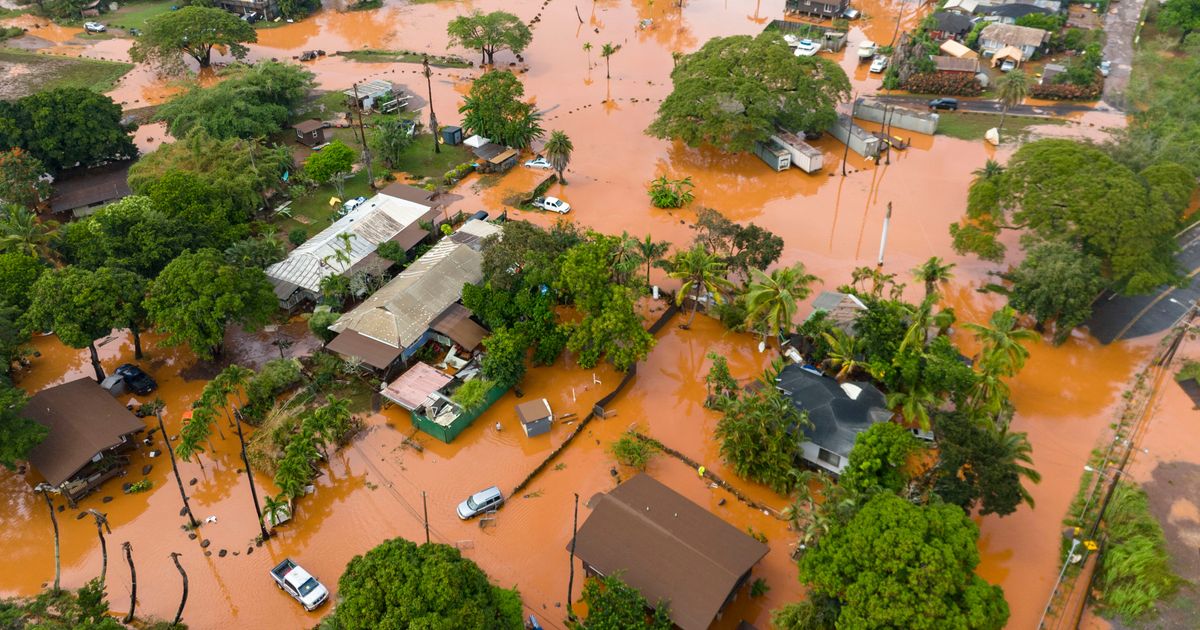
Officials estimate storm damage could top $1 billion after 8–16 inches of rain (up to ~16 inches at Kaala) caused Hawaii's worst flooding in over 20 years and prompted evacuation orders for ~5,500 people. The 120-year-old Wahiawa dam rose from 79 to 84 feet—about 6 feet below its capacity—and is rated 'high hazard potential,' raising imminent-failure concerns while federal assistance has been sought. Material impacts are expected across airports, roads, schools, homes and a Maui hospital, creating near-term fiscal and insurance exposure for the state with further rain forecast and damage assessments ongoing.
Immediate market winners are firms that supply rapid earthmoving, rental equipment and concrete — these are the businesses that capture first-dollar rebuilding spend in weeks to months, not commodity suppliers that sit upstream. Expect a stepped schedule of demand: emergency pumps and rentals in days, heavy civil contracts awarded in 1–6 months, and multiple years of spillway/dam remediation and shoreline stabilization projects that favor firms with balance-sheet capacity to self-fund mobilization.
Dole is the proximate focal point because of ownership and regulatory exposure around the aging dam; this raises two distinct risks — direct legal/cleanup costs and a precedent risk where states push remediation costs onto legacy landowners. That second-order effect could force other agricultural landowners (and their insurers) into capital-intensive remediation programs, pressuring margins and driving selective asset sales over 6–24 months.
Fiscal and credit mechanics matter: Hawaii will seek federal aid and likely increase muni issuance to finance reconstruction, which should widen spreads on Hawaii-specific paper near-term and create calendarable supply for fixed-income desks. Insurance and reinsurance will book losses, but the bigger hit is to local capacity (availability of contractors, skilled crew, materials) which will bid up onshore construction pricing and create a transient inflation pocket in Pacific construction inputs.
A clear catalyst sequence to watch: (1) state acquisition vote and any binding commitment on Dole within 2–10 days, (2) federal disaster declaration and FEMA funding timing over 1–8 weeks, and (3) first-round contract awards and contractor mobilization over 1–6 months. Reversal could come quickly if (A) the state completes the Dole transfer and assumes remediation costs, or (B) federal funding covers most public works without relying on private-party assessments.
AI-powered research, real-time alerts, and portfolio analytics for institutional investors.
Request DemoOverall Sentiment
strongly negative
Sentiment Score
-0.80
Ticker Sentiment
