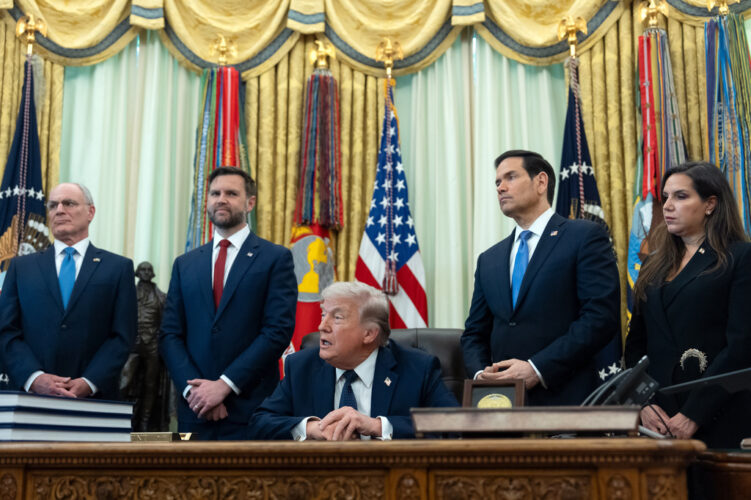
The Trump administration is sending Steve Witkoff and Jared Kushner to Pakistan on Saturday to continue ceasefire talks with Iran, while also imposing sanctions on a major China-based oil refinery and about 40 shipping companies and tankers tied to Iranian oil. The measures target Iran’s key revenue stream by tightening pressure on its crude exports. The combination of renewed diplomacy and expanded secondary sanctions raises geopolitical and energy-market risk.
This is less about the immediate diplomatic optics and more about the market testing whether enforcement can finally bite on Iran’s oil cash flow. If the secondary sanctions are real and sustained, the first-order effect is a tighter shadow-fleet market: higher tanker day rates, longer voyage times, more STS complexity, and a widening spread between compliant and sanctioned crude logistics. That tends to lift volatility in global freight and creates a short-term squeeze in non-Western shipping capacity even if headline oil volumes only drift lower.
The bigger second-order effect is on crude differentials, not just outright prices. Iranian barrels are usually absorbed into Asia through opaque channels, so pressure on that flow should show up first as stronger Middle East benchmark differentials and a modest bid to medium-sour grades that can substitute into Asian refining systems. That is supportive for integrated producers with Middle East-linked exposure and for refiners that are structurally long compliant feedstock access, while Chinese and regional independent refiners face margin pressure if they have to source cleaner but more expensive barrels.
The policy risk is two-sided: if this is mostly signaling ahead of negotiations, the market will fade the impact within days; if enforcement is broadened to insurers, port agents, and banks, the effect becomes a months-long supply-chain tax. The key variable is not the number of sanctioned hulls but whether counterparties believe evasion economics have worsened enough to change behavior. That would matter more for freight, regional spreads, and EM FX than for headline Brent unless there is an actual supply interruption.
The contrarian view is that the market may be underestimating how elastic the illicit network is. Iran has repeatedly shown it can re-route barrels through intermediaries and smaller, older tankers, which means the near-term price response could be muted while compliance costs rise elsewhere. In that scenario, the cleanest trade is not a directional oil bet but a relative-value trade on logistics and sanctions exposure versus broad energy.
AI-powered research, real-time alerts, and portfolio analytics for institutional investors.
Request TrialOverall Sentiment
mildly negative
Sentiment Score
-0.25
