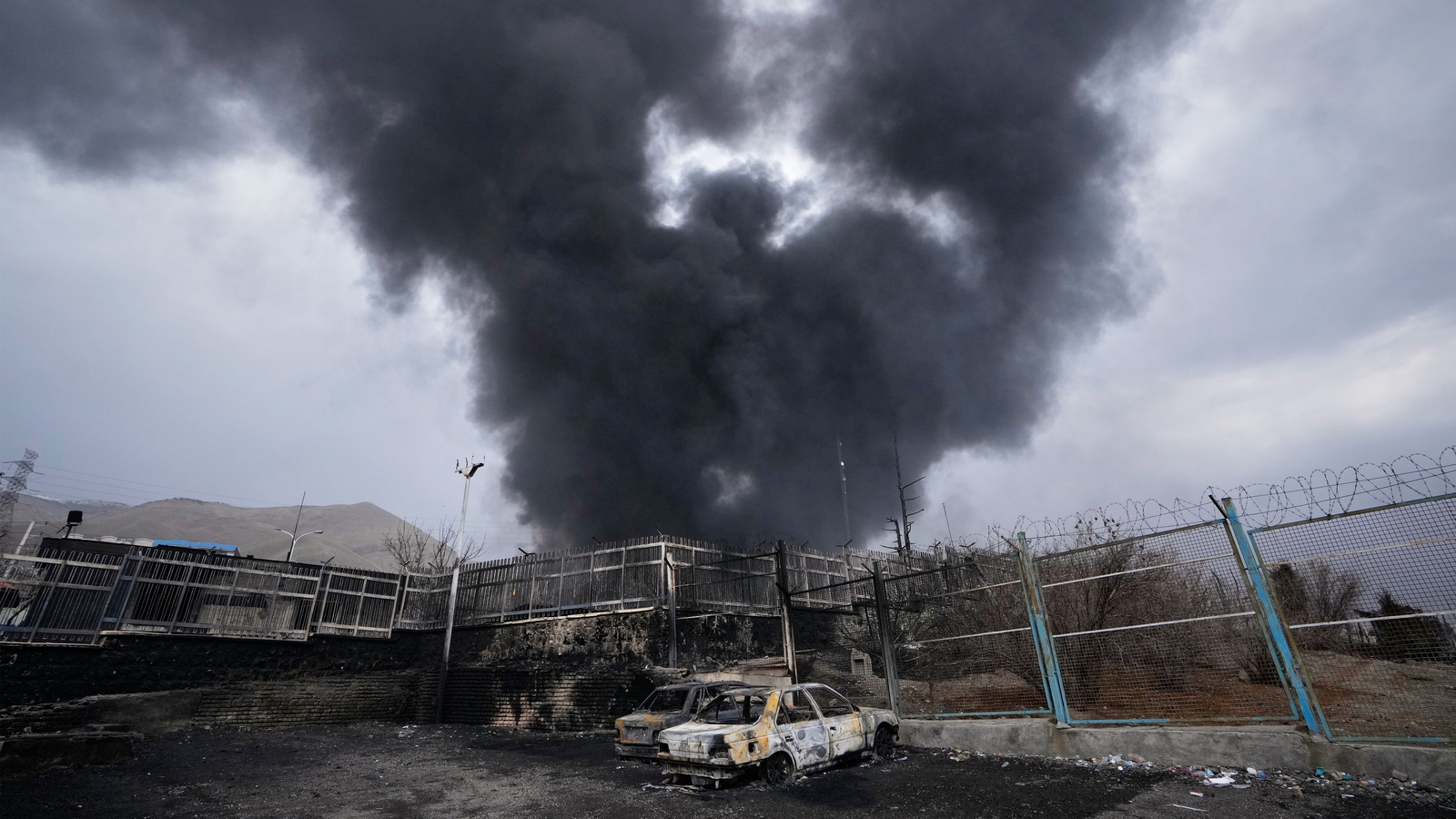
Brent crude briefly spiked to ~$119.50/bbl before easing to $101.76 (Brent +9.8% vs Friday); U.S. crude jumped to $99.59 (+9.6%). Global equity markets sold off (S&P 500 -1.3%, Dow -721 pts / -1.5%, Nasdaq -1.2%; Kospi -6%, Nikkei -5.2%), with travel and retail names hit hard (Carnival -7.3%, United -6.9%, Best Buy -4.4%). Analysts warn of supply risks through the Strait of Hormuz and a potential $150+/bbl scenario, driving stagflation concerns while the 10-year Treasury yield remains at 4.15% as inflation and growth risks tug in opposite directions.
Energy-driven shock scenarios crystallize a very specific pattern of winners and losers across transport and retail supply chains: businesses with large direct fuel exposure (widebody cruise, long-haul airlines, trucking fleets) face immediate margin compression while refiners and upstream producers capture an outsized swing in cash flow. Second-order effects favor firms that can reprice demand fast (airlines with dynamic ancillaries, retailers with strong buy-online-pickup-in-store networks) and hurt low-margin, long-logistics retailers that cannot pass through higher inbound freight costs.
Time horizons matter. In the first days to weeks, market moves will be dominated by logistical stoppages, insurance repricing and realized freight rate spikes; earnings risk concentrates in the next 1–3 quarters as inventory replenishment and consumer discretionary elasticity reveal demand destruction. A coordinated policy response (SPR releases, diplomatic de-escalation) can normalize markets within weeks, while structural responses (US shale ramp, refinery turnarounds completing) play out over quarters; a protracted chokepoint would shift the outcome toward stagflation and materially reprice risk assets and real yields over 6–18 months.
Consensus reaction is heavily risk-off and prices in a fairly binary outcome; that creates asymmetric opportunities. If the shock is transitory, high implied vol and option skew are likely to compress quickly — rewarding time-limited directional option shorts and mean-reversion equity buys — whereas a sustained disruption favors long-dated commodity-convex trades and selective short exposure to fuel-intensive operators. Our focus should be on short-duration tactical hedges plus targeted fundamental shorts calibrated to liquidity and hedging costs, rather than broad market directionals.
AI-powered research, real-time alerts, and portfolio analytics for institutional investors.
Request DemoOverall Sentiment
strongly negative
Sentiment Score
-0.65
Ticker Sentiment
