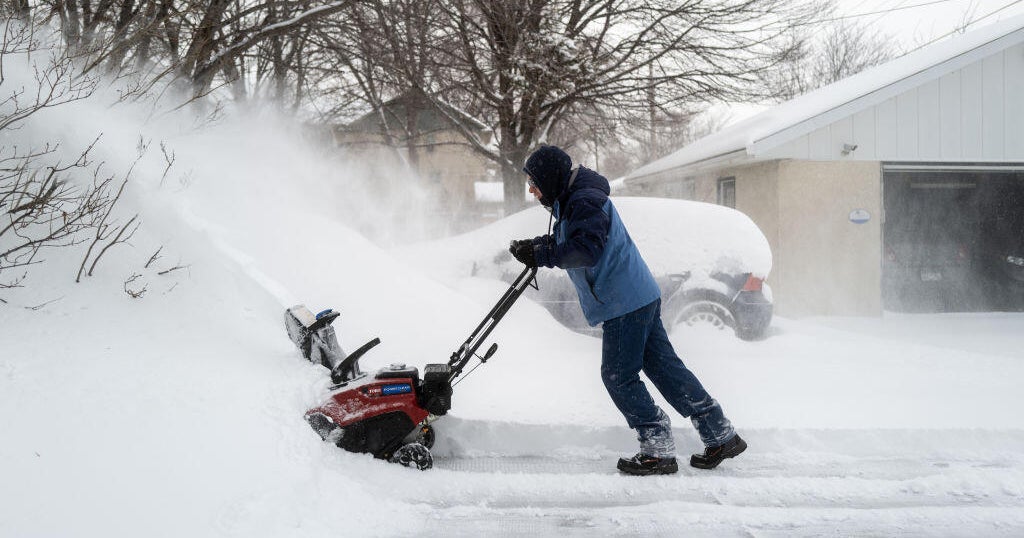
1–3 inches per hour snowfall expected Saturday night into Sunday across Minnesota, with major impacts forecast from Saturday evening through Sunday. Minneapolis–St. Paul airport reported 48 departures canceled and 43 delayed as of Saturday afternoon, indicating localized travel and logistics disruption. Major carriers (example: Verizon) report network redundancies and advise device preparedness; municipalities (St. Louis Park) have declared snow emergencies starting 10 p.m. Saturday. Expect near-term operational risks to regional travel, ground transport and staffing, but limited broader market impact.
Infrastructure winners are those selling physical redundancy and bulk consumables: home and light-commercial backup power, municipal snow/ice contracts, and de-icing chemical suppliers see a concentrated revenue and pricing window measured in days-to-weeks after major winter hits. Telecom and data players with built-in redundancy avoid headline outages but face a second-order test — battery backup durations are finite (hours, not days), which pushes demand toward diesel gensets and local fuel logistics if outages persist beyond a single storm cycle.
Airlines and last-mile logistics absorb the immediate operational shock: concentrated cancellations create rebooking costs, spillover demand for alternative transport, and volatile short-term cash flow; meanwhile grocery and hardware retailers see lumpy, localized stock pull-forward that stresses distribution nodes. For suppliers with flexible inventory near affected metros, margin expansion is possible for 1–3 weeks; for carriers and hub-centric airlines, the revenue loss can cascade into higher operational costs through overtime, repositioning, and increased insurance/claims.
Tail risks to this short-term dislocation include a forecast bust (reduced intensity or rapid warm-up) and rapid municipal pre-positioning that mops up demand before retail channels respond — both would compress upside for physical goods. Over a multi-quarter horizon, repeated extreme-weather events accelerate capex decisions: municipalities and corporates may accelerate procurement of standby power and de-icing contracts, which benefits manufacturers and specialty chemical providers but pressures utility capex and regulatory capital allocation.
The consensus is focused on immediate disruption and consumer inconvenience; the underappreciated outcome is a transient repricing of emergency goods and B2G (business-to-government) services that can meaningfully skew quarterly results for niche suppliers. Monitor real-time SKU sell-through, municipal RFP activity, and inbound flight rebooking patterns as high-frequency indicators that separate the transitory winners from the overhyped losers.
AI-powered research, real-time alerts, and portfolio analytics for institutional investors.
Request DemoOverall Sentiment
neutral
Sentiment Score
0.00
