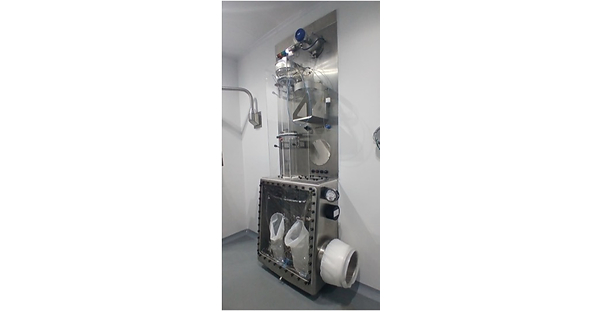
Piramal Pharma Solutions (PPS) hat in Turbhe, Indien, eine neue Sprühtrocknungsanlage mit Band-5-Containment-Kapazität in Betrieb genommen, um die Formulierung komplexer Biomoleküle (u. a. Peptide/HPAPIs) zu unterstützen. Die Anlage arbeitet als geschlossenes System mit Inertgasversorgung und Sicherheitsmaßnahmen; sie verarbeitet Chargen mit geringem Volumen bei einer Zufuhr von bis zu 1 Liter/Stunde und kann hochkonzentrierte Lösungen mit bis zu 30% Wassergehalt sprühtrocknen. Zudem erfüllt der Verarbeitungsbereich ISO-Klasse 8 (Klasse 100.000), was das sichere Handling hochwirksamer Verbindungen erleichtert und die Fähigkeit zur Skalierung/Verbesserung von Bioverfügbarkeit und Partikelkontrolle stärkt.
This is more of a capability signal than an earnings event. In CDMO land, adding containment plus spray-drying is valuable because it moves the platform from “capacity available” to “we can actually solve the formulation problem for difficult molecules,” which tends to raise win rates and customer stickiness more than near-term revenue. The economic upside is usually back-end loaded: qualification, validation batches, and then commercial use, so the payoff is 6-18 months out, not the next quarter.
The competitive read-through is that the scarce asset is not the spray dryer itself but the integrated know-how around high-potency handling, solvent control, and regulatory credibility. That should help Piramal take share at the margin from smaller regional CDMOs that can make APIs but cannot reliably support low-volume, high-complexity formulations. For large public peers, the bigger implication is pricing discipline: as more Indian capacity comes online, the scarcity premium on peptide development work should compress, which could cap margins for service providers exposed to formulation-heavy work.
For ABBV, the direct fundamental impact looks immaterial unless there is a disclosed supply relationship or a specific peptide program routed through this site. The more relevant second-order effect is on future development economics: better outsourced peptide capacity can shorten timelines and reduce COGS for late-stage programs, but only after tech transfer and quality validation are proven. The contrarian mistake would be to equate “new capacity” with immediate revenue; in this niche, utilization and customer qualification are the real bottlenecks, and any quality event would quickly unwind the optimistic read.
AI-powered research, real-time alerts, and portfolio analytics for institutional investors.
Request DemoOverall Sentiment
mildly positive
Sentiment Score
0.18
Ticker Sentiment
