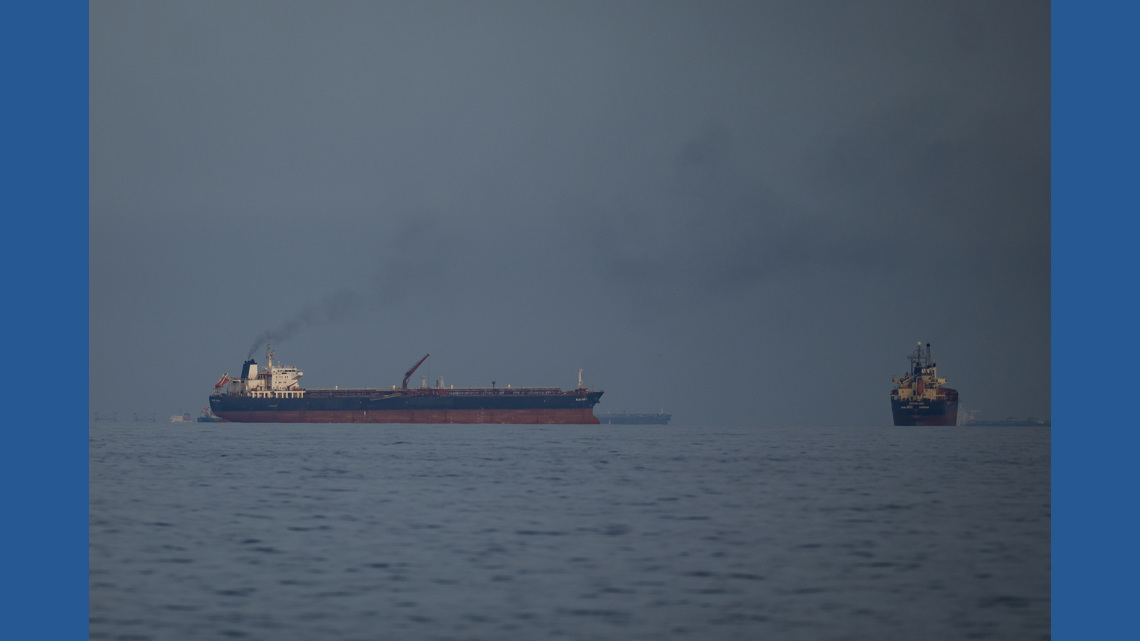
The U.S. announced a 30-day reprieve allowing Russian oil loaded on tankers as of Thursday to be delivered without U.S. sanctions. Brent briefly moved above $100 to $103.24/bbl (vs $72.87 on Feb. 27); analysts say the measure should modestly stabilize or slightly lower prices but won’t fundamentally change long-term sanctions pressure. About 125 million barrels of Russian oil are estimated to be in transit (≈5–6 days of normal Strait of Hormuz shipments or ~1 day of global consumption at ~101m bpd); CREA estimates Russia is earning ~€510m ($588m) daily from oil and LNG this month (≈14% above February), while Ukraine warns the easing could provide up to ~$10bn for the war.
The immediate market response will be driven more by a change in perceived enforcement risk than by material new volumes — that compresses insurance and freight premia and should shave $2–6/barrel off the typical sanction-induced discount for spot barrels over the next 2–8 weeks. Tanker owners and brokers capture most of that arbitrage in the near term via higher charter rates and shorter ballast legs; refiners with flexibility on crude slate see improved intake economics as transaction friction falls.
Over a 3–12 month horizon the impact is asymmetric: temporary easing lowers near-term volatility but leaves structural sanction pathways intact, so any sustained narrowing of discounts requires either durable legal pathways or deeper brokerage/insurance adaptation. Financially, this means incremental revenue for sellers and transporters can be front-loaded into working capital and freight profitability rather than recurring state budget inflows, limiting the long-run fiscal multiplier.
Key reversal catalysts to monitor are enforcement tightening by Western insurers, an escalation that further disrupts Hormuz chokepoints, or a coordinated producer response that changes baseline flows — any of which can swing spreads and spot freight rates by 30–100% within days. Conversely, diplomatic normalization or multi-country releases of strategic inventories could shave ~$8–$12/barrel off Brent-equivalent levels over 1–3 months, compressing tanker spot earnings and narrowing refinery margins.
Contrarian read: the market is treating this as a liquidity fix when it’s mostly a window-dressing of legal certainty. That suggests the biggest trading edge is in instruments that monetize a short, expectable drop in sanction-risk premia (insurance, freight, narrow physical spreads) rather than large directional crude exposure which remains subject to larger geopolitical tail risks.
AI-powered research, real-time alerts, and portfolio analytics for institutional investors.
Request DemoOverall Sentiment
mixed
Sentiment Score
0.00
