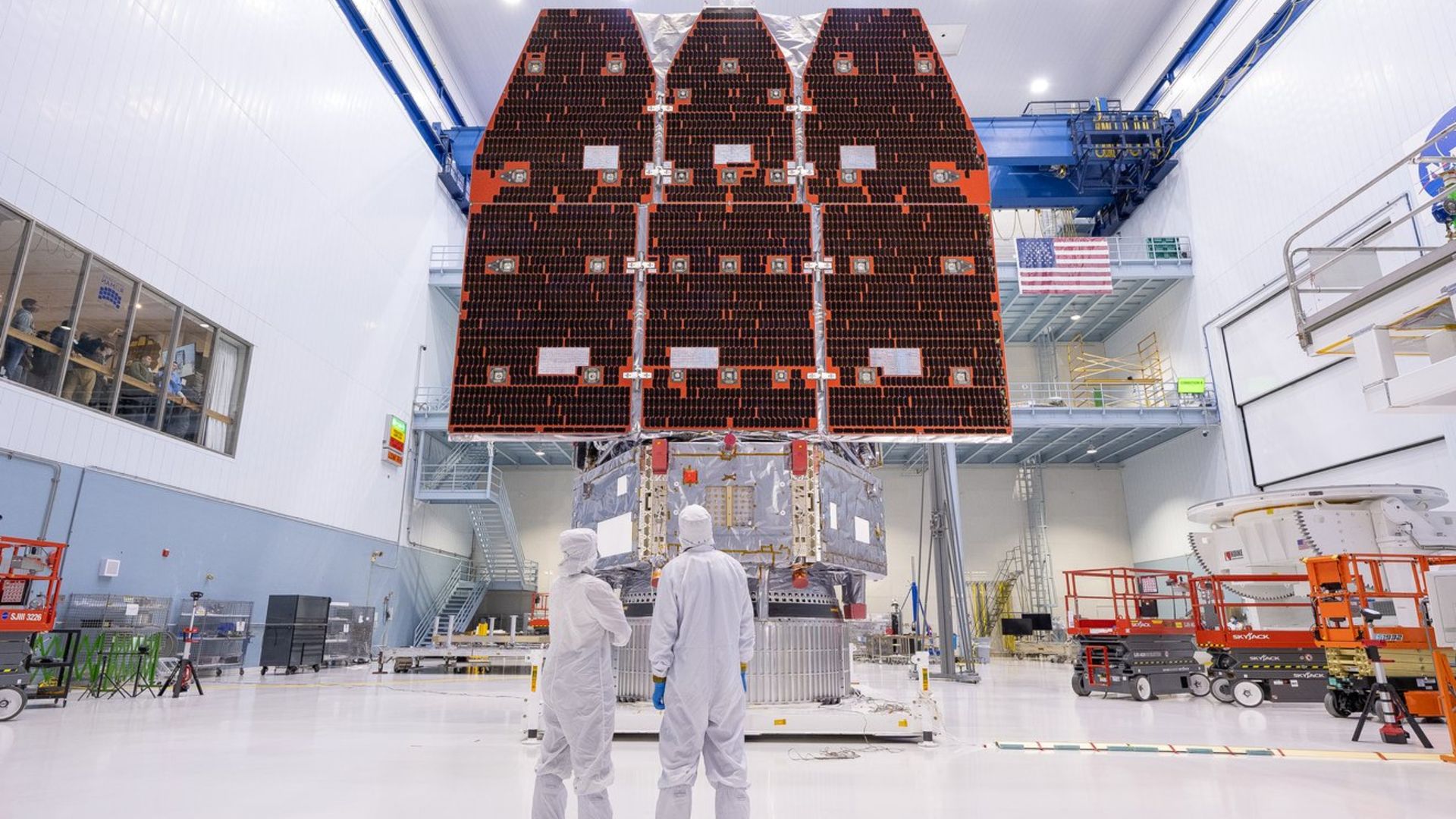
NASA says the Nancy Grace Roman Space Telescope is complete and on track for a September 2026 launch, eight months ahead of schedule and under budget. The observatory will have a 2.4-meter mirror, image 100x more sky than Hubble, process data 1,000x faster, and generate about 500 TB of data per year once operational. It will travel to Lagrange Point 2 aboard a SpaceX Falcon Heavy rocket, with the mission positioned to advance work on dark matter, dark energy and exoplanets.
Roman is less a single-mission catalyst than a downstream demand shock for the data-processing stack in space science. The second-order winners are likely not the headline aerospace primes, but the firms that monetize cataloging, compression, storage, cloud compute, and AI-assisted image triage; a 500TB/year feed creates a recurring analytics burden that should persist for years and compound as survey programs proliferate. That also means Roman’s real economic value may be realized through follow-on contracts and toolchain adoption, not the launch event itself.
The launch timing matters because the market will likely price the mission as “de-risked” only when it clears final integration and rideshare/launch-site work, leaving a narrow window where launch delay risk is asymmetric to the downside. Any slip into 2027 would mostly hurt sentiment rather than fundamentals, but it could still compress near-term enthusiasm around space-enabling names that have benefited from the broader commercial-space revival. By contrast, a clean arrival at L2 and first-light success would extend the positive cycle for NASA contractors with test, thermal, optics, and deep-space communications exposure.
The underappreciated contrarian angle is that Roman’s biggest scientific value may be to reduce uncertainty in categories the market already treats as “long-duration optionality”: exoplanet characterization, survey-driven discovery, and cosmology data sets. That argues against chasing pure-play space names on a one-day headline; the better trade is the picks-and-shovels layer with revenue already tied to government science budgets. Fiscal support is likely durable, but the tighter budget environment makes “mission success without cost overrun” especially important for preserving future pipeline funding.
Near-term, the main risk to the thesis is not technical failure but bureaucratic slippage: launch services, ground ops readiness, or post-launch calibration issues could push the revenue recognition and follow-on award cadence right by 1-2 quarters. Over a 12-24 month horizon, the bigger catalyst is whether Roman’s early data drives new program announcements in astrophysics and deep-space infrastructure, which would broaden the contract addressable market beyond this one spacecraft.
AI-powered research, real-time alerts, and portfolio analytics for institutional investors.
Request DemoOverall Sentiment
moderately positive
Sentiment Score
0.45
