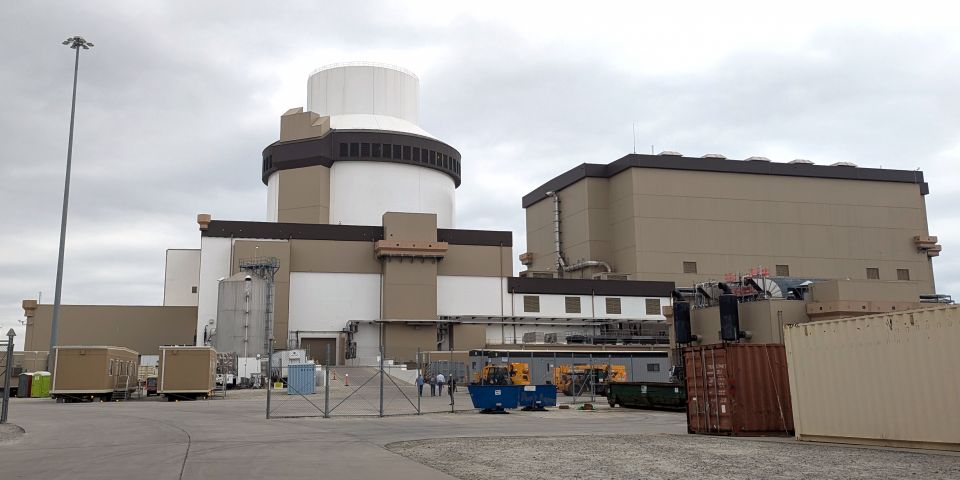
Japan has proposed up to $100 billion to support Westinghouse in building AP1000 large-scale reactors and SMRs as part of a broader $550 billion Japan–U.S. industrial investment package, with roles reportedly agreed and a high-level Japanese PM visit to the U.S. this week. The DOE has also held talks with GE Vernova/Hitachi and KEPCO on alternatives as talks with Westinghouse have reportedly been slow, creating execution risk; Westinghouse's PwC-backed analysis claims a 10-unit AP1000 build by 2030 could generate ~$92.8B in GDP and 44,300 jobs over 13 years and ~$12.9B/year in GDP (or $1.03T over 80 years) supporting ~22,500 jobs annually.
KEPCO's APR1400 is functionally advantaged versus alternatives on path-to-deployment: it already cleared large-scale export and construction execution scenarios overseas, meaning its marginal time-to-first-power and validated supply chain are shorter than a greenfield revival for other designs. That creates a non-linear payoff where a procurement decision in KEPCO's favor triggers concentrated orderbook growth for Korean heavy manufacturers, EPC integrators and state-backed export finance, not a slow, diffuse recovery for U.S.-centric suppliers.
Key catalysts and time horizons cluster into three windows: near-term (weeks–months) political/diplomatic signals and DOE shortlist announcements; medium (6–18 months) regulatory approvals and loan-commitment windows; and long-term (2–8 years) construction and commissioning. Tail risks that would unwind the favorable scenario include explicit procurement lockouts for geopolitical reasons, sudden tightening of U.S. content requirements, or material supply constraints in large forgings and highly skilled modular crews that can blow out schedule and cost assumptions.
The market is underestimating two second-order effects: 1) speed-of-deployability premium — bidders with existing serial-build experience capture outsized margins and faster revenue recognition, and 2) export-finance leverage — a government-backed credit package shifts effective cost competition even if headline unit costs look similar. Conversely, consensus is likely over-optimistic on near-term macro GDP/job multipliers tied to plant starts; until firm contracts and loan guarantees are signed, valuations should not price in multi-decade cashflows.
AI-powered research, real-time alerts, and portfolio analytics for institutional investors.
Request DemoOverall Sentiment
mildly positive
Sentiment Score
0.15
Ticker Sentiment
