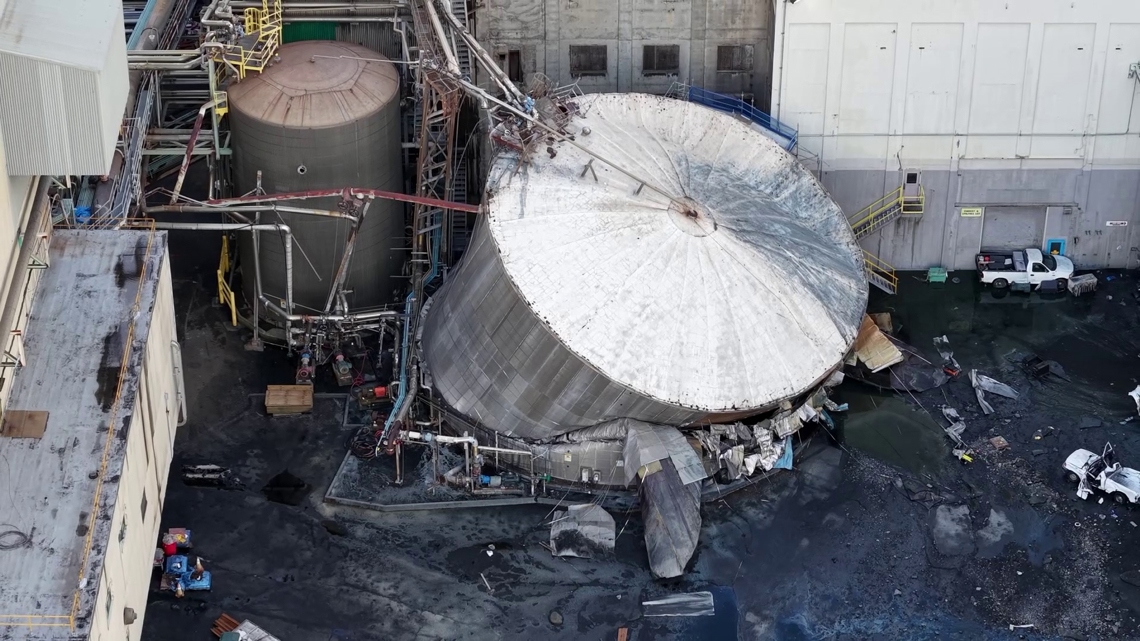
A tank implosion at Nippon Dynawave's Longview paper mill has left at least 1 person dead and 9 employees missing, with 9 others treated at hospitals. The incident involved a 900,000-gallon chemical tank carrying white liquor used in papermaking, and officials said they do not believe there are any rescues to be made. The event is a serious operational and human tragedy for the facility, though the broader market impact should be limited.
This is less a one-off industrial accident and more a reminder that a single-process bottleneck can create a surprisingly broad earnings cascade in pulp/paper and adjacent logistics. The immediate hit is local, but the second-order impact is likely to show up in regional mill utilization, maintenance capex, and contract fulfillment slippage over the next 1-3 quarters if the outage is material. In that scenario, smaller paper producers with tighter inventories and less flexible feedstock sourcing are more exposed than large integrated operators that can redirect production. The key market risk is legal and remediation overhang: chemical tank failures tend to generate not just repair costs but environmental scrutiny, third-party claims, and insurance disputes that can stretch for months. That matters because the economic damage often exceeds the physical asset loss; if investigators identify design, maintenance, or operator-process failures, expect a longer tail on downtime and a higher probability of similar audit activity across the sector. Suppliers of industrial safety, inspection, and process-control systems may see a modest demand bump as mills accelerate preventive spending. The contrarian angle is that headline risk may overstate sector-wide contagion. Unless this points to a structural flaw in a common vendor or a broader pulp market disruption, the tradeable impact is likely more idiosyncratic than systemic. The better setup is to fade any indiscriminate selloff in diversified packaging/paper names while staying cautious on names with concentrated mill exposure or elevated environmental liabilities.
AI-powered research, real-time alerts, and portfolio analytics for institutional investors.
Overall Sentiment
strongly negative
Sentiment Score
-0.82
