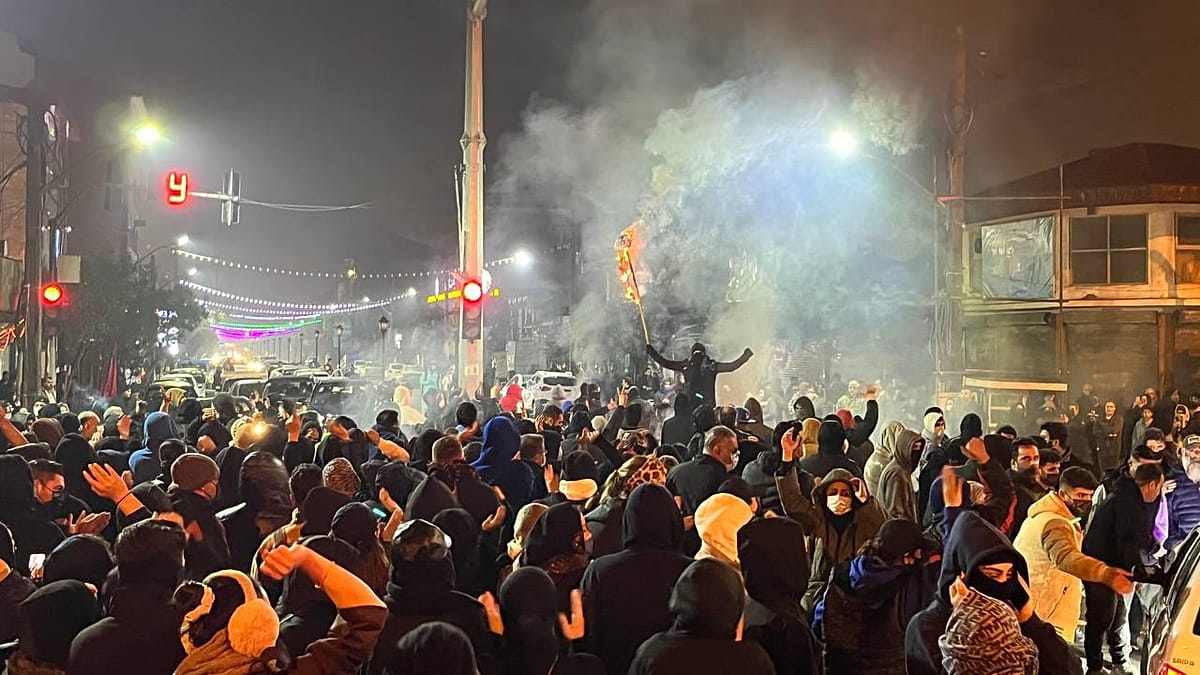
Iran has imposed an unprecedented communications blackout amid recent protests, fully cutting internet access and disabling mobile networks and international calls while leaving only domestic landline service; previously, Tehran had used selective bandwidth throttling, targeted internet shutdowns (notably in November 2019) and reduced speeds during other unrest. The escalation to a full telecom and satellite-jamming campaign sharply increases political opacity and state control of information, representing a heightened political-risk event and a potential risk-off catalyst for investors with exposure to Iran or sensitive regional assets.
Market structure: A nationwide communications blackout in Iran re-routes real economic and risk flows toward defense, secure-communications and safe-haven assets. Expect near-term demand pressure on satellite/secure-comm vendors (Iridium IRDM, Viasat VSAT) and cybersecurity firms (CRWD, PANW) while Iranian domestic telecom revenues and regional consumer-tech exposure contract by an estimated double-digit percent during prolonged outages.
Risk assessment: Immediate tail risks include rapid escalation to kinetic conflict that would push Brent +5–15% in days and widen GCC sovereign CDS by 50–150bp; medium-term risks (weeks–months) include sanctions spillovers and cyber retaliation hitting global energy/logistics. Hidden dependencies: insurance premiums for tanker routes and subsea cable resilience are non-linear—small disruptions can force large routing/price moves.
Trade implications: Positioning should be asymmetric — buy protection and selective longs. Defense primes (LMT, NOC) and GLD are natural beneficiaries of heightened geopolitical risk; EM equities (EEM) and regional telcos are most exposed to downside. Options can monetize short-lived volatility spikes while limiting capital at risk.
Contrarian angles: Consensus will overpay for immediate safety; a 3–6 month horizon may price in persistent risk that collapses if crackdown restores order. Look for mean-reversion in EM FX and oil if no external escalation within 30–60 days; satellite/secure-comm hardware makers may underdeliver near-term but re-rate on multi-quarter contract flow.
AI-powered research, real-time alerts, and portfolio analytics for institutional investors.
Request DemoOverall Sentiment
moderately negative
Sentiment Score
-0.35
