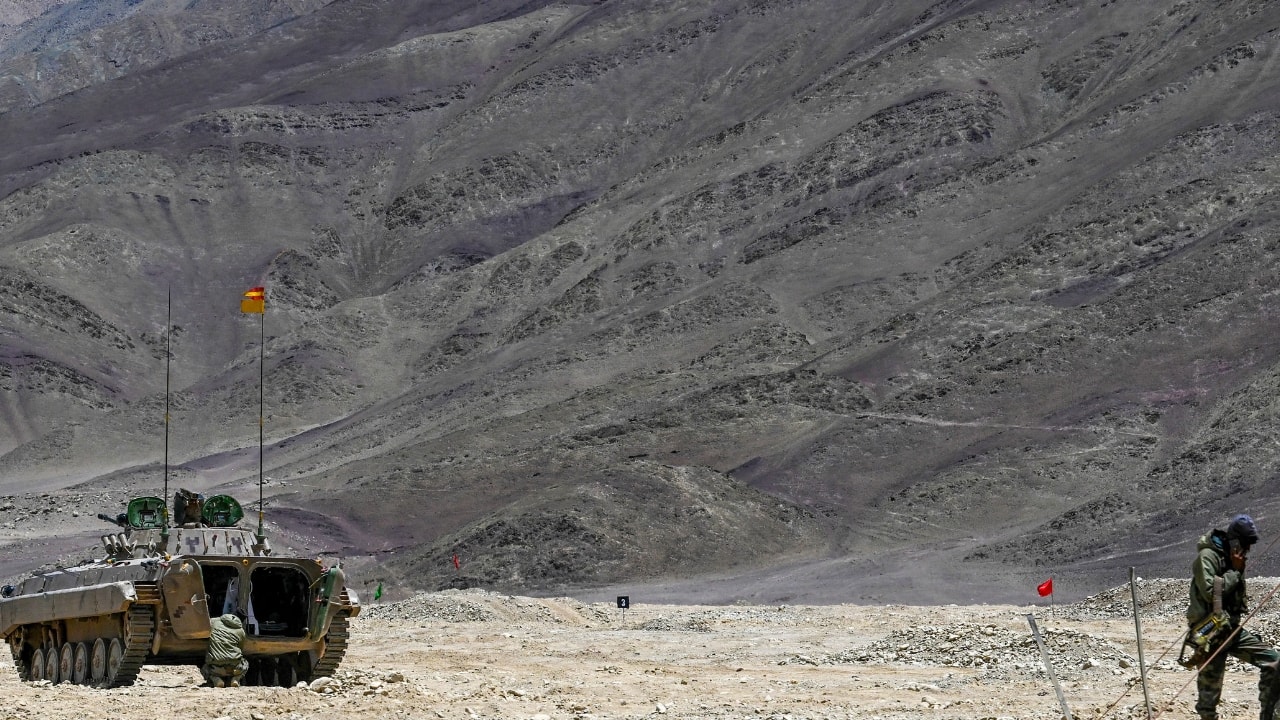
Since the deadly 2020 LAC clash, India has accelerated strategic infrastructure along the China border, building roads, over 30 helipads, upgraded airstrips and the Mudh‑Nyoma airbase (~14,000 ft, 19 miles from the border) to improve rapid lift capacity. A marquee project is the Zojila tunnel (work began after 2020, >$750m, at ~11,500 ft) intended to provide year‑round access to Ladakh; logistics remain arduous—soldiers require ~220 lb of supplies monthly and remote posts can consume ~13 gallons of fuel daily. The buildup strengthens deterrence and creates potential defense and construction contract opportunities, but analysts warn increased patrols and infrastructure could raise friction in disputed areas, implying heightened geopolitical and operational risk.
Market structure: Direct winners are Indian defense OEMs, heavy civil contractors, road/airstrip engineers and regional logistics providers — expect incremental regional capex of roughly $8–20bn over 3–5 years (Zojila is $750m precedent). Upstream commodity demand (steel, cement, bitumen, diesel) will lift input prices regionally by an estimated 3–7% in the first 12–18 months, improving pricing power for large cap contractors but compressing margins for small subcontractors. Cross-asset: expect modest INR weakening (1–3%) and 10–30bp upward pressure on 10y G-sec yields as issuance rises; oil price sensitivity increases short-term due to elevated military fuel consumption.
Risk assessment: Tail risks include kinetic escalation (low probability, high impact) that could trigger capital controls, sanctions, or supply-chain shocks; another tail is project cost overruns >30% or environmental injunctions delaying megaprojects by 12–36 months. Time horizons: days — INR and CDS spikes on headlines; weeks–months — tender flows, bond auctions and orderbooks; years — structural defence budget uplift of 8–15% annually. Hidden dependencies: central financing crowding out private infrastructure spending and reliance on a handful of steel/cement suppliers can create single‑point-of-failure supply bottlenecks.
Trade implications: Tactical longs: establish 2–3% position in L&T (LT.NS) and 1–2% in HAL (HAL.NS) with 12–24 month targets of +30–40% and stop-loss at -12%. Add 1% long in BEL (BEL.NS) for electronics/avionics exposure and 1–2% in UltraTech Cement (ULTRATECH.NS) or JSWSTEEL.NS for material upside; use 9–12 month call spreads to cap cost (e.g., buy LT 12‑month 20–25% OTM call / sell 40% OTM). FX/commodities: buy 3‑month USDINR calls if spot moves >1.5% and a 3–6 month Brent call spread if oil >$95.
Contrarian angles: Consensus underestimates execution risk and margin squeeze from commodity inflation — small/mid-cap infra names may be overbought; prefer large caps with balance-sheet firepower. The market may also underprice political risks (border skirmish escalation) which would favor liquid, hedgable plays (L&T, HAL) over illiquid private contractors. Historical parallels (post‑1999 border buildouts) show front‑loaded volatility and 12–24 month mean reversion; guard positions with option hedges and size limits.
AI-powered research, real-time alerts, and portfolio analytics for institutional investors.
Request DemoOverall Sentiment
mixed
Sentiment Score
0.08
