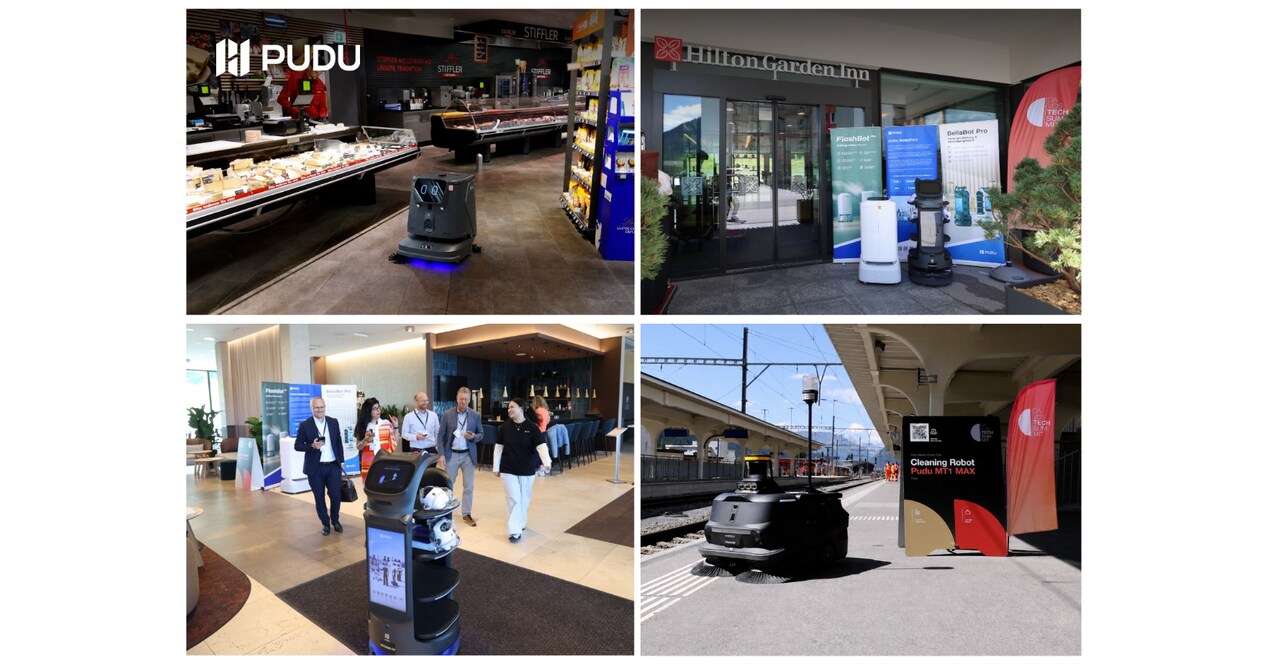
Pudu Robotics showcases physical (embodied) AI via its “Robot City” initiative at the Davos Tech Summit, highlighting real-world deployments across retail, hospitality, and public spaces. The company reports it has shipped 130,000+ robots across 85 countries/regions, with international markets contributing 80%+ of revenue, and in June 2026 announced a deal to deploy 200 PUDU CC1 cleaning robots across Denner stores in Switzerland. The update is constructive on operational traction and product scalability, but it is framed as a demonstration/initiative rather than a financial results release.
This is less a revenue event than a validation event for the category: the equity-relevant signal is that autonomous workflows are moving from controlled demos toward repeatable operating standards in high-traffic environments. The near-term winners are not the robot vendors themselves so much as the enabling stack — edge compute, vision/LiDAR, fleet software, and system integrators — while the most exposed losers are labor-intensive facility and hospitality operators whose wage inflation has historically been their pricing cover. The second-order effect is that adoption should cluster first in multi-site chains where one software update can be rolled across hundreds of locations, creating an outsize advantage for large operators versus independents.
The key risk is timing: procurement cycles, elevator/POS integration, insurance, and maintenance realities usually delay economic impact by 6-18 months, so the stock market can easily overprice the theme before any margin line changes. What would falsify the bullish read is evidence that pilots stay pilots: no repeat orders, high downtime, or operator pushback after a few public incidents. In that case, the theme stays a conference narrative rather than a budget line, and the best trade becomes selling the “physical AI” basket on strength.
The contrarian view is that the market is likely underestimating how narrow the first true monetization wedge is. Cleaning and back-of-house logistics are the real beachhead; customer-facing service robots are still a novelty that can slow adoption if service quality is inconsistent. If wage growth cools, the urgency to automate falls; if it re-accelerates, this theme gets legs quickly, but the earnings impact should remain concentrated in a handful of recurring-service models rather than broad industrials.
AI-powered research, real-time alerts, and portfolio analytics for institutional investors.
Request DemoOverall Sentiment
mildly positive
Sentiment Score
0.18
