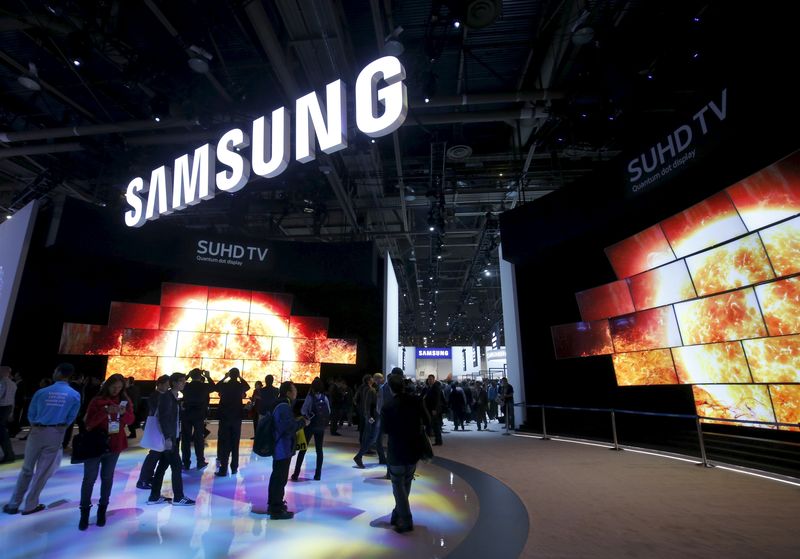
The S&P 500 and Nasdaq closed lower on hot CPI data and renewed geopolitical uncertainty, while Samsung Electronics fell more than 5% in Seoul after wage talks with its largest labor union collapsed. The union plans an 18-day strike starting May 21 unless Samsung improves its offer, adding operational risk to the company's AI chip business. The dispute also highlights pressure in the high-bandwidth memory market as Samsung tries to catch SK Hynix.
The immediate market read-through is not the wage dispute itself, but the signaling effect for the AI memory supply chain: if labor friction delays output at a key HBM supplier, pricing power migrates to the scarce-node players that can still deliver on schedule. That tends to widen the gap between “AI demand” and “AI monetization,” because customers will pay up for reliability before they pay up for incremental capacity. In the near term, this favors firms with cleaner execution and fewer labor/governance overhangs, while penalizing any name where management credibility is already under scrutiny.
For NVDA, the impact is second-order but meaningful: a disruption at a critical upstream memory vendor increases the probability of temporary allocation constraints, which can delay ramp timing rather than reduce end demand. That usually supports near-dated revenue visibility for the best-positioned ecosystem partners, but it also raises the odds of a short-term multiple reset if investors start discounting supply uncertainty into the broader AI complex. The key window is days to weeks, not quarters; unless the strike escalates into a sustained production issue, the more durable effect is likely a reprioritization of customer relationships and an acceleration of share gains for the most operationally dependable suppliers.
The contrarian view is that the market may be over-indexing on headline risk while underpricing the likelihood of a fast settlement once lost output becomes expensive enough. Labor actions in semis often resolve before they become a true throughput problem because both sides can quantify the cost of missed shipments very quickly. If that happens, the trade becomes one of mean reversion in the pressured names rather than a multi-month supply shock, and the better expression is relative value rather than outright bearishness.
Separately, the risk-off tone around inflation and geopolitics matters because it compresses the market’s tolerance for any incremental supply-chain noise. In a tape already sensitive to CPI surprises, even a contained disruption can amplify factor rotation out of high-multiple tech into cash-generative defensives, especially if investors fear that AI capex returns are being pushed out. The setup is therefore asymmetric: limited downside if the labor issue resolves quickly, but meaningful short-term underperformance if it collides with another macro shock.
AI-powered research, real-time alerts, and portfolio analytics for institutional investors.
Request DemoOverall Sentiment
moderately negative
Sentiment Score
-0.35
Ticker Sentiment
