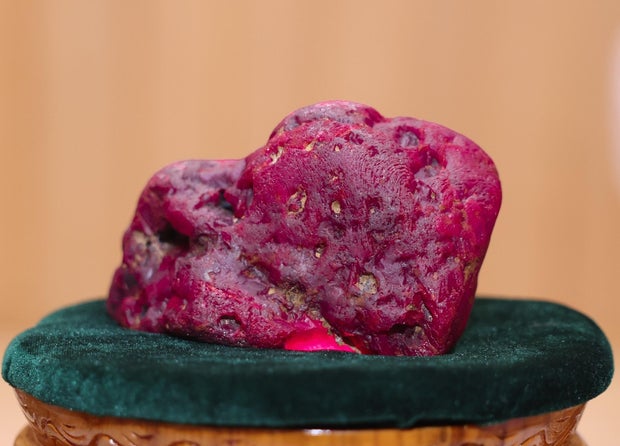
Myanmar has uncovered an 11,000-carat ruby in the Mogok region, which state gemologists say is more valuable than the 21,450-carat stone found in 1996 because it is untreated and has strong color and clarity. The discovery highlights how ruby and jade revenues continue to finance Myanmar’s conflict, with control of Mogok shifting from an ethnic armed group back to the military after a China-brokered ceasefire. Market impact is limited, but sanctions and smuggling risks could affect whether the stone ever reaches the international market.
The investment takeaway is not the gemstone itself but the market structure around it: Myanmar’s ruby supply is both highly concentrated and increasingly securitized by conflict. That combination creates a classic “scarcity premium plus sanctions discount” regime, where the top end of the rough market can see headline value gains while realizable value falls because the buyer pool is shrinking and provenance risk is rising. In practice, the largest economic beneficiary is likely not the state miner but the first mover in the opaque supply chain that can route the stone through Thailand/UAE and re-paper origin.
Second-order effects are more important than the auction outcome. If the military monetizes this find publicly, it signals tighter state control over mined assets and potentially higher royalty capture, which should modestly improve near-term cash for the regime but also intensify incentives for insurgents to raid, tax, or obstruct surrounding deposits. That keeps the civil-war premium embedded in all Mogok production for the next 3-12 months and raises the probability of intermittent logistics disruption rather than a clean supply response.
The contrarian angle is that the market may be overestimating the durability of the “untreated rare ruby” narrative. Untreated natural stones command a premium only if they can clear compliance screens; for most institutional buyers, provenance risk now dominates gem quality. So the right mental model is not bull case for Burmese gemstones broadly, but bifurcation: a narrow set of illicit intermediaries can profit, while compliant luxury brands and Western dealers face a persistent substitution opportunity toward Mozambique, Madagascar, and lab-grown alternatives.
Catalyst-wise, the key variable over the next 1-6 months is whether the stone is auctioned domestically, warehoused, or quietly exported. A transparent state sale would validate the government’s control and support local pricing; a delayed or missing chain of custody would reinforce sanctions leakage and push the trade further underground. Longer term, each headline discovery increases the political value of Mogok, making renewed conflict around the tract more likely over the next 12-24 months.
AI-powered research, real-time alerts, and portfolio analytics for institutional investors.
Request DemoOverall Sentiment
neutral
Sentiment Score
0.00
