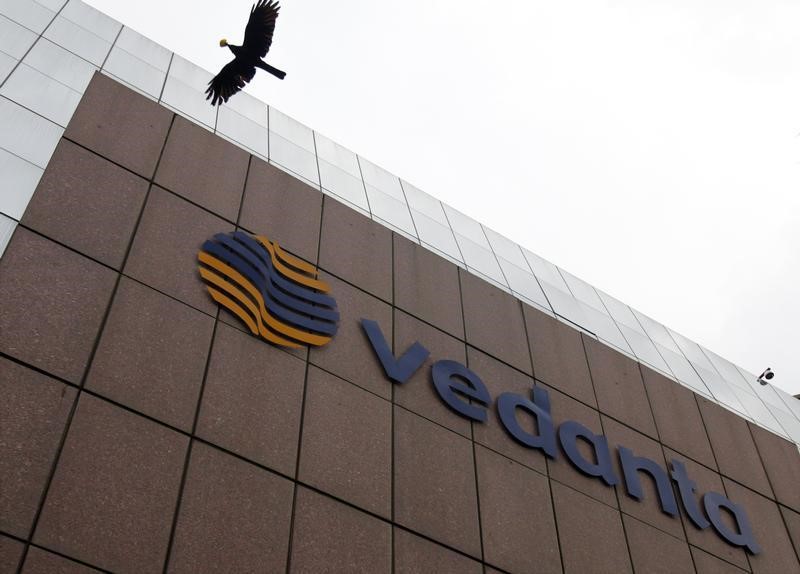
Vedanta reported a record full-year profit of $2.8 billion, up 22% year over year, while fourth-quarter profit nearly doubled to $1 billion. Annual revenue rose 15% to nearly $20 billion and Q4 revenue increased nearly 30% to $5.6 billion, supported by higher commodity prices and stronger aluminium and zinc performance. The company also said its long-planned demerger became effective on May 1, moving the five-way split into implementation phase to unlock value.
This is less a one-quarter earnings story than a capital-structure rerating setup. The key second-order effect is that a successful multi-way split forces the market to stop valuing the group as a discounted conglomerate and start underwriting each cash stream on its own growth, leverage, and governance profile; that usually expands the valuation range long before any operational synergy is realized. The early winners are the higher-quality, lower-capex businesses that can support cleaner balance sheets and higher payout capacity, while the weakest unit tends to be exposed once cross-subsidies disappear.
The implementation phase creates a tactical window in which optionality is underpriced but execution risk remains high. Over the next 1-3 quarters, the market will likely focus on three friction points: asset allocation between the five entities, debt apportionment, and whether commodity volatility masks true standalone earnings power. If management executes cleanly, the rerating can be material; if not, complexity simply shifts from the parent to the new entities and the discount persists.
The broader read-through is for Indian industrials and resource names with latent breakup value: demergers often catalyze index inclusion, improved liquidity, and more explicit capital return policies, which can attract domestic long-only flows. The contrarian risk is that investors may be extrapolating a valuation unlock that requires several reporting cycles of proof; in commodity-heavy structures, peak earnings can make the post-split multiple look optically cheap before normalizing, creating a classic value trap if commodity prices roll over. The market may be underestimating how much of the upside depends on deleveraging and governance, not just the legal separation.
AI-powered research, real-time alerts, and portfolio analytics for institutional investors.
Request DemoOverall Sentiment
moderately positive
Sentiment Score
0.62
