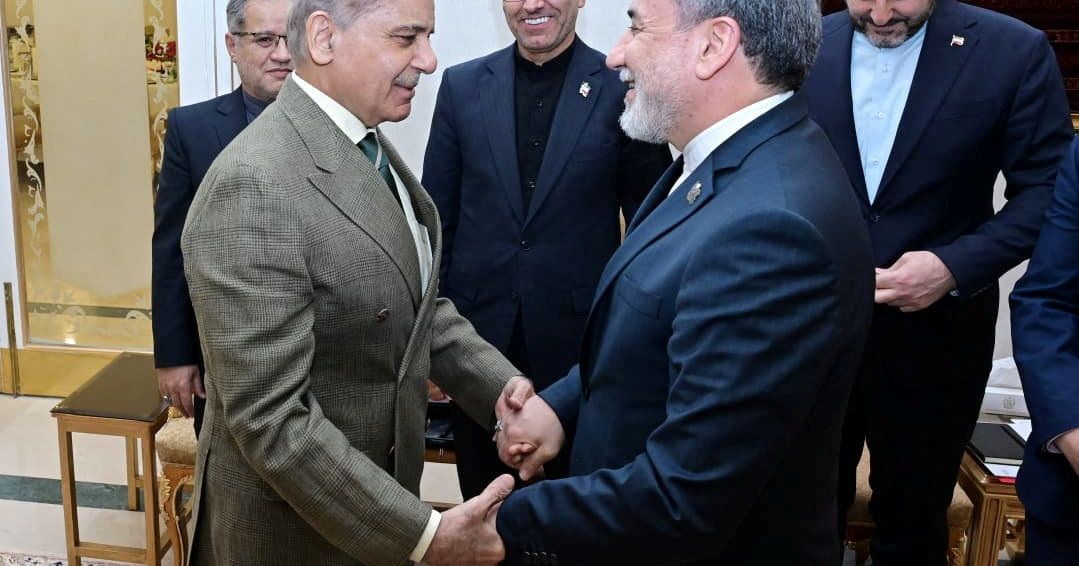
Iran’s foreign minister said Tehran shared a 'workable framework' to permanently end the war during talks in Pakistan, but said it remains unclear whether the U.S. is serious about diplomacy. Pakistan continues mediation efforts between Tehran and Washington, though Donald Trump said he canceled the planned trip by U.S. negotiators to Pakistan, leaving the next diplomatic step uncertain. The article is geopolitically important but contains no direct market or economic policy change.
The market implication is not a clean “peace premium” but a dispersion trade around diplomatic optionality. When negotiations are being routed through third parties and public signaling is contradictory, the first-order move in risk assets is usually modest; the larger opportunity is in assets that are sensitive to escalation probability rather than the headline itself. That means oil volatility, defense order expectations, and frontier/emerging-market risk premia are likely to react more than broad equities.
The second-order effect is on Pakistan as a mediator: successful engagement marginally improves its external financing narrative and near-term FX stability, but failure raises the probability that it gets exposed to regional blowback without compensation. Oman benefits more quietly as a trusted convening venue; that kind of diplomatic utility tends to accrue in softer forms like sovereign relationship capital and future transit/infrastructure relevance rather than immediate price action. For defense-linked names, the key is not whether conflict starts tomorrow, but whether the probability distribution shifts toward a longer tail of recurring standoffs, which supports backlog visibility and higher political-risk premiums.
The contrarian view is that investors may be overpricing the chance that process equals progress. A visible mediation track can actually prolong uncertainty by delaying a hard break or a durable settlement, keeping energy, shipping, and regional credit risk elevated for weeks to months. If the U.S. or Iran uses the talks mainly as leverage, then the correct trade is to own volatility and avoid directional bets on an immediate normalization that likely requires multiple failed rounds before any credible de-escalation.
AI-powered research, real-time alerts, and portfolio analytics for institutional investors.
Request DemoOverall Sentiment
neutral
Sentiment Score
-0.05
