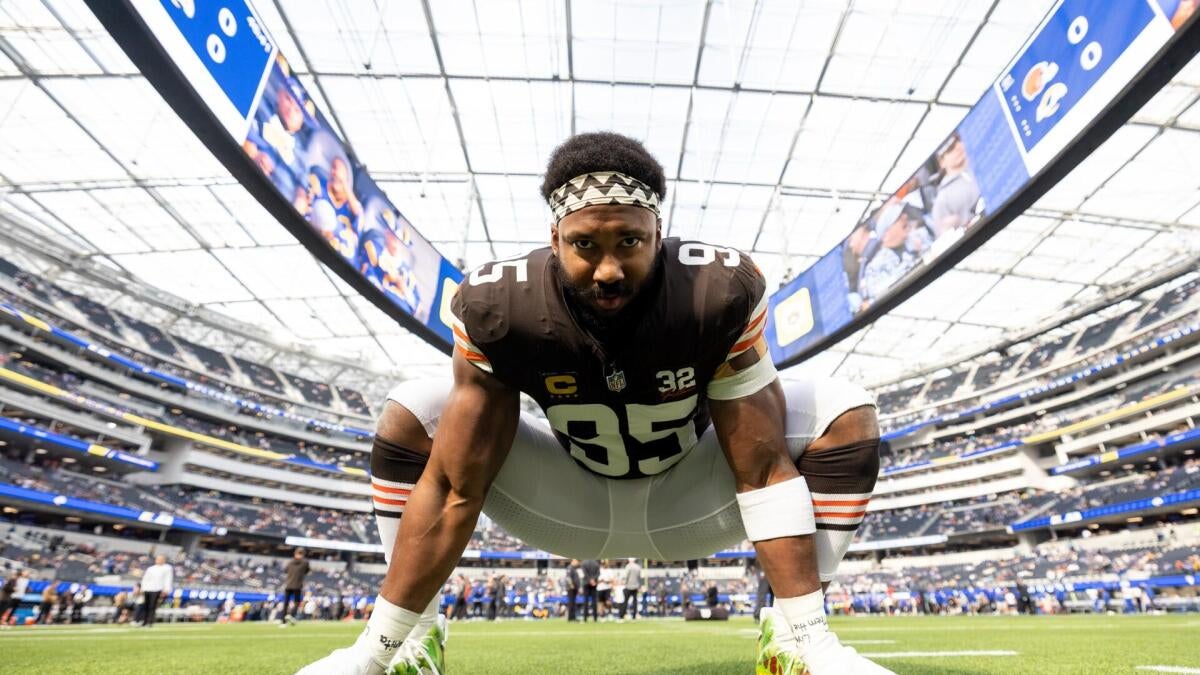
The Los Angeles Rams acquired 2025 NFL Defensive Player of the Year Myles Garrett from the Cleveland Browns in a blockbuster trade that sent Jared Verse plus a 2027 first-round pick, a 2028 second-round pick and a 2029 third-round pick to Cleveland. The move pairs Garrett with 2025 NFL MVP Matthew Stafford and gives the Rams the league leaders in passing yards, passing touchdowns, catches, receiving touchdowns and sacks from last season. It materially strengthens Los Angeles' Super Bowl LXI outlook, though the article is sports-related and unlikely to have direct broader market impact.
This is less a football transaction than a capital-allocation signal: the Rams are deliberately concentrating scarce roster value into a narrow championship window. The second-order effect is that they are effectively monetizing future optionality for present certainty, which should improve near-term title probability but raises the variance of outcomes if injury or scheme fit disappoints. In sports terms, that is classic convexity compression: they are paying away years of flexibility to reduce the probability of a single-year miss.
The key market-style insight is that the move attacks the one weakness that tends to be most predictive of playoff downside: pass-rush conversion on money downs. Pressure rate is useful, but postseason defenses are decided by whether one elite player can end drives without requiring coverage to hold for long durations; Garrett is specifically a third-down transformer. That also means the marginal value of the McDuffie/Watson secondary upgrade is higher than it looks, because better coverage increases sack completion rate and creates a nonlinear effect on defensive efficiency.
The main risk is not talent but coordination and fragility: star-heavy constructions can fail when one elite piece misses time, and the Rams have now stacked several high-usage assets on both sides of the ball. The longer the horizon, the more the deal looks like a negative expected-value bet in asset terms, since the surrendered draft capital compounds over three to four years. But over the next 6-9 months, this is a real catalyst for marketable upside in win probability and a meaningful reduction in the chance that their season ends because of late-game defensive leakage.
Contrarian view: consensus will likely frame this as an obvious upgrade, but the more interesting question is whether the market is underpricing diminishing returns on elite talent concentration. If Stafford’s age curve or soft-tissue risk bites, the team can still be forced into a high-variance offensive environment where even an elite pass rush doesn’t fully offset regression. So the trade is best viewed as a short-duration title bet, not a durable franchise moat.
AI-powered research, real-time alerts, and portfolio analytics for institutional investors.
Request DemoOverall Sentiment
strongly positive
Sentiment Score
0.72
