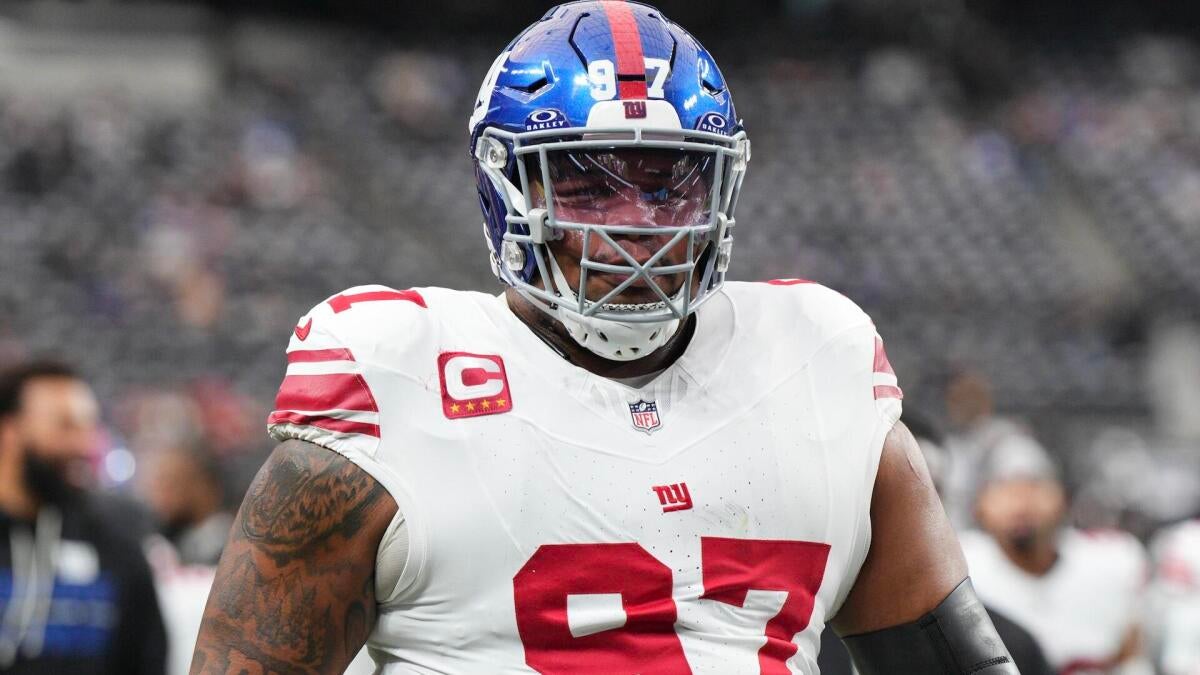
The Giants traded Dexter Lawrence to the Bengals for the No. 10 overall pick in the 2026 NFL Draft, giving New York two top-10 selections at Nos. 5 and 10. Cincinnati also secures a new contract for Lawrence, while addressing a defense that ranked 31st in total defense and 30th in scoring defense last season. The deal is a meaningful roster and draft-capital shakeup, but it is still sports-news specific rather than market-wide.
This is a classic value-transfer trade where the acquiring team is effectively buying certainty at a premium and the selling team is converting one aging, expensive asset into multiple shots on goal. The immediate winner is the defense-starved buyer, but the more important second-order effect is that the transaction can materially change draft behavior for both clubs: the seller now has leverage to address multiple roster holes, while the buyer is signaling it is willing to sacrifice future draft optionality to compress its turnaround window. In roster-construction terms, this is a bet that one elite interior defender has more marginal impact on win probability than a top-10 rookie contract, which is usually only true when the team believes its current core is within 1-2 seasons of contention.
The risk on the buy side is that defensive line impact is highly context-dependent: if the surrounding front seven and coverage structure remain weak, the acquired player’s splash-play rate can be muted and the deal devolves into an expensive reputation purchase rather than a true efficiency upgrade. That makes the payoff horizon short—weeks to a few months for sentiment, but one full season for real defensive conversion. For the seller, the main tail risk is execution: two premium picks create upside only if the front office can hit on at least one high-probability blue-chip contributor, and draft-market consensus often overprices the quality of top-10 certainty versus the long-tail variance of elite veterans.
The contrarian angle is that the market may be overestimating how much one defender can fix a unit that has deeper structural issues in coverage and scheme continuity. If the defense still ranks near the bottom by midseason, this move will likely be reclassified as a headline-grabbing but low-ROI allocation of premium capital. Conversely, if the team starts fast, the trade could become a catalyst for a broader re-rating of the roster-building thesis and front-office credibility, making this as much a governance and narrative event as a football one.
AI-powered research, real-time alerts, and portfolio analytics for institutional investors.
Request DemoOverall Sentiment
mildly positive
Sentiment Score
0.20
