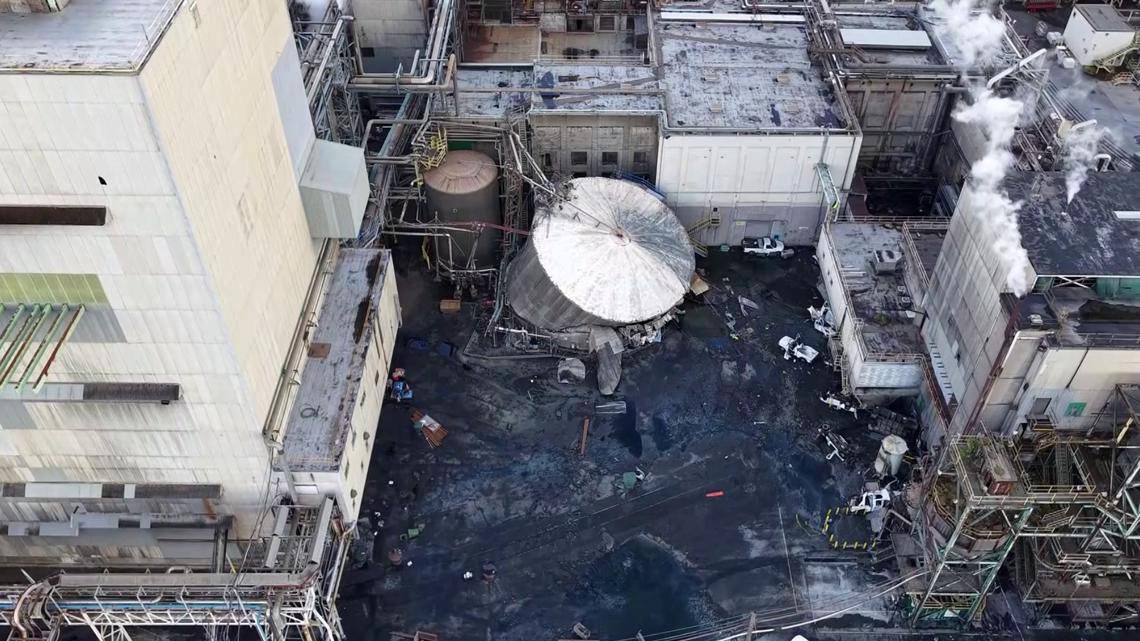
A tank implosion at Nippon Dynawave Packaging's Longview paper mill killed at least one person, left others critically injured, and nine employees unaccounted for. The Washington State Department of Labor and Industries has cited the company four times for safety violations since 2019 and has two open investigations, including one opened two months ago related to a tank valve complaint. While the article is primarily a workplace safety and regulatory story, the incident and compliance history are materially negative for the company.
This is not just an isolated industrial accident; it is a governance and balance-sheet event with a slow-burn liability profile. In the near term, the direct economic hit is likely to be less about lost production than about regulatory drag: surprise inspections, mandated remediation, insurance retentions, and potential shutdowns can cascade into weeks or months of operating friction even before civil claims are tallied. The bigger signal is that a facility with prior compliance issues can abruptly reprice counterparty trust across the whole regional industrial base.
Second-order winners are likely to be nearby competitors and substitute suppliers that can step into any disrupted fiber, pulp, or packaging demand over the next 1-2 quarters. Buyers who need uninterrupted supply will pay up for reliability, so the margin uplift accrues first to operators with cleaner safety records and more redundant capacity. Conversely, any customer concentration into a single mill or site now carries a higher perceived continuity premium, which can improve pricing for diversified incumbents.
The tail risk is litigation severity rather than the headline injury count. Mass-tort dynamics, OSHA/L&I findings, and potential environmental remediation can compound over 6-24 months, especially if investigators establish that maintenance, training, or process controls were deficient. The market usually underestimates the cost of capital effect: even absent a large cash judgment, a visible safety failure can tighten lender terms and raise insurance costs across the next renewal cycle.
Contrarian view: the immediate selloff in anything exposed to industrial safety or paper/packaging supply chains may be too blunt if the incident proves mechanically isolated. If regulators conclude this was a one-off equipment failure rather than a systemic process issue, the event becomes more of a reputational overhang than a durable earnings impairment. That means the opportunity is not to chase the headline, but to own the cleaner operators with better compliance disclosure and avoid the weakest governance profiles until the investigation scope is clear.
AI-powered research, real-time alerts, and portfolio analytics for institutional investors.
Request DemoOverall Sentiment
strongly negative
Sentiment Score
-0.75
