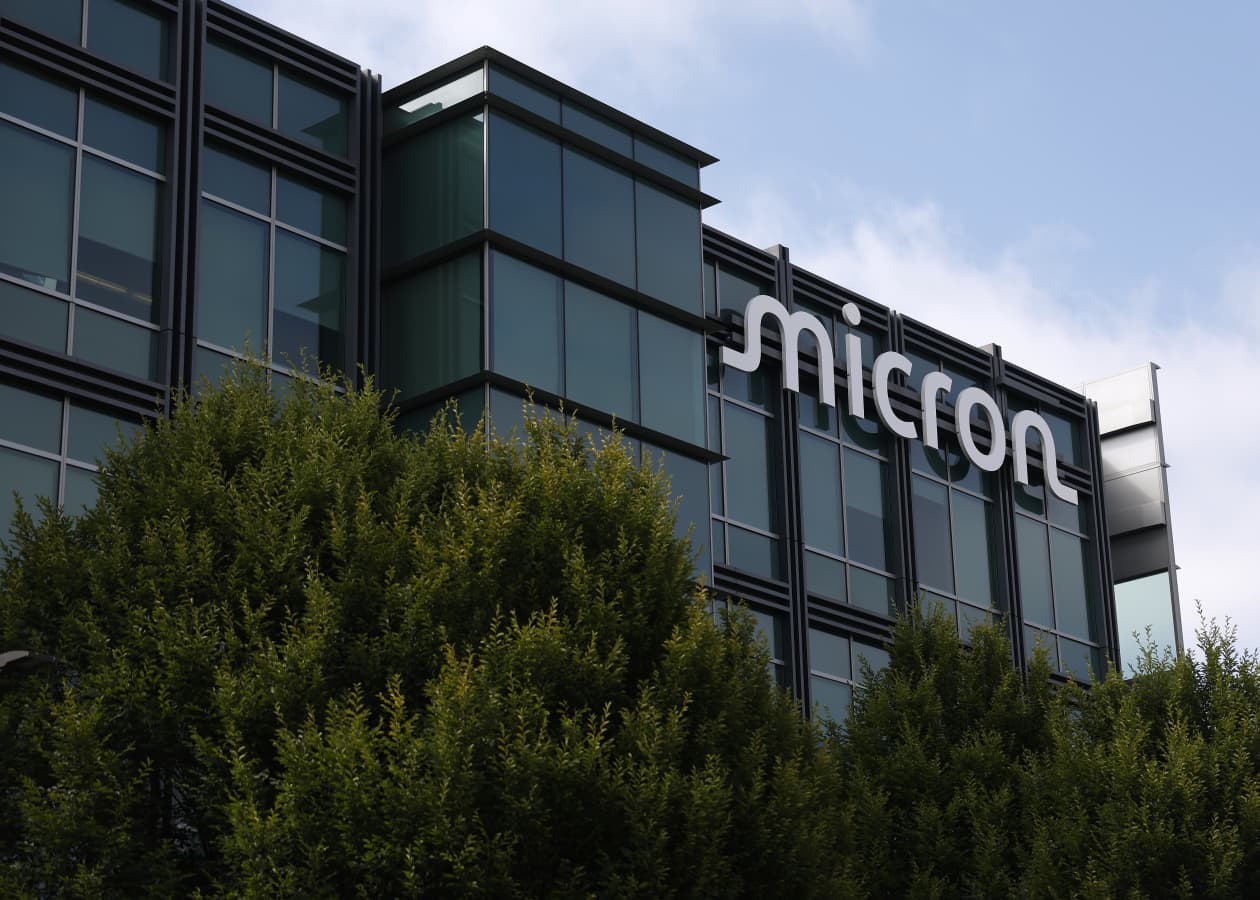
Micron shares jumped 7% after the company announced a $3B U.S. manufacturing investment plan to expand its semiconductor supply chain. The initiative includes $500M strategic financing to GlobalWafers for its advanced 300mm raw silicon wafer facility in Sherman, Texas, plus a 10-year supply agreement that provides Micron guaranteed long-term access to advanced wafer capacity. The move targets tightening supply for high-bandwidth memory (HBM) and DRAM, which are in demand for AI workloads.
The market should read this less as a one-day PR bump and more as a de-risking of a critical AI input. In a memory cycle, secured upstream capacity can matter as much as spot pricing because it reduces execution risk on high-margin HBM shipments and supports a higher terminal multiple for MU if investors believe supply is no longer the binding constraint.
The second-order winner may actually be the broader AI hardware chain: if Micron can lock wafer access, server OEMs and GPU vendors get fewer bottlenecks in AI cluster builds, which is incremental support for NVDA, AMD, and the AI-capex complex. The less obvious loser is any peer still exposed to generic commodity memory economics without a comparable supply-chain advantage; this widens the gap between AI-tied memory and the rest of the group.
Near term, the stock can give back some of the pop if investors focus on cash deployment rather than incremental earnings power. The key 1-3 month catalyst is whether management converts this into firmer HBM/DRAM margin guidance; absent that, the move risks being viewed as strategic but not immediately accretive.
Contrarian view: consensus may be underestimating how much geopolitical and customer-preference value attaches to U.S.-anchored supply. Over 6-18 months, that can lower MU's discount rate and improve deal access, but the thesis is falsified if memory pricing rolls over faster than expected or if the company cannot show that this spend improves ASPs, utilization, or gross margin trajectory.
AI-powered research, real-time alerts, and portfolio analytics for institutional investors.
Overall Sentiment
strongly positive
Sentiment Score
0.55
Ticker Sentiment
