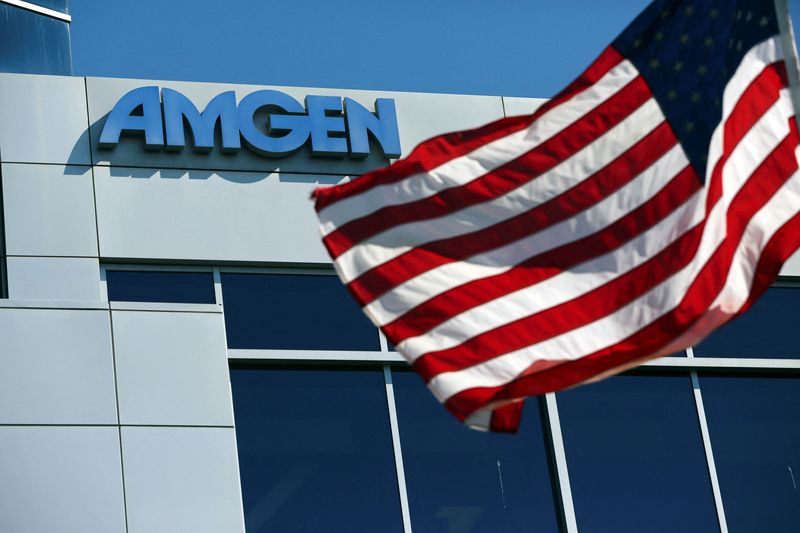
Federal judge blocks Colorado’s plan to cap Amgen’s Enbrel price, issuing a preliminary injunction against the $600-per-50mg weekly cap ($31,200/year) set to start Jan. 1, 2027. The court said Amgen would likely face significant and irreparable harm, potentially affecting future wholesaler/distributor contract negotiations and the company’s access to pricing flexibility for a patented drug with a list price >$100,000/year. Enbrel generated $2.23B in 2025 sales, making the ruling a material regulatory/legal overhang for AMGN in the U.S. branded-drug pricing debate.
This is less about the single drug than about the pricing precedent. The ruling lowers the probability that state-level affordability boards can directly impair patented-drug economics, which should modestly de-risk AMGN’s multiple and, more importantly, reduce the litigation discount investors apply to other mature branded franchises facing similar state-level pressure. The market impact is likely bigger in sentiment than in near-term EPS, because the threatened cash-flow hit was never the core issue; the core issue was whether states could create a patchwork pricing regime that bleeds into wholesaler negotiations and reimbursement behavior.
Second-order, the decision may shift political pressure from list-price caps toward channels that are harder to underwrite ex ante: subsidies, formulary leverage, and payer negotiation. That is bad for gross-to-net visibility across large-cap pharma, but it is a slower and more diffuse drag than an outright cap, so the immediate winner is AMGN relative to the sector, while the longer-run beneficiaries could be biosimilar and specialty competitors if payers use this as cover to intensify substitution elsewhere. For AMGN, the legal overhang matters more for sentiment around terminal multiples than for this year’s revenue bridge.
The contrarian risk is that investors may overread the injunction as a durable win. This is a preliminary order, not a permanent resolution, and any appeal or legislative workaround could reintroduce uncertainty over 1-3 months; the stock could give back gains if the market decides the issue simply migrated from pricing law to access policy. The thesis is falsified if Colorado or other states move quickly to alternative enforcement channels, or if management signals no change in its willingness to supply the product under similar threats elsewhere.
AI-powered research, real-time alerts, and portfolio analytics for institutional investors.
Request DemoOverall Sentiment
moderately negative
Sentiment Score
-0.35
Ticker Sentiment
