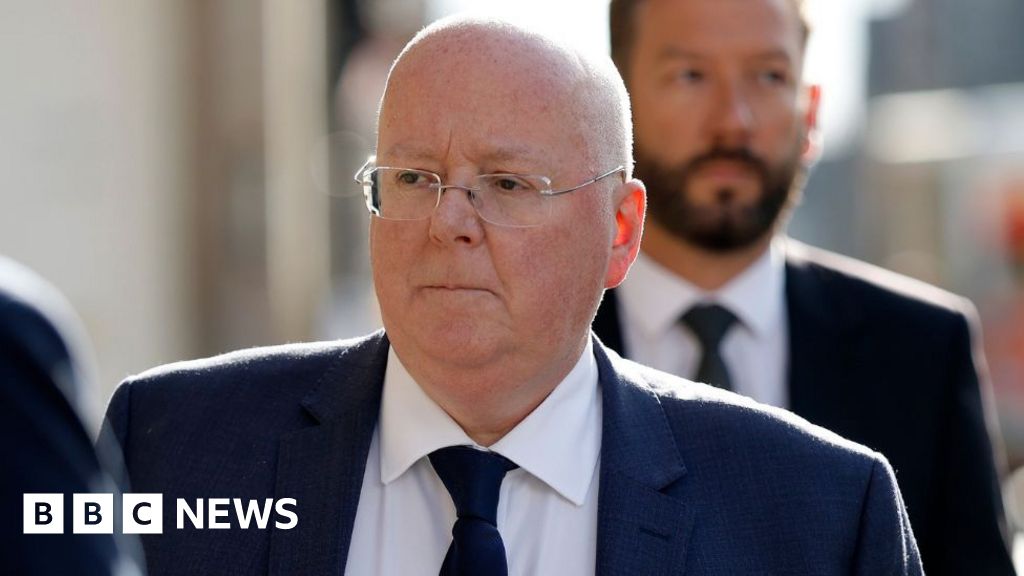
The article centers on a £400,000-plus embezzlement case involving former SNP chief executive Peter Murrell and renewed calls for a joint parliamentary inquiry into party finances and government oversight. It highlights allegations of weak governance, concerns about the relationship between prosecutors and politicians, and scrutiny of Nicola Sturgeon and John Swinney over transparency. The story is politically significant but is unlikely to move markets directly.
This is less a direct market event than a governance stress test for Scottish institutions, and the second-order effect is reputational rather than economic. The more the story shifts from individual misconduct to process failures, the higher the odds of a protracted institutional inquiry cycle that keeps the SNP in defensive mode for months, not days. That tends to depress organizational bandwidth, fundraising efficiency, and candidate recruitment ahead of the next election cycle, while benefiting opposition parties that can frame themselves as the cleaner-operators trade.
The bigger marketable angle is not Scotland-specific policy, but the broader UK governance premium. Any credible joint inquiry would force attention onto the boundary between party, state, and prosecution service, which raises the perceived cost of weak controls across small-cap political-adjacent organizations and donor-funded groups. If this metastasizes into a wider debate on party finance oversight, expect a modest bid for compliance, audit, and governance names that sell into public sector or regulated customers, where control failures are easier to monetize in procurement decisions.
The contrarian view is that the headline risk may be overextended relative to economic impact: there is no obvious direct exposure to listed UK corporates, and Scottish political churn rarely transmits into earnings unless it changes fiscal policy or public spending. The actual catalyst set is procedural—whether a joint inquiry is approved, whether it widens to touch the law-officer/prosecution relationship, and whether the SNP leadership is forced into concessions. Absent that, this remains a high-noise, low-beta event that fades once the legal process and parliamentary theater diverge.
AI-powered research, real-time alerts, and portfolio analytics for institutional investors.
Request TrialOverall Sentiment
mildly negative
Sentiment Score
-0.35
