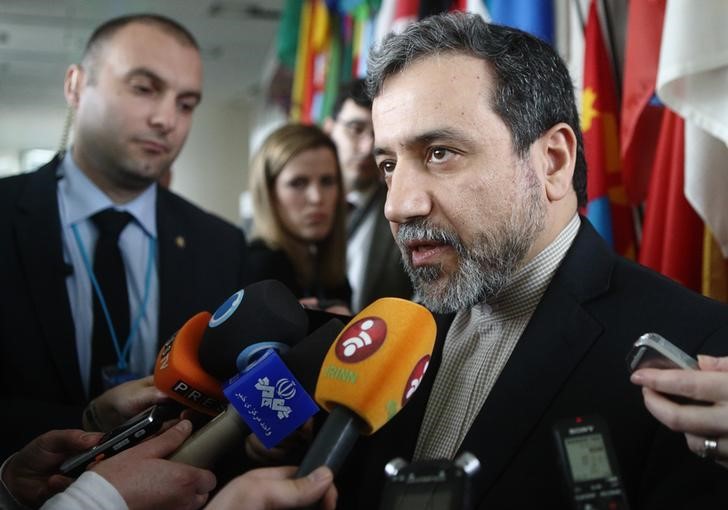
Iranian foreign minister Abbas Araghchi said he will travel to Pakistan, fueling hopes for renewed diplomacy even though he did not confirm peace talks. The article also notes President Trump’s three-week extension of the Israel-Lebanon ceasefire and ongoing uncertainty around the Strait of Hormuz, with Brent crude up 0.6% to $105.71 a barrel and WTI down 0.9% to $95.03. The geopolitical backdrop keeps oil markets volatile and raises inflation and global growth risks.
The market is likely overestimating the durability of any near-term de-escalation signal. When a geopolitically sensitive chokepoint can swing oil by several dollars on diplomatic headlines alone, the bigger tradable variable is not the peace process itself but the probability distribution around supply interruptions over the next 2-6 weeks. That keeps the energy complex bid and favors names with embedded optionality to a sustained backwardation regime rather than pure beta to spot.
Second-order effects are more interesting than the headline oil move. If crude stays above the low-$100s for even a few weeks, refiners and petrochemical inputs outside the Gulf become margin-vulnerable, while LNG and North American integrateds gain relative insulation. Conversely, elevated freight insurance, tanker rerouting, and inventory hoarding can tighten physical markets faster than futures imply, which often benefits midstream and storage-linked cash flows before it shows up in producer earnings.
The contrarian read is that traders may be too focused on a binary ceasefire outcome and underweighting regime risk: a partial truce can actually prolong uncertainty, keeping shipping risk premiums elevated without fully restoring flows. That is a worse outcome for airlines, consumer discretionary, and industrials than a quick resolution, because input-cost volatility suppresses planning and hedging efficiency. The most likely mistake is assuming any headline diplomacy immediately normalizes energy markets; historically, these situations mean-revert in headlines but not in physical logistics.
Catalyst-wise, the key window is days to a few weeks for headline volatility, but the inflation/growth second-order effect plays out over 1-3 months. If crude fails to break below the recent resistance quickly, inflation breakevens and rate expectations can reprice higher, tightening financial conditions even without a broader selloff. That argues for positioning in assets that benefit from persistent uncertainty, not one-off spikes.
AI-powered research, real-time alerts, and portfolio analytics for institutional investors.
Request TrialOverall Sentiment
mildly positive
Sentiment Score
0.15
