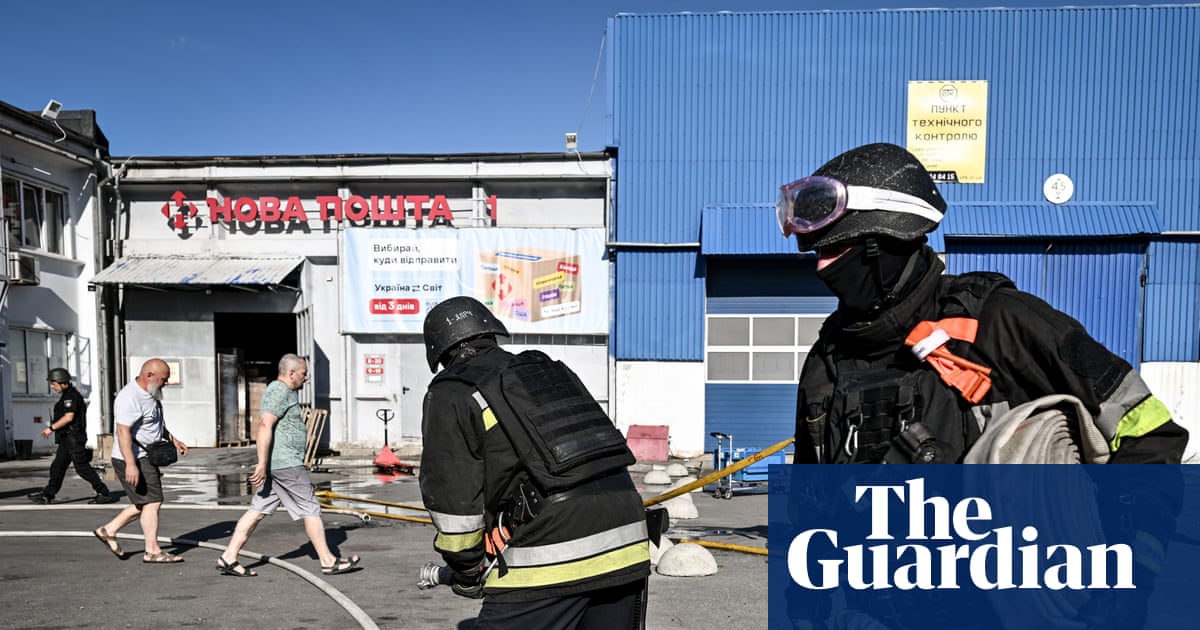
Ukrainian drones reportedly struck Russia’s Tyumen oil refinery more than 2,000 km from the border, with Zelenskiy saying new Ukrainian drones can travel over 3,000 km and were successfully deployed. Additional strikes hit an oil terminal in occupied Crimea and other Russian-held targets, while Russian attacks killed at least 12 people across Ukraine, including five in Zaporizhzhia and three in Dnipropetrovsk and Poltava. The escalation raises geopolitical risk for energy infrastructure and could keep crude and refined-product markets on edge.
The immediate market signal is not the refinery fire itself but the proof that Russia’s inland energy infrastructure is now reachable at operational scale. That shifts the risk premium from episodic border-region disruption to a broader, persistent discount on Russian crude and refined-product logistics, because inland assets were previously viewed as comparatively safe and therefore underinsured in strategic terms. The second-order effect is on domestic Russian fuel balances: even modest refinery downtime can force product rerouting, raise internal freight costs, and tighten exportable diesel supply, which matters more for global middle distillates than for headline Brent.
This should also be read as an escalation in the offense-defense asymmetry. If Ukraine can credibly threaten deep-rear assets, Russia must either disperse air defenses, divert interceptors, or accept higher attrition around core industrial nodes; all three outcomes raise the marginal cost of keeping refining capacity online. Over a multi-month horizon, that argues for a higher floor in crack spreads versus outright crude, because refined-product disruptions are harder to replace quickly than upstream barrels.
The bigger contrarian point is that the market may underprice the duration of the disruption while overpricing the immediacy of a crude spike. Siberian refining is not systemically large enough to trigger a supply shock on its own, but repeated strikes could create a slow-burn tightening in diesel and naphtha that supports refiners outside the conflict zone more than producers. The key catalyst to monitor is whether these strikes become a weekly cadence; if so, the trade is less about one-day oil beta and more about persistent product scarcity and logistics stress.
On the defense side, the story is supportive for companies exposed to long-range drones, ISR, electronic warfare, and counter-UAS systems. The demonstrated range expansion is a signal that the procurement cycle for cheaper autonomous strike platforms is still early, which should benefit suppliers with scalable software, guidance, and sensing stacks rather than traditional prime contractors alone.
AI-powered research, real-time alerts, and portfolio analytics for institutional investors.
Request DemoOverall Sentiment
strongly negative
Sentiment Score
-0.70
