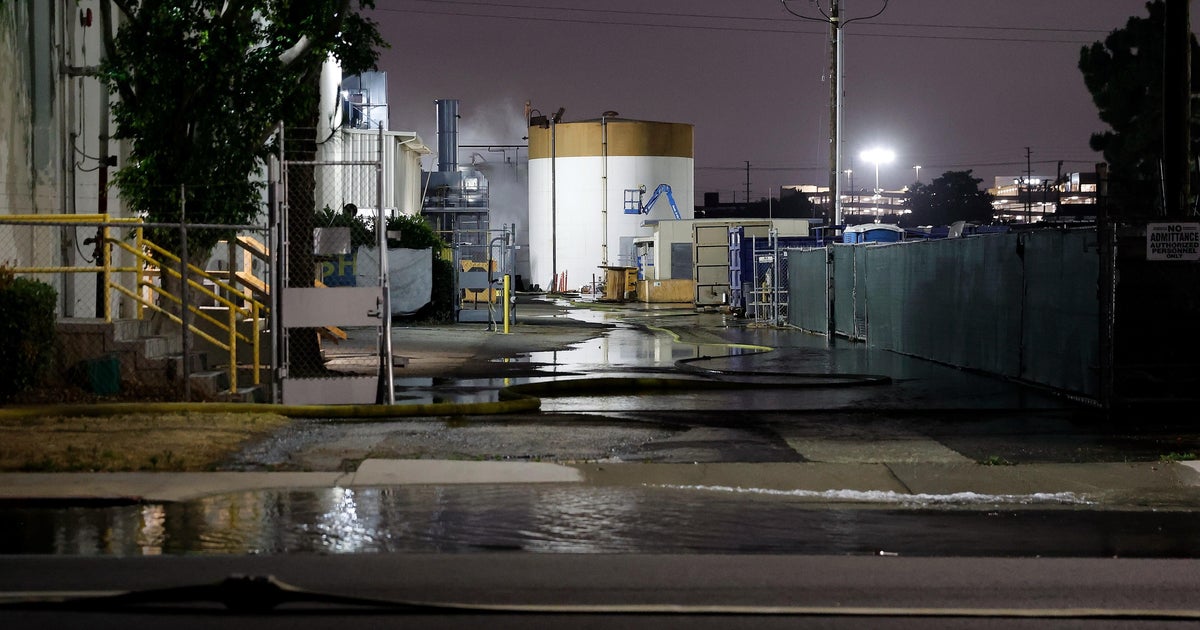
Orange County officials said the BLEVE/explosion threat at the GKN Aerospace chemical tank in Garden Grove has been eliminated after an overnight pressure-release operation, with tank temperature falling from 100 degrees to 93 degrees. However, about 50,000 residents remain under mandatory evacuation orders and a toxic leak risk still exists, keeping the incident active. The Orange County District Attorney has opened an investigation into GKN Aerospace, and state/federal emergency resources continue to support the response.
The market implication is not the incident itself, but the sequencing risk around resumption: once the catastrophic tail is removed, the next trade is usually a lagged normalization in local industrial operations, not an immediate full reopen. That creates a short window where insurers, remediation contractors, environmental testing firms, and specialized hazmat/logistics providers can benefit even as the original operator faces direct cost, downtime, and legal overhang. The bigger second-order effect is reputational: a chemical-storage failure in a defense/aerospace-adjacent campus raises scrutiny on facility-level process safety across the sector, which can slow permitting and increase inspection intensity for peers in California and other high-regulation states.
The legal path looks more important than the physical incident for public equities. A state emergency plus a DA investigation materially increases the odds of discovery-heavy litigation, regulatory penalties, and potentially higher insurance attachment points, which can persist for quarters even if operations normalize in days. The key catalyst is whether the site can prove containment integrity and reopen without a confirmed release; if any leak is verified, the story shifts from one-off operational failure to broader compliance deficiency, extending the liability arc and likely pulling in landlords, contractors, and insurers.
Consensus may be underestimating how quickly this becomes a cost inflation story rather than a pure headline risk. If the facility or adjacent businesses are forced into more stringent tank-monitoring, third-party certification, and redundant containment systems, that is a structural capex uplift for a broader industrial base. The contrarian view is that the incident may ultimately be bullish for select industrial service providers and testing firms because it accelerates spend that would otherwise be deferred, while the direct equity loser is the operator and any private-equity-owned industrials with similar legacy assets and weak disclosure.
AI-powered research, real-time alerts, and portfolio analytics for institutional investors.
Request DemoOverall Sentiment
moderately negative
Sentiment Score
-0.35
Ticker Sentiment
