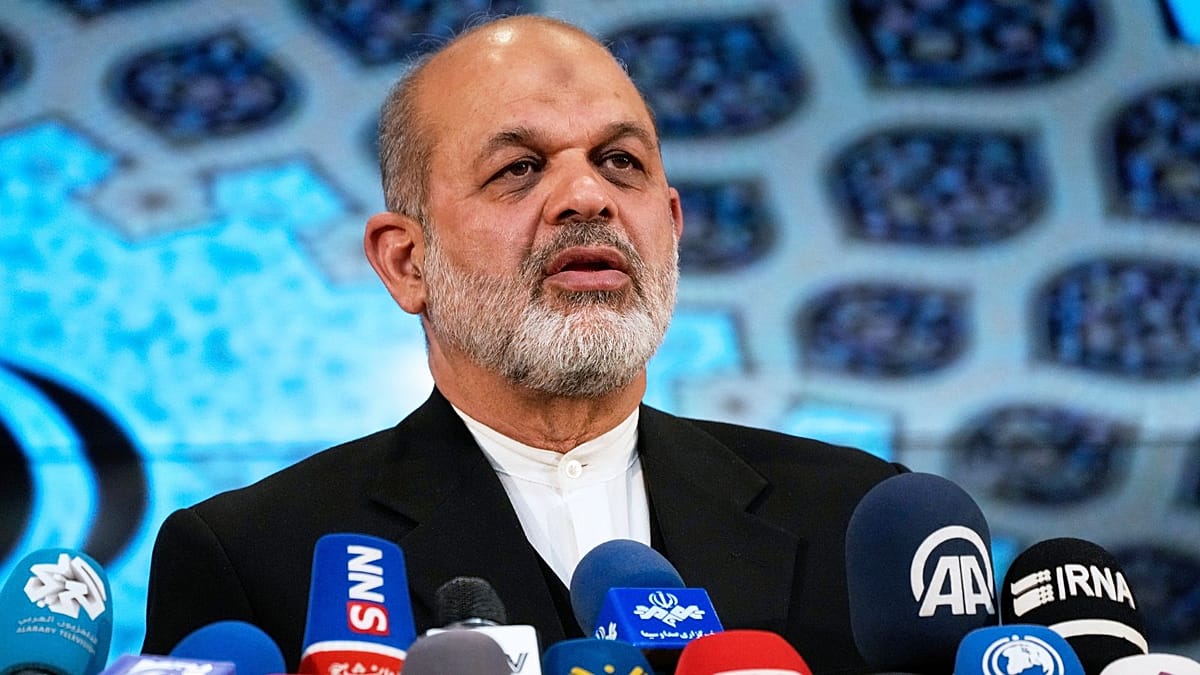
Ahmad Vahidi has emerged as a central figure in Iran's military response and negotiating strategy, with reports that he may be the main back-channel contact for regional mediators. The article highlights Tehran's hardline stance on the Strait of Hormuz and enriched uranium, keeping geopolitical and energy-market risk elevated. The piece also revisits Vahidi's long-standing link to the 1994 Buenos Aires bombing and his role in Iran's domestic security crackdown.
The market implication is not the headline geopolitical noise; it is the increasing centralization of Iranian decision-making under IRGC hardliners with a tolerance for asymmetric escalation. That raises the odds of policy being driven by deterrence signaling rather than economic optimization, which is bearish for regional risk premia, tanker routing, and any asset exposed to a sustained Hormuz friction premium. The key second-order effect is that even without kinetic disruption, a higher baseline of perceived supply risk can keep prompt crude, refined products, and shipping insurance tighter for longer than consensus expects.
The more interesting tradeable angle is that this framework makes de-escalation less likely to be fast or clean. If the same network is controlling both military response and negotiation posture, talks can become a tool for tactical delay rather than compromise, which means headlines can periodically compress spreads without removing tail risk. That favors owning convexity in energy and defense over linear beta, because the downside if negotiations fail is abrupt while the upside from temporary calm is usually only a partial retracement.
For equities, the beneficiaries are not just integrated majors; it should also support US defense, missile defense, cyber, and selective midstream names with exposure to export flows and Gulf routing. The losers are airlines, chemical margin names, import-dependent industrials, and any consumer discretionary basket sensitive to a renewed energy tax. A less obvious effect is on sanctions-compliance and maritime-security service providers, where recurring incident risk can translate into multi-quarter demand without requiring an outright supply shock.
The consensus may be underpricing how much of this is already embedded in crude versus underpricing how much is not embedded in shipping and defense. If Hormuz remains open, oil may mean-revert quickly, but the repricing in tanker rates, war-risk insurance, and defense procurement can persist for months. Conversely, any verified back-channel progress that credibly reduces the probability of miscalculation is the main reversal catalyst, but absent that, this is a stay-long-volatility regime rather than a clean directional oil call.
AI-powered research, real-time alerts, and portfolio analytics for institutional investors.
Request DemoOverall Sentiment
strongly negative
Sentiment Score
-0.55
