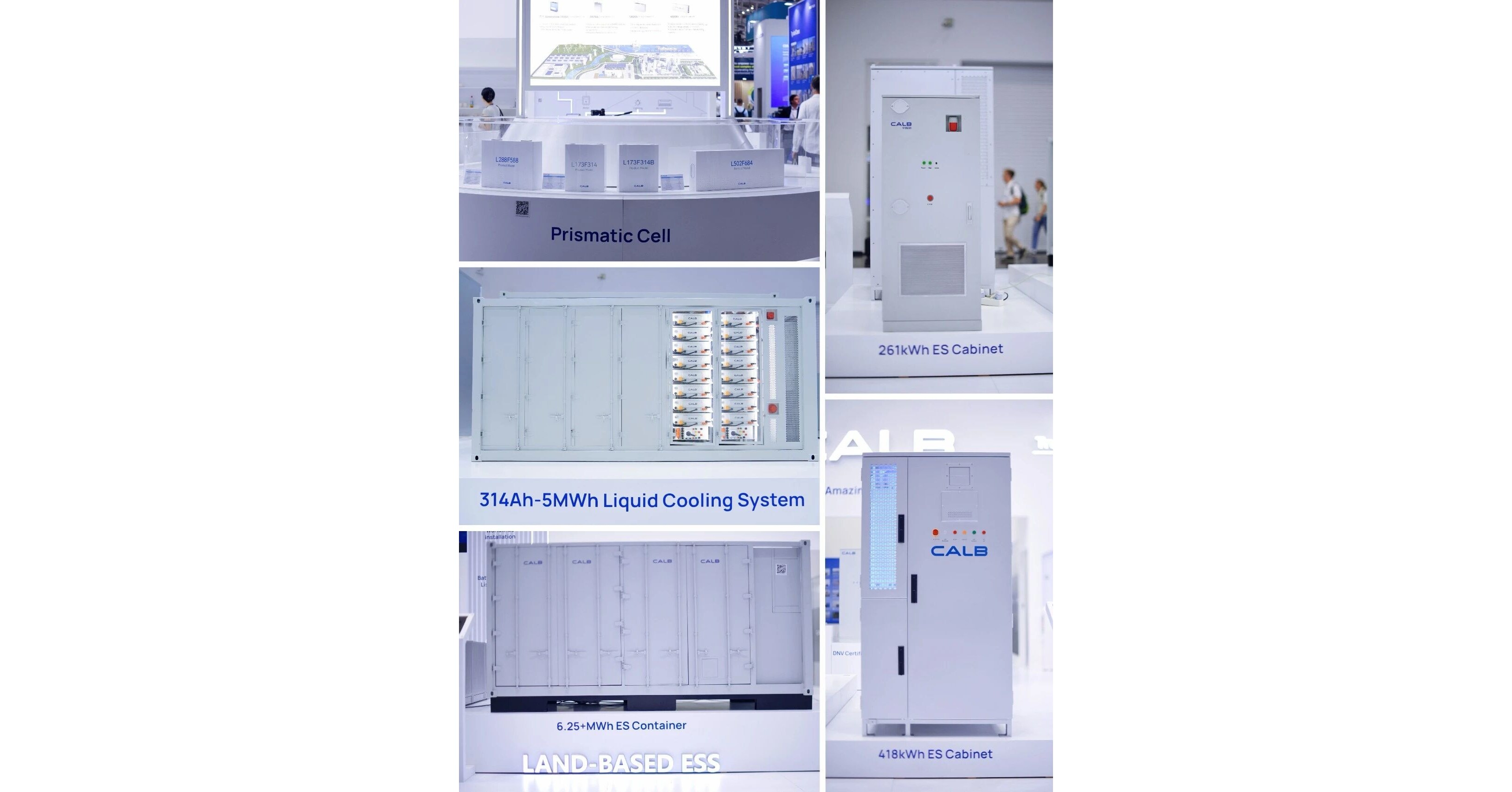
CALB a présenté à Intersolar Europe 2026 une nouvelle gamme de solutions de stockage d’énergie longue durée, incluant une cellule empilée 661 Ah (jusqu’à 15 000 cycles, dégradation nulle sur 3 ans, durée de vie calendaire jusqu’à 25 ans) et un conteneur refroidi par liquide de 6,25 MWh. Le conteneur augmente la capacité énergétique d’environ 25% tout en réduisant d’environ 40% le nombre de composants vs la génération précédente, et la société met aussi en avant des systèmes modulaires 6,9 MWh et >10 MWh ainsi que des armoires C&I de 261 kWh et 418 kWh. L’annonce est surtout produit/innovation et vise à réduire le LCOS tout en améliorant sécurité, efficacité et rentabilité sur le cycle de vie.
This is less a revenue event than a pricing signal: higher-density, lower-component-count storage hardware keeps the industry on a deflationary curve. The first-order winner is project economics—lower LCOS expands the addressable market for utility-scale and C&I storage—but the second-order loser is anyone relying on premium hardware margins to defend returns. That matters because storage is increasingly bought on bankability and lifetime economics, so incremental cost reductions tend to get competed away in bids rather than preserved in supplier margins.
For listed peers, the pressure falls on system integrators and OEMs exposed to commoditization, especially where product differentiation is mostly packaging and controls rather than cell chemistry. Chinese suppliers can undercut on cost, but their European penetration still depends on certification, warranty credibility, and procurement politics; that creates a split market where large developers may welcome the economics while regulated buyers and critical-infrastructure projects remain cautious. In that setup, Western names with software, financing, or grid-integration revenue are relatively better insulated than pure-hardware players.
The contrarian point is that the market may overrate the near-term competitive threat from a trade-show launch. The missing data is bankable order flow in Europe, not product specs: no evidence here yet of large contracted volumes, service revenue, or margin-accretive share gains. Over 1-3 months, the catalyst to watch is European tender pricing and backlog commentary from storage vendors; over 6-18 months, the real risk is a broader ASP reset that compresses margins across the sector while benefiting developers and utilities with large storage pipelines.
AI-powered research, real-time alerts, and portfolio analytics for institutional investors.
Request DemoOverall Sentiment
mildly positive
Sentiment Score
0.15
