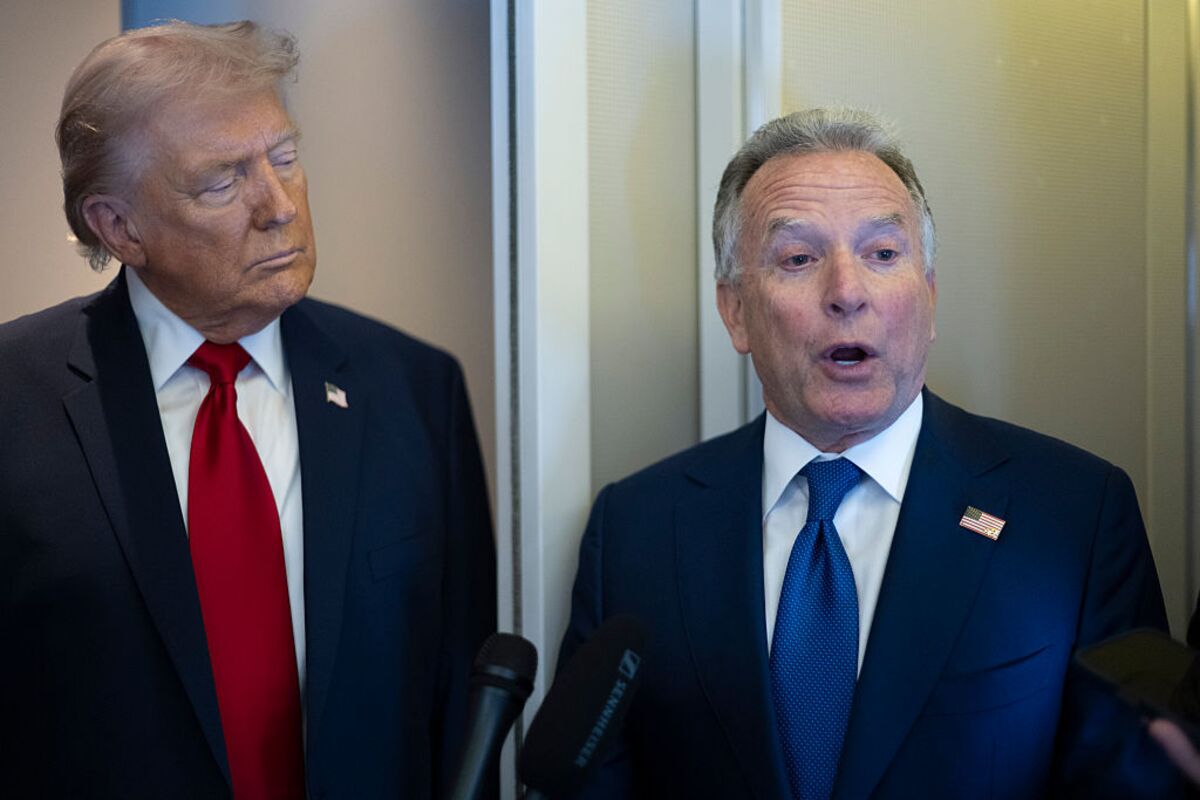
President Donald Trump said special envoy Steve Witkoff is traveling to Pakistan on Tuesday for talks with Iran, with negotiations potentially extending into Wednesday. The report signals an active diplomatic effort on a geopolitical issue, but it provides no concrete policy outcome, market figures, or immediate economic implications.
This is less about immediate market pricing than about the signaling value of a direct channel opening ahead of a broader escalation cycle. A Pakistan venue matters because it lowers visibility and creates ambiguity around intermediaries, which can be useful when both sides want optionality but not commitment; that tends to compress headline risk for a few sessions while keeping tail risk elevated. The near-term market read is that energy vol should stay bid even if spot crude does not move much, because the real asset here is the probability distribution of outcomes, not the first headline.
The second-order winner is the logistics and defense complex, not the obvious oil-beta names. If talks reduce the odds of an immediate flare-up, that is bearish for air-defense, missile-interceptor, and shipping-freight dislocation trades that have been gaining on geopolitical convexity; if talks fail, those same names re-rate quickly because supply-chain insurance demand rises before physical disruptions show up. Expect shipping insurers, regional carriers, and Gulf-exposed industrials to remain the most sensitive over a 1-3 week horizon.
The contrarian mistake is to treat diplomacy as de-escalation. In these setups, negotiations often extend the timeline while widening the outcome set; markets may underprice the chance that the process itself becomes a cover for tactical strikes or proxy escalation over the next 30-90 days. The right framework is not “peace vs war,” but whether the talks reduce the probability of a hard stop in flows enough to justify selling volatility too early.
If this is substantive, the first reversal signal will be not the meeting itself but the absence of follow-on scheduling or any broadened participation within 48-72 hours. A quick failure would likely be followed by a jump in regional risk premia and a rotation into energy, defense, and dollar strength; a successful de-risking would flatten that move but probably only temporarily, because structural distrust remains high.
AI-powered research, real-time alerts, and portfolio analytics for institutional investors.
Request DemoOverall Sentiment
neutral
Sentiment Score
0.00
