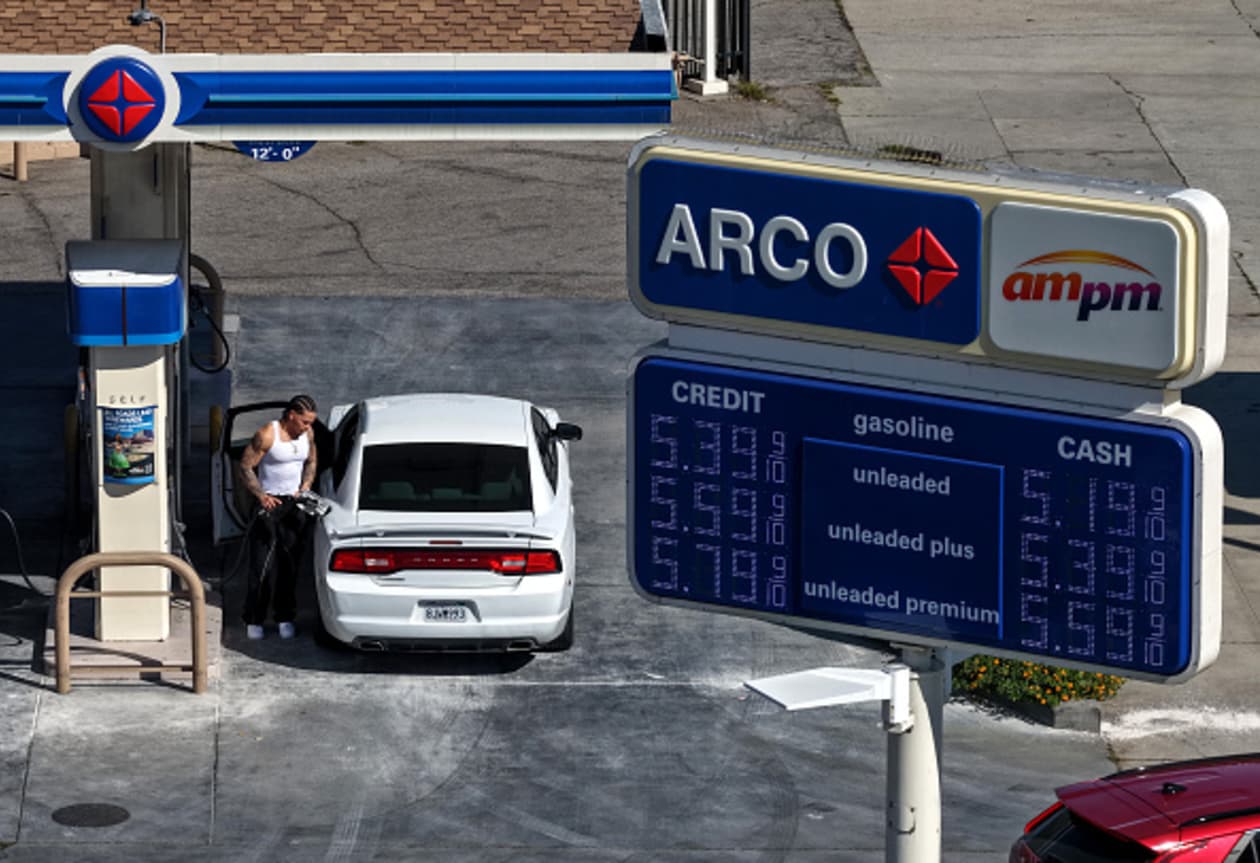
Higher U.S. gas prices, now averaging more than $4 a gallon, are prompting more consumers to consider electric vehicles. The article argues that fuel savings are only one part of the decision, implying broader ownership-cost considerations rather than a clear buy signal for EVs. The catalyst is geopolitical, tied to the U.S. and Israel’s war with Iran, but the piece is mainly consumer guidance rather than market-moving news.
The first-order read is that higher gasoline prices widen the EV consideration set, but the more interesting effect is on the margin: price-sensitive households will not buy an EV outright, they will start by shopping used EVs, lower-trim hybrids, and lease-heavy deals. That means the near-term beneficiaries are not necessarily the EV OEMs with the strongest brand, but the players with the best inventory finance, residual-value support, and dealer throughput. In other words, a pump-driven spike in EV interest may show up first in cross-shopping behavior rather than in clean unit acceleration.
The second-order risk is that this is a sentiment catalyst, not a durable demand regime shift. Gas at $4 can nudge consumers over a psychological threshold for 1-3 months, but unless financing conditions improve, the monthly payment gap still dominates total cost of ownership. That creates a setup where EV search traffic and showroom traffic can rise quickly while actual conversion rates disappoint, which would be especially punitive for OEMs and retailers carrying elevated EV inventory or offering aggressive subsidies.
A contrarian angle: the market may be overestimating the bullishness of gasoline spikes for pure EV equities and underestimating the benefit to hybrids and plug-in hybrids. Consumers rarely leap from ICE to full BEV when uncertainty rises; they migrate to lower-risk efficiency upgrades. If that pattern holds, suppliers and OEMs with strong hybrid mixes should outperform the high-burn pure-play EV names, while charging-network economics remain largely unchanged in the near term because utilization needs sustained fleet penetration, not just consumer curiosity.
Geopolitically, this is a reminder that energy-price shocks can create a short-lived demand impulse for electrification without fixing the structural affordability problem. If gas retraces, the trade likely reverses fast; if gas stays elevated for a full quarter, OEM commentary will start to reflect a broader demand shift, but the cleanest monetization is still via relative value rather than outright EV beta.
AI-powered research, real-time alerts, and portfolio analytics for institutional investors.
Request DemoOverall Sentiment
neutral
Sentiment Score
0.05
