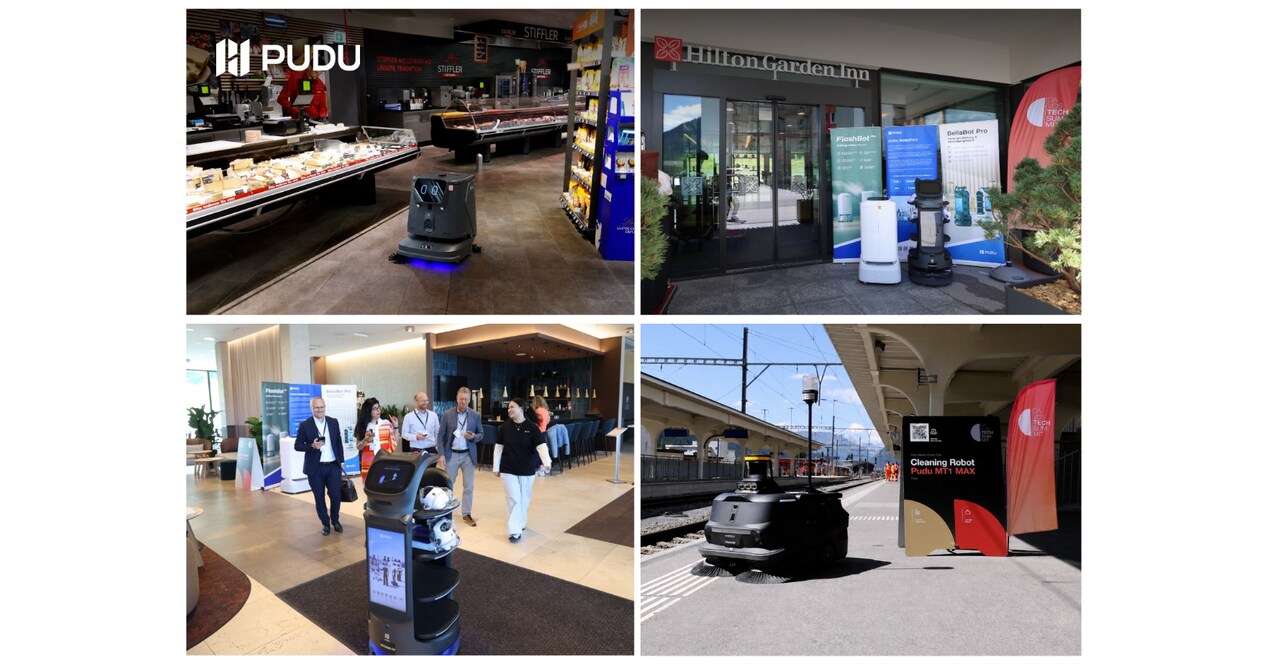
Pudu Robotics showcased Physical AI/embodied AI deployments at Davos Tech Summit 2026 via its Robot City initiative, deploying four robots across retail (SPAR), hospitality (Hilton) and a public station plaza. The company highlighted unified “one brain” embodied AI architecture (PuduFM foundation model and PuduAgent platform) and noted it has delivered 130,000+ robots across 85 countries as of 2026, with overseas markets at 80%+ of revenue. A June 2026 partnership with Robobee to deploy 200 CC1 cleaning robots at Swiss retailer Denner was cited as incremental commercialization progress.
This is less a single-name story than a signal that embodied AI is moving from pilot theater to procurement logic. The investable implication is that the margin pool shifts toward companies that can package perception, fleet orchestration, and serviceability into a repeatable solution; pure hardware exposure is the weak leg because unit economics eventually get competed away. The real second-order winner is the ecosystem around deployment complexity — integration, software, sensors, and maintenance — not the robot OEMs making the loudest claims.
For operators in cleaning, hospitality, and retail, the near-term effect is defensive: robots cap labor inflation before they create meaningful labor elimination. That means the first beneficiaries are high-footfall, labor-constrained sites where overnight cleaning and back-of-house delivery have obvious payback; broad consumer-facing adoption will lag because integration with elevators, POS, and facilities systems is the true bottleneck. Publicly listed facility-service firms with exposure to outsourced cleaning look most vulnerable if chain-level rollouts accelerate.
The catalyst path is longer than the headline suggests: 1-3 months = sentiment and demo-driven follow-through; 6-18 months = proof of uptime, maintenance economics, and service revenue mix. Falsifiers are simple: if deployment cadence stays showroom-level, or if maintenance/service costs erase labor savings, the AI multiple should compress quickly. The contrarian miss is that the market may be over-indexing on foundation-model branding and underpricing the operational grind required to make robots cheaper than people on a fully loaded basis.
AI-powered research, real-time alerts, and portfolio analytics for institutional investors.
Request DemoOverall Sentiment
mildly positive
Sentiment Score
0.15
Ticker Sentiment
