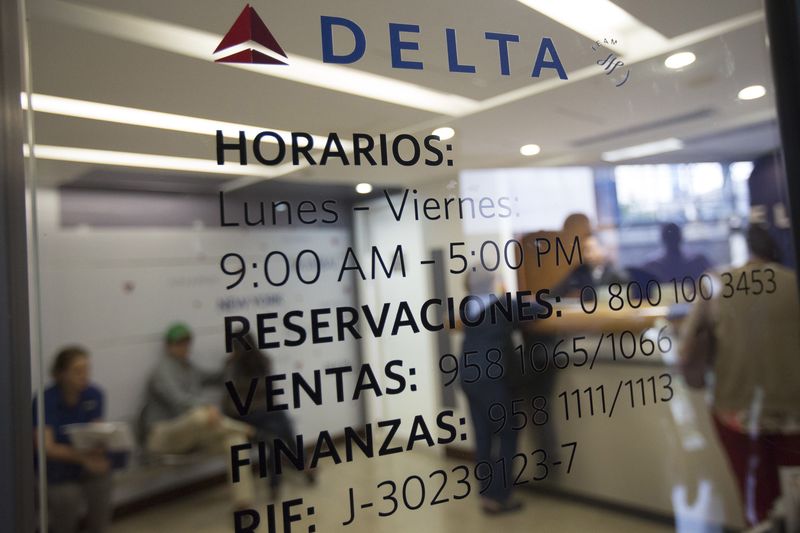
Airline stocks jumped 5% to 7.6% after reports that the U.S. and Iran are nearing a memorandum to end hostilities, which could reduce Strait of Hormuz disruption risk and lower jet fuel costs. United Airlines led the move at +7.6%, while American, Delta, and Southwest each rose about 7% and JetBlue gained 5%. Brent crude fell 8% to a two-week low on easing Middle East supply concerns.
This is a classic air-pocket relief trade, but the bigger signal is not lower fuel costs per se — it is the rapid compression of geopolitical risk premia across travel and transport. Airlines should outperform over days to weeks because the market tends to re-rate near-term margin sensitivity faster than it models any actual demand benefit; lower jet fuel is immediately visible in consensus revisions, while any improvement in passenger demand from lower ticket prices takes quarters to flow through. The strongest relative beneficiaries are the highest operating-leverage names with the most embedded fuel exposure and the most room for estimate revisions, while the weakest are carriers where balance-sheet concerns dilute the impact of cheaper fuel.
Second-order winners extend beyond airlines. Lower crude reduces working-capital pressure for freight, parcel, cruise, and consumer discretionary names with fuel-sensitive logistics, while also easing inflation optics for rate-sensitive sectors. The flip side is that energy equities may lag even if the move proves temporary, because the market will quickly discount a narrower range of outcomes for oil and reduce the implied tail risk of a supply shock in the Strait of Hormuz. If the agreement stalls or is perceived as tactical theater, the unwind could be violent: oil can retrace part of the selloff in a single session, and the airline beta trade would likely give back a meaningful share of its gains.
The consensus is probably overconfident on durability. A one-page memorandum is not a sanctions regime change, and the market is pricing a smooth de-escalation before the negotiation period even starts; that leaves asymmetry to the upside in crude if talks disappoint. For airlines, the best setup is not an outright chase after a 5-8% gap move, but a tactical structure that captures continued risk-on sentiment while defining downside if oil rebounds. The key question over the next 1-4 weeks is whether jet fuel futures confirm the move; if they do not, the equity rally should fade as a headline-driven squeeze rather than a fundamentals-driven re-rating.
AI-powered research, real-time alerts, and portfolio analytics for institutional investors.
Request DemoOverall Sentiment
moderately positive
Sentiment Score
0.45
Ticker Sentiment
