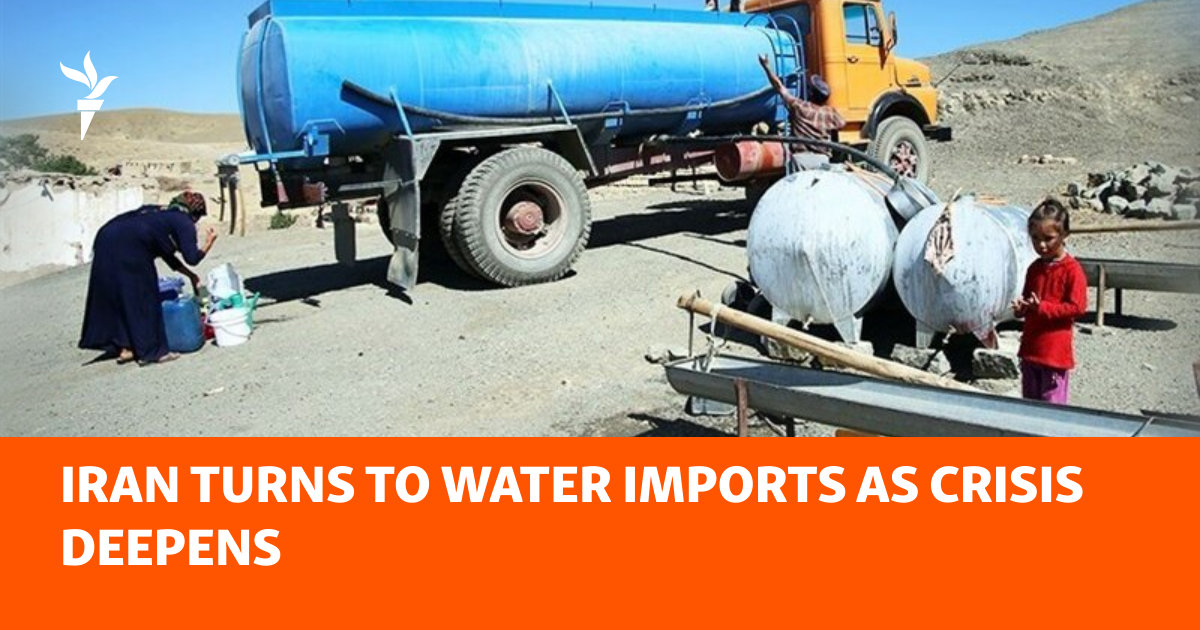
Facing the driest year in over half a century, Iran’s energy minister announced a policy pivot to formally import water and expand ‘virtual water’ via increased imports of water‑intensive goods to conserve domestic supplies. The plan acknowledges chronic over‑extraction, depleted reservoirs and aquifers, and the political power of vested water interests, and signals a retreat from long‑standing agricultural self‑sufficiency for a country of roughly 90 million people that experts say can sustainably feed only 40–50 million. Expect increased demand for agricultural and water‑intensive commodity imports, potential barter or trade deals with regional neighbors (notably Afghanistan and Armenia), and heightened political risk around resource allocation and infrastructure management.
Market structure: Iran’s pivot to water imports and expanded “virtual water” implies sustained upward pressure on global soft-commodity prices (wheat, rice, barley) and fertilizer demand; expect 5–20% incremental annual demand from Iran over 12–24 months if domestic production is cut by 30–50% as climatologists warn. Water-tech and desalination-capex beneficiaries (desalination, membranes, pumps) gain pricing power; legacy water-intensive agriculture and local irrigation-equipment suppliers in Iran/MENA will lose market share and revenue.
Risk assessment: Tail risks include sudden geopolitical escalation (sanctions, cross-border water conflicts) that could spike oil/insurance premia and disrupt trade lanes — low probability but high impact on EM credit spreads within 0–6 months. Hidden dependencies: increased food imports worsen Iran’s FX and current-account balances, raising inflation and political instability risk over 6–24 months; seasonal precipitation or a diplomatic water-sharing deal could rapidly reverse commodity moves.
Trade implications: Tactical plays include long desalination/water-technology (XYL, AWK, PNR, VEOEY) and fertilizer (NTR, MOS, CF) vs short domestically-exposed MENA ag names; expect 6–12 month alpha as capex and commodity flows reprice. Use option call spreads to buy upside with defined risk (6–9 month expiries) and overweight soft-commodity ETFs (WEAT, CORN, SOYB) for a 3–9 month horizon to capture supply reallocation.
Contrarian angles: Consensus underestimates fiscal/FX shock inside Iran — betting only on supply-side winners may be incomplete; a fast pivot to imports can be stalled by sanctions or logistics, creating short-term oversupply in some commodity corridors and compressing prices by 10–15% for 1–3 months. Historical parallels: 2008–09 food shock showed prices can overshoot then mean-revert; prefer staggered entries and event triggers (rainfall metrics, signed water agreements) rather than lump-sum buys.
AI-powered research, real-time alerts, and portfolio analytics for institutional investors.
Request DemoOverall Sentiment
moderately negative
Sentiment Score
-0.42
