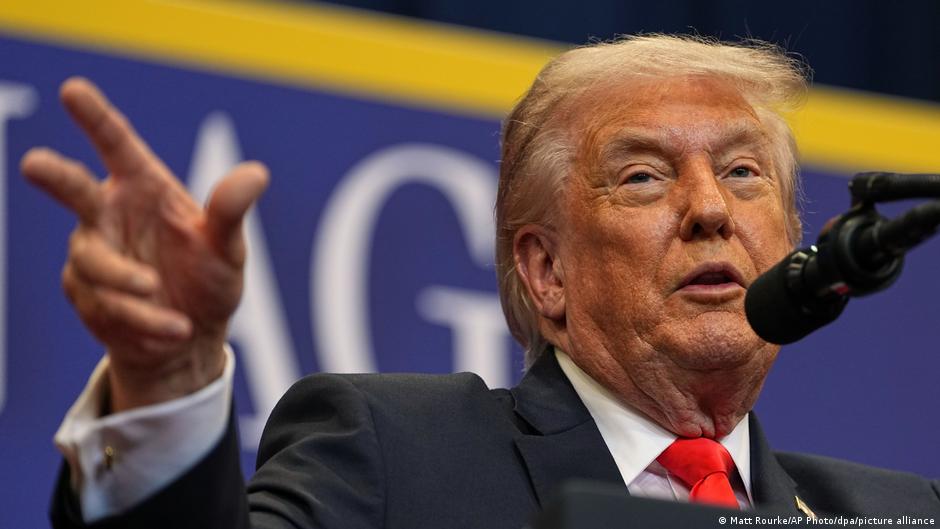
Trump said he is reviewing a new Iranian proposal to end the conflict, but signaled skepticism that it would be acceptable after rejecting an earlier offer. Iran said the decision on diplomacy versus renewed confrontation is now in Washington’s hands, while a senior Iranian military figure warned a new Iran-U.S. conflict is likely. Separately, Israel struck dozens of Hezbollah targets in southern Lebanon, with the war’s spillover continuing to pose elevated geopolitical and energy-market risk.
The market implication is less about the headline diplomacy and more about the probability distribution of regime escalation staying fat-tailed. A renewed Israel/Iran/U.S. clash would immediately reprice defense, cyber, and energy-risk hedges, but the more durable second-order effect is on Gulf logistics and insurance: even without a Hormuz closure, incremental vessel war-risk premia can tighten refined-product flows and elevate diesel cracks before crude fully moves.
The key near-term readthrough is that Washington still has a negotiating window, but Tehran is simultaneously signaling optionality to continue confrontation. That combination usually depresses risk assets in the region without fully resolving the tail, which is the worst setup for short vol. Over days, expect headline-driven factor rotation into defense, cyber, and quality balance sheets; over months, the bigger beneficiary may be U.S. energy infrastructure and LNG exposure if Middle East risk keeps the market pricing a persistent supply premium.
The contrarian point: the consensus may be overestimating the immediacy of an oil shock and underestimating the political utility of “managed ambiguity.” Both sides have incentives to avoid a full trade-disrupting escalation, which can cap the realized move even while implied volatility stays bid. That creates a better opportunity in options and relative value than in outright directional crude longs unless we see explicit shipping disruption or strikes on critical energy infrastructure.
Health-related instability inside Iran is a secondary but meaningful catalyst because it increases internal fragility and raises the odds that external confrontation is used for domestic consolidation. In that regime, the highest-convexity path is not a broad commodity rally but a sharp repricing of regional equities, defense names, and shipping insurance, with downside concentrated in airlines, EM transport, and Israel-linked consumer exposures.
AI-powered research, real-time alerts, and portfolio analytics for institutional investors.
Request DemoOverall Sentiment
strongly negative
Sentiment Score
-0.55
