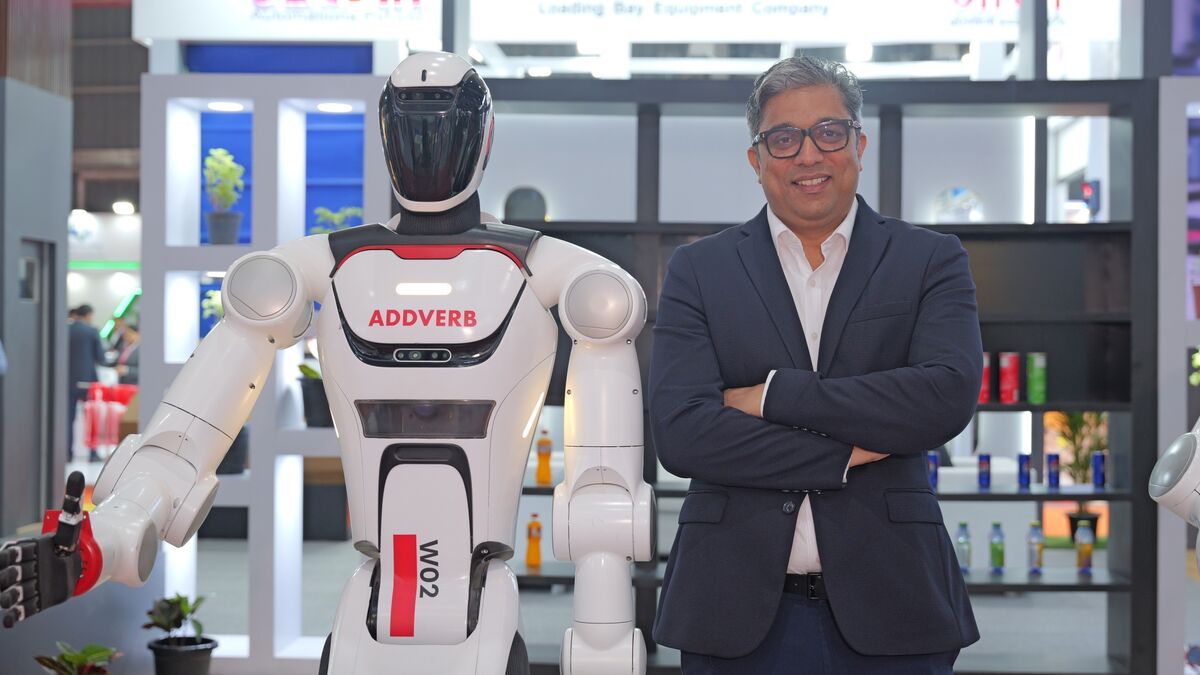
Addverb Technologies, an India-based robot startup backed by Asia Ambani, is seeking to raise more than $100 million to strengthen its position as the country’s leading robotics maker. The funding effort underscores continued investor interest in robotics and industrial automation in India as the company looks to compete more directly with Chinese players. The article is mainly a financing update with limited operational detail, so immediate market impact appears modest.
This is less a single-company financing story than an inflection point for India’s industrial automation stack. If a well-capitalized domestic robot platform can scale, the first-order beneficiaries are not the startup’s equity holders alone but the upstream ecosystem: integrators, sensor/servo suppliers, and contract manufacturers that can localize away from China-centric sourcing. The second-order effect is margin pressure on smaller automation vendors that rely on imported subassemblies, because a funded national champion can compress price points while locking in enterprise accounts with bundled service contracts.
The competitive dynamic matters more than the headline raise size. In India, automation adoption has been constrained less by technology availability than by capex discipline and fragmented service support; a credible local incumbent can shorten procurement cycles from months to weeks by offering financing, installation, and uptime guarantees. That creates a winner-take-most path in warehouse and factory robotics where switching costs rise sharply after the first deployment, especially if the company uses the capital to subsidize pilot projects and then harvest recurring software/service revenue.
The key risk is that “take on China” is a strategic narrative, not a near-term demand driver. Robotics margins can look attractive in demos but get crushed if the business is forced into hardware-heavy growth before utilization and aftermarket attach rates mature; expect a 12–24 month window before unit economics can be proven at scale. The biggest reversal catalysts are a slowdown in Indian industrial capex, aggressive pricing from Chinese incumbents, or a failure to localize enough of the bill of materials to protect gross margin from FX and import duties.
Contrarian view: the market may be underestimating how much of the value accrues to enablers rather than the startup itself. If capital is raised and deployment accelerates, the higher-probability trade is through adjacent industrial automation names, logistics operators, and electronics manufacturing beneficiaries that gain from broader robotics penetration without single-company execution risk.
AI-powered research, real-time alerts, and portfolio analytics for institutional investors.
Request DemoOverall Sentiment
neutral
Sentiment Score
0.15
