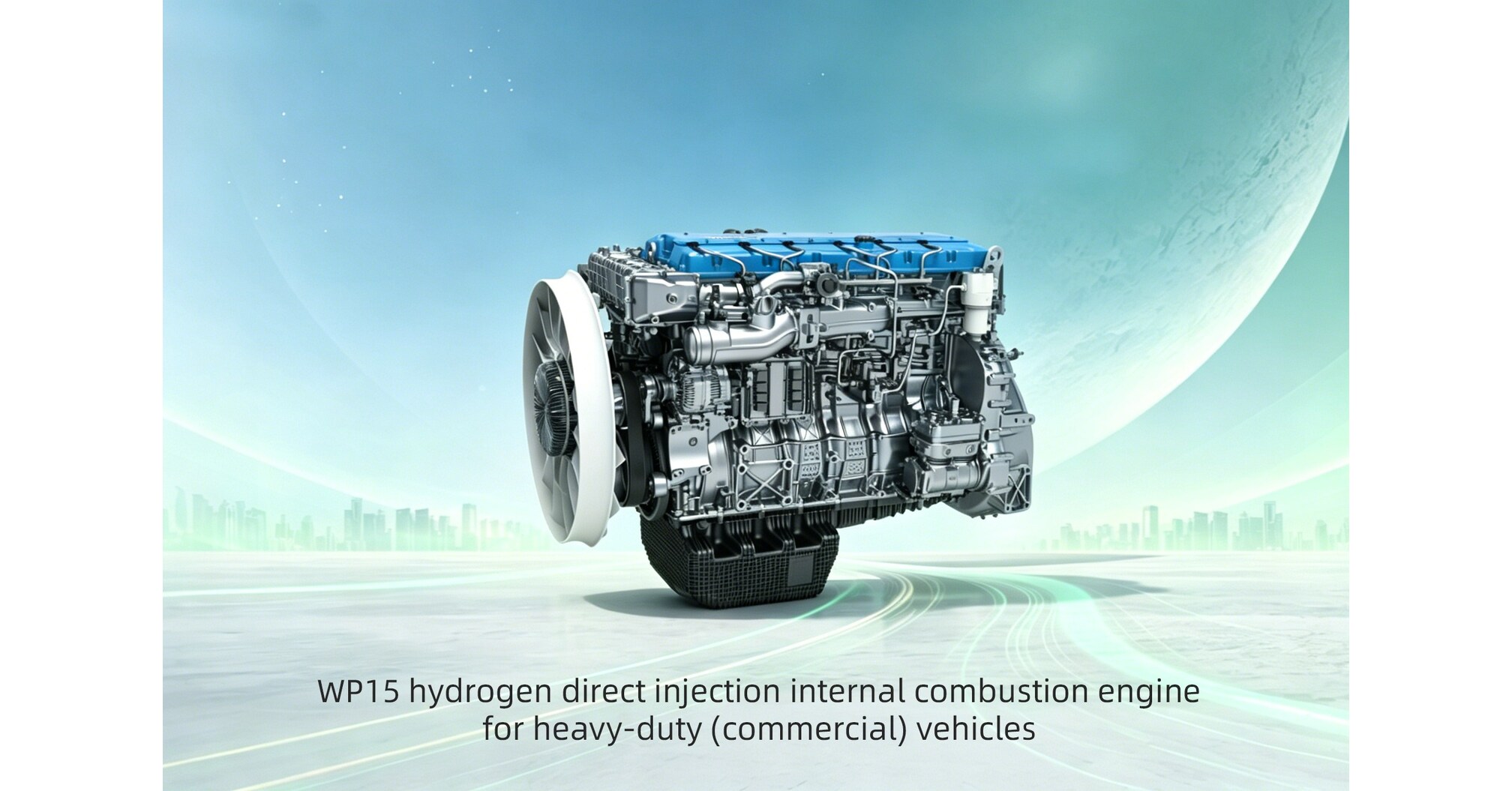
Weichai Power said its WP15 14.6L heavy-duty hydrogen direct-injection engine passed China VI full-cycle certification on July 3, making it the first such heavy-duty hydrogen ICE to comply with China VI standards in both China and globally. The engine targets up to 600 hp and 2,800 N•m with a reported 46.8% maximum brake thermal efficiency, and claims 90% component commonality with conventional engines to lower production/retrofit/maintenance costs. The company plans to accelerate mass production and support national hydrogen demonstration projects, positioning the certification as a meaningful step toward commercialization of zero-carbon heavy transport.
This is more useful as a signal on commercialization pathways than on immediate revenue. A China VI certification removes a key regulatory overhang, but it does not solve the real bottleneck: delivered hydrogen cost, fueling density, and fleet economics. In the near term, the market may overreact to the novelty, while the actual monetization is likely to come from retrofit/aftermarket pull-through and service revenue rather than a large standalone engine margin step-up.
The second-order winners are not just the OEM. Hydrogen producers, station builders, compressors, tank/storage suppliers, and captive-fleet operators in ports/mining/steel are the real beneficiaries if this architecture gains traction. The competitive pressure falls on diesel incumbents and, more subtly, on fuel-cell truck advocates: hydrogen ICE can win on capex, serviceability, and faster adoption even if it is less efficient, which could redirect subsidy dollars toward lower-complexity hardware.
The key risk is that this is a press-release-to-order-book gap story. Over the next 1-3 months, watch for named fleet pilots, corridor coverage, and disclosed hydrogen supply agreements; without those, this is just a technology milestone. Over 6-18 months, the thesis breaks if hydrogen fuel remains uneconomic versus diesel-plus-carbon-cost or if policy shifts toward lifecycle emissions accounting that penalizes combustion-based solutions. The contrarian read is that this may be a better bridge technology than the market expects, especially in China’s heavy-duty niches where uptime and retrofit economics matter more than peak efficiency.
AI-powered research, real-time alerts, and portfolio analytics for institutional investors.
Request DemoOverall Sentiment
moderately positive
Sentiment Score
0.35
Ticker Sentiment
