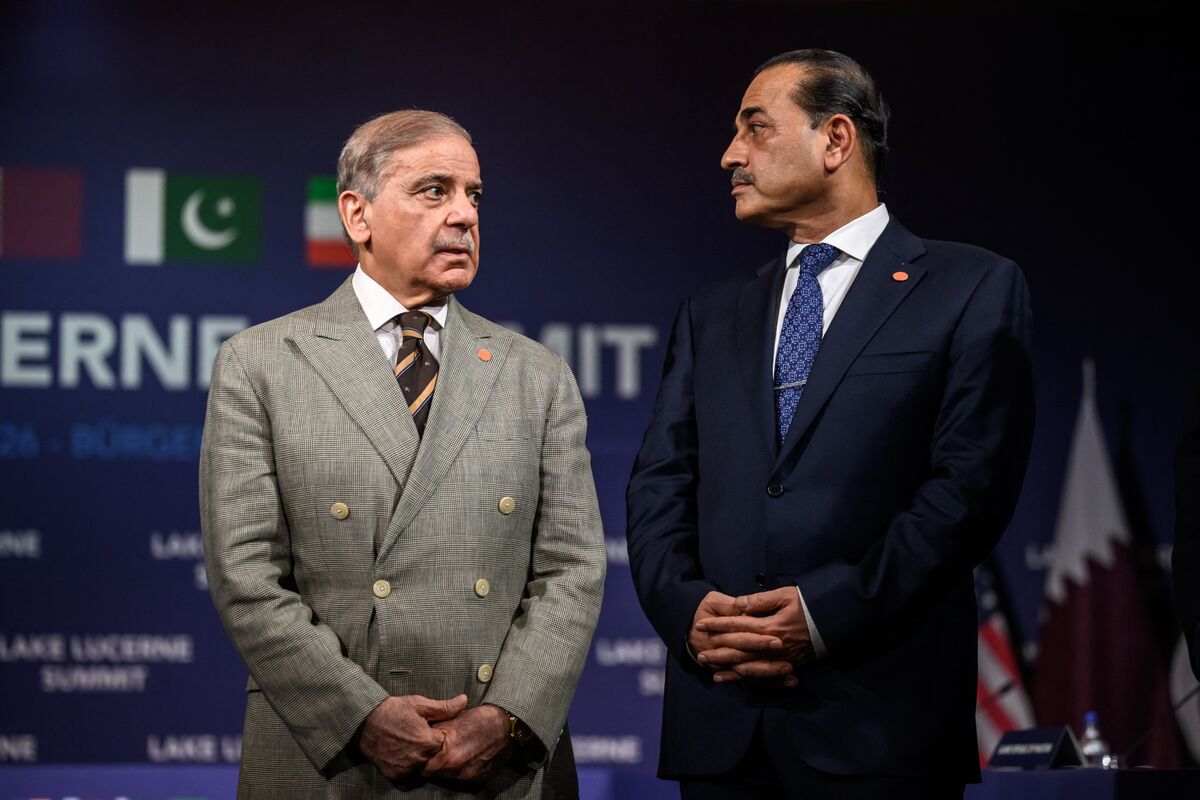
Pakistan received a diplomatic boost as US Vice President JD Vance publicly praised Prime Minister Shehbaz Sharif and Field Marshal Asim Munir during the launch of US-Iran peace talks in Bürgenstock. The article highlights warmer US-Pakistan ties and Pakistan’s role as a facilitator, but it contains no direct economic or market-moving policy announcement. The tone is broadly neutral to slightly constructive for Pakistan’s geopolitical standing.
This is less about a single diplomatic photo-op than about Pakistan temporarily gaining optionality across three stress channels: external financing, military legitimacy, and regional bargaining power. The immediate market implication is a small but meaningful compression in Pakistan’s sovereign-risk premium if the meeting is interpreted as improving Washington access; that matters most for USD bonds and FX forwards, where positioning is typically shallow and reactive rather than fundamental.
The second-order effect is on energy and shipping risk, not just Pakistan. Any reduction in Gulf-Iran escalation probability lowers the tail premium embedded in crude, LNG, and regional freight routes, but the impact is likely to be modest unless talks persist for weeks and produce verifiable follow-on steps. The more important near-term catalyst is whether Pakistan converts diplomatic capital into IMF-adjacent credibility; without that, the market will fade the signal quickly, because domestic macro weakness still dominates.
Contrarian read: the consensus may be overestimating Pakistan’s strategic leverage and underestimating how transactional this alignment is. If talks stall, Pakistan can just as easily be seen as overexposed to Washington’s shifting priorities, which would re-open pressure on FX reserves and local rates. In that scenario, any rally in Pakistani risk assets should be sold into rather than chased, because the upside is narrative-driven while the downside is balance-sheet driven.
AI-powered research, real-time alerts, and portfolio analytics for institutional investors.
Request DemoOverall Sentiment
neutral
Sentiment Score
0.05
