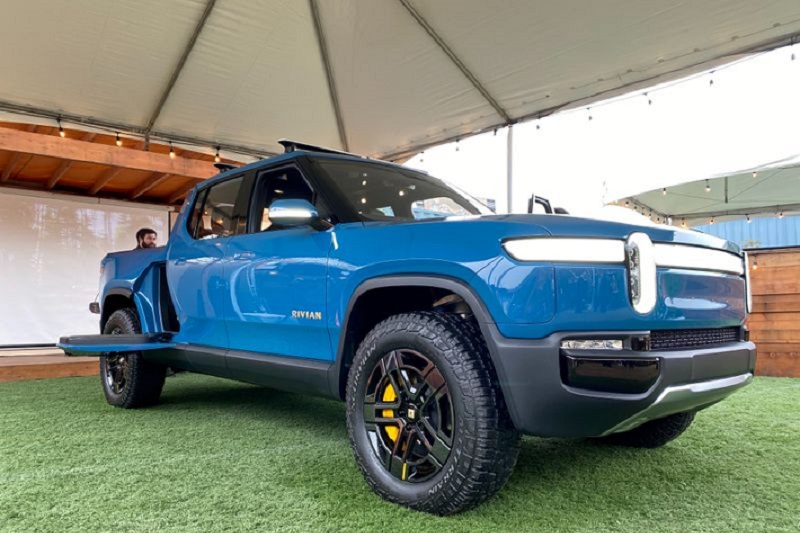
Cantor Fitzgerald reiterated a Neutral rating on Rivian with an $18 price target and raised its Q1 2026 revenue estimate to about $1.266 billion from $1.203 billion, citing pre-announced deliveries and higher R2 pricing assumptions. Rivian also reported 10,365 first-quarter vehicle deliveries, beating expectations, and announced a Redwood Materials battery storage project at its Illinois plant. The outlook remains mixed given ongoing supply chain, manufacturing, and adoption risks, along with a thin 2.67% gross margin over the last 12 months.
The key takeaway is not that one EV name got incremental validation, but that the bar for the whole category remains brutally high: modest revenue growth does little if gross margin is still near break-even and the product cycle is capital-intensive. That combination tends to compress valuation multiples across the group because investors stop paying for volume growth and start underwriting funding durability. In that regime, names with weaker balance sheets or higher working-capital needs become financing stories rather than operating stories.
The second-order winner here is likely not Rivian equity holders but suppliers and partners with exposure to production scaling, battery reuse, and factory energy optimization. The battery storage initiative is economically meaningful because it attacks peak-power costs and raises asset utilization, which matters more than the headline megawatt-hours: it signals management is hunting for structural opex reduction, not just top-line expansion. If this kind of cost engineering shows up repeatedly over the next 2-3 quarters, it could improve cash burn optics enough to slow bearish sentiment even without a large demand inflection.
The market may be underestimating how much of the near-term move is already reflected in delivery upside and estimate revisions. In the next 1-2 months, the bigger catalyst is not more unit growth but whether management can demonstrate margin decomposition that suggests a credible path to positive contribution margins on newer trims. If that proof point does not arrive, any rally driven by delivery beats risks fading as investors refocus on funding needs and competitive pricing pressure.
Contrarian view: the consensus is treating this as a gentle, gradual improvement story, but the more important question is whether the business model can clear a higher cost of capital in a less forgiving macro backdrop. With pricing still soft across the EV stack, even small ASP gains can mask underlying mix weakness; that makes estimates fragile if consumer incentives roll over or competitive discounting intensifies. The risk/reward is asymmetric around execution: a few quarters of cleaner margin progress could re-rate the name, but one reset in guidance or capex intensity can undo that quickly.
AI-powered research, real-time alerts, and portfolio analytics for institutional investors.
Request DemoOverall Sentiment
neutral
Sentiment Score
0.15
Ticker Sentiment
