
Israel intercepts and detains crews of Gaza aid flotillas near Crete
Source: The Guardian
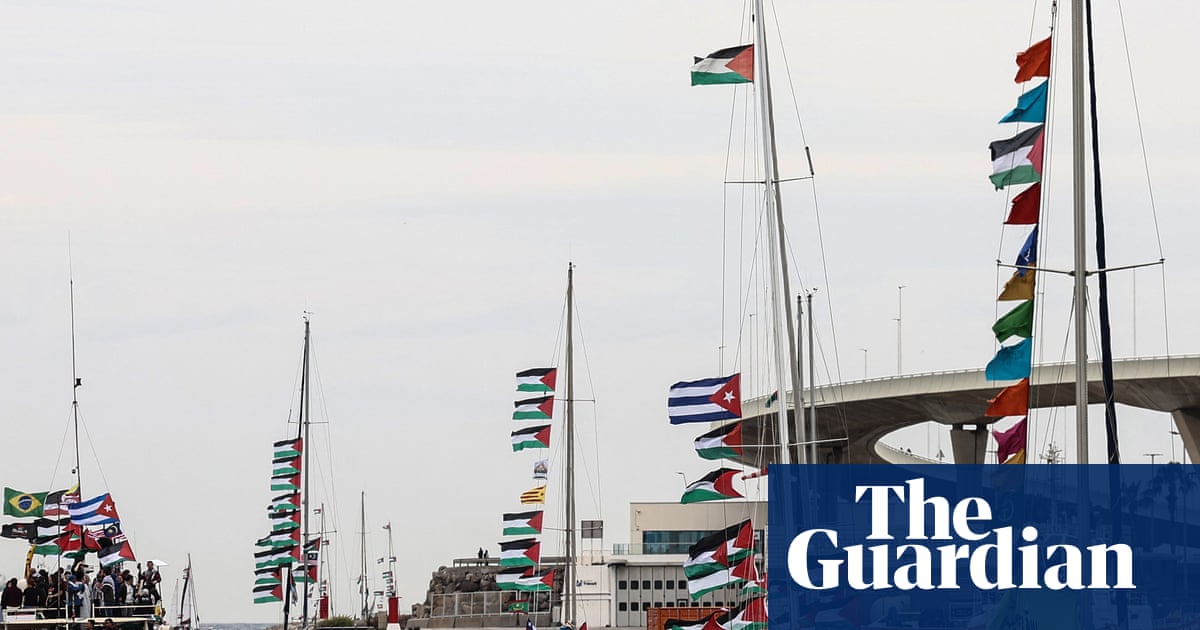
Israeli forces intercepted at least 22 boats from the Global Sumud Flotilla near Crete, detaining about 175 activists while 36 vessels remained underway. The incident escalates tensions around Israel’s Gaza blockade, with Turkey, Italy, and UN officials condemning the action and Israel citing security and sanctions grounds. The event is geopolitically significant and could reinforce risk-off sentiment across regional defense and shipping-related headlines.
Analysis
This is not an oil or broad-beta event; it is a recurring sovereign-risk flashpoint that primarily transmits through defense procurement, maritime security, and legal-risk premia. The immediate market response should be strongest in companies exposed to naval interception, drones, communications jamming, ISR, and port-security systems, as governments in the region will justify incremental spending on littoral surveillance and counter-flotilla capabilities. The second-order effect is a measurable bid for “gray-zone” defense contractors whose products sit below headline missile/air-defense budgets and can be contracted quickly.
The more material catalyst is escalation bias over the next 1–3 weeks. If detentions are paired with images of disabled civilian vessels, storm exposure, or foreign nationals onboard, expect a spike in diplomatic pressure and a temporary rise in shipping-insurance and maritime security costs for the Eastern Med corridor. That would not only support defense names, but could also widen risk premia for regional logistics, cruise, and ferry operators with exposure to rerouting, port delays, and insurance surcharges.
The overhang is asymmetric because the market tends to underprice legal and reputational spillovers until they hit procurement or sanctions processes. A stronger-than-expected response from European governments could force faster EU-level monitoring, sanctions language, or fleet-protection measures, which would extend the trade from days into quarters. The contrarian view is that the event may peak quickly if the detained crews are released and the story remains contained, in which case the trade becomes a volatility scalp rather than a durable defense upcycle.
The cleanest risk/reward is a basket long in defense and maritime-security beneficiaries versus a short in transport names with Mediterranean exposure. Avoid chasing broad risk-off unless the incident widens into vessel damage or casualties; absent that, the upside is more concentrated in procurement and legal-risk repricing than in macro de-risking.
AllMind Terminal
AI-powered research, real-time alerts, and portfolio analytics for institutional investors.
Request TrialMarket Sentiment
Overall Sentiment
strongly negative
Sentiment Score
-0.55
Key Decisions for Investors
- Go long NOC / LMT into the next 1-2 weeks as a geopolitical hedge; prefer LMT if the market starts pricing command-and-control and maritime ISR follow-through, with tighter downside than pure munitions names.
- Buy RTN-style maritime-security exposure via HII or ESGR-linked defense primes on any dip over the next 5 trading sessions; the trade works if governments fast-track littoral surveillance orders.
- Pair trade: long defense basket (NOC, LMT, HII) / short Mediterranean-exposed transport or cruise proxies (RCL, CCL, airlines with regional route exposure) for a 2-6 week horizon; thesis is insurance and rerouting costs rising faster than demand impact.
- If options liquidity is available, buy 1-2 month upside calls on a major defense name and fund by selling higher-strike calls; the catalyst window is short, so structure for convexity rather than outright delta.
- If there is no further escalation within 72 hours, fade the knee-jerk with a partial profit take on defense longs; the trade is likely to compress quickly unless Europe materially broadens the response.
More News
- US, China Kick Off Trade Talks Ahead of Trump-Xi Summit
- Iran’s economy faces another blockade: Red tape and gridlock are clogging up land routes that bypass the U.S. Navy’s Hormuz stranglehold
- Fed's Kashkari reportedly says inflation is still too high across the U.S. economy
- US, China open high-level talks ahead of Trump-Xi summit
- Why have US prosecutors labelled China’s Huawei a criminal enterprise?
- Nvidia CEO Jensen Huang emerges as Trump's top ally in AI safety debate