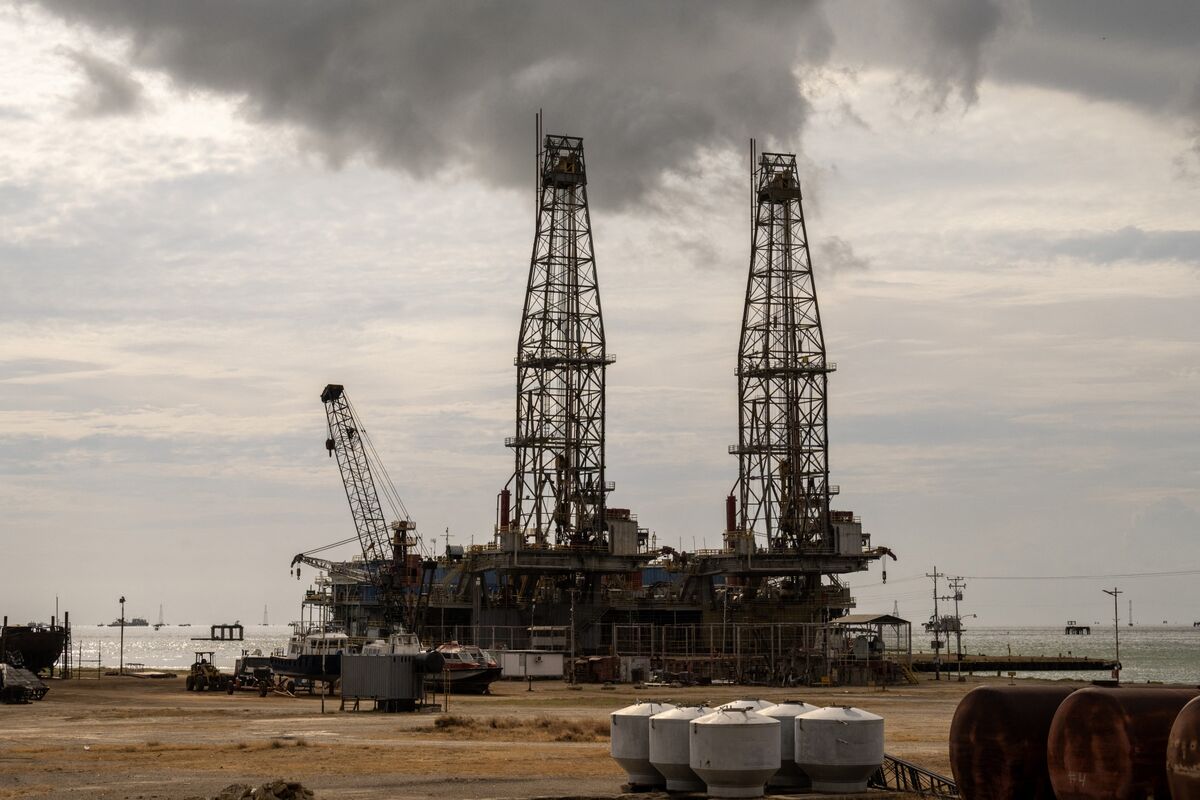
US oil executives met with Venezuela’s president in Caracas and sought assurances that the country is safe to invest in, as the Trump administration pushes for a revival of Venezuela’s energy sector. The visit, which included a top US Energy Department official, signals potential reopening of investment channels but provides no concrete policy or commercial commitments yet. Market impact is likely limited for now, though it could matter for future oil supply and regional geopolitics.
The strategic signal is less about near-term Venezuelan barrels and more about option value: Washington is testing whether a sanctions unwind can be converted into incremental supply without openly admitting a policy pivot. If even a modest tranche of Venezuelan production returns, the first-order impact on global balances may be small, but the second-order effect is meaningful for medium-sour differentials, Gulf Coast refinery economics, and the pricing power of non-OPEC heavy producers. The beneficiaries are not just US E&Ps; it is also the logistics, diluent, and refining complex built around processing heavier crude slates.
The key risk is that this becomes a slow, politically fragile process rather than a clean reopening. In that case, the market may briefly price a supply overhang, but actual barrels could lag by quarters because of operational degradation, capex constraints, and legal uncertainty around who is permitted to lift or finance cargoes. That creates a classic event-risk setup: crude can soften on headlines in days, while the physical market remains tight for months, especially if any disappointment coincides with outages elsewhere.
Consensus is likely underestimating how asymmetric the downside is for policy-sensitive offshore names versus the upside for integrated refiners and heavy-crude processors. A sanctions thaw lowers geopolitical risk premium, but it can also compress margins for producers with the highest marginal cost and weakest balance sheets if the market extrapolates too much supply too quickly. The contrarian read is that this is more bearish for long-duration price expectations than for spot, which argues for hedging the front end while staying constructive on companies that win from wider feedstock optionality rather than outright oil beta.
AI-powered research, real-time alerts, and portfolio analytics for institutional investors.
Request TrialOverall Sentiment
neutral
Sentiment Score
0.10
