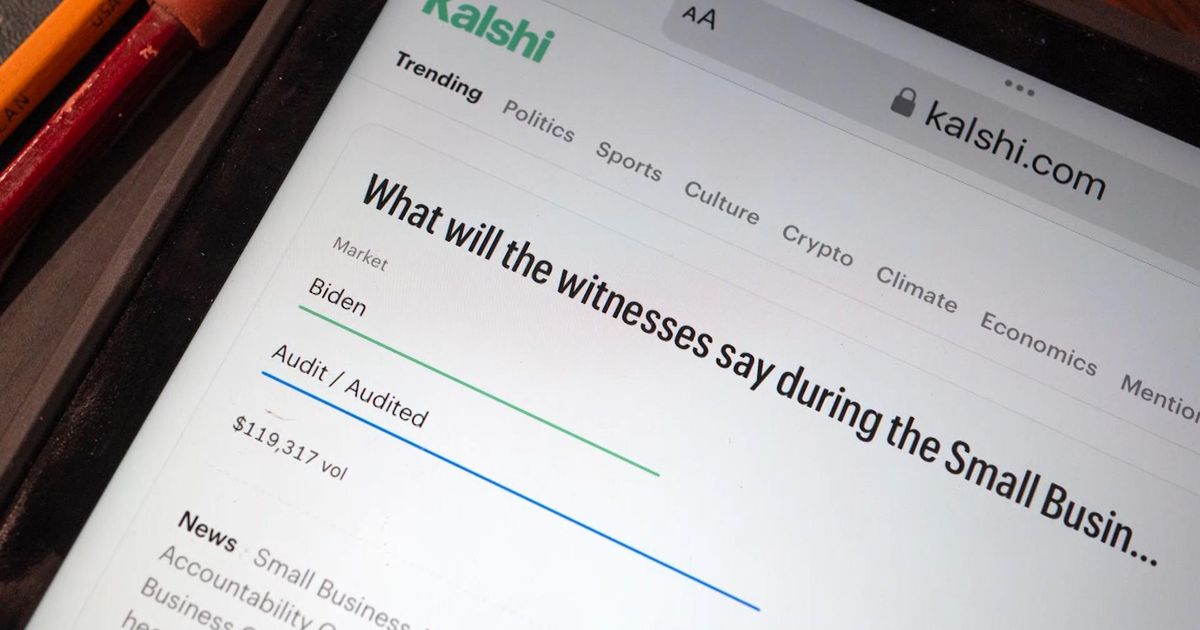
A Fort Bragg master sergeant was charged by the U.S. Justice Department with unlawfully using confidential government information to profit more than $400,000 on Polymarket, highlighting insider-trading risk in prediction markets. The case is drawing attention to the regulatory gray area around platforms such as Polymarket and Kalshi as Congress weighs oversight. Polymarket said it flagged the activity, referred it, and cooperated with authorities.
This is less about one soldier and more about the first credible stress test for an entire new asset class. The second-order effect is that prediction markets lose their main structural advantage — the claim that prices aggregate dispersed information efficiently — if participants start discounting the signal quality because military, political, or corporate insiders can front-run contracts. That should widen the spread between headline event odds and the true probability, making the market less useful for hedgers and more reliant on retail flow.
The likely near-term winner is the regulated exchange layer, not the individual contracts. Any platform that can prove surveillance, KYC, and referral-to-authority workflows will gain share as Congress and the CFTC move toward a tighter framework; the losers are venues with weak monitoring or a “wild west” brand, which could see lower liquidity and higher customer acquisition costs over the next 6-18 months. In practice, stricter compliance is a moat: higher friction raises barriers for casual competitors while improving legitimacy for scale players.
The bigger macro catalyst is legislative rather than judicial. If lawmakers treat this as a national-security and market-integrity issue, expect a faster path to contract restrictions, reporting obligations, and limits on sensitive categories like war, elections, and public-company events. That would compress TAM assumptions for the sector even if trading volumes remain healthy, because the highest-engagement contracts are also the most politically fraught.
The contrarian view is that the scandal may actually increase usage among sophisticated traders: once the market accepts that some insiders are present, price action can become a better intelligence proxy than a poll. But that is only sustainable if platforms can visibly police abuse. Absent that, the impulse response is likely a short-lived volume spike followed by slower growth and a higher regulatory discount.
AI-powered research, real-time alerts, and portfolio analytics for institutional investors.
Request TrialOverall Sentiment
mildly negative
Sentiment Score
-0.30
