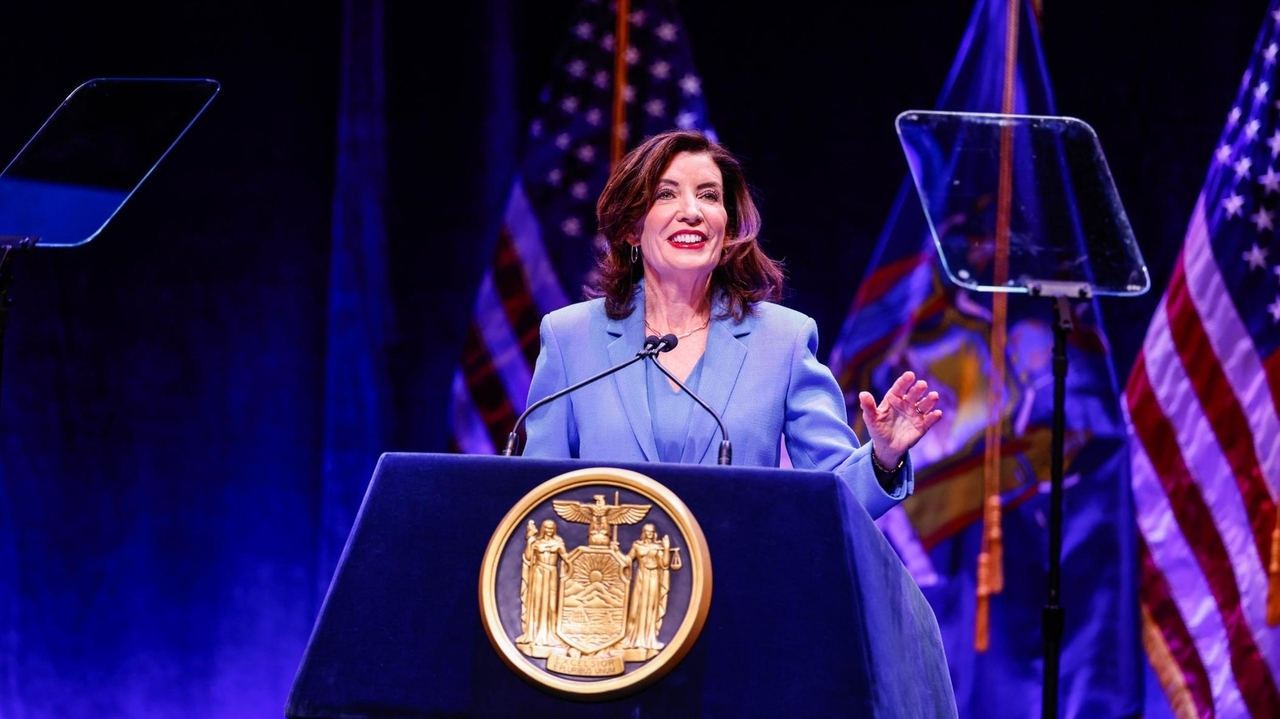
New York Gov. Kathy Hochul proposed a package of affordability and infrastructure measures in her State of the State, including universal pre-K by 2028, reductions in car insurance and utility bills, streamlining SEQRA to speed housing construction, a $3.75 billion commitment to water infrastructure and a Smart Growth Water Grant Program, plus modernization of the LIRR Jamaica hub. The initiatives will be negotiated into the state budget and carry execution risks—potential legislative pushback, uncertain federal funding and reserve protection—while additional regulatory items include social media rules for minors and disclosure requirements for AI images in campaigns. For investors, the proposals signal potential increased state capital spending in construction, utilities and transit projects but with modest near-term market impact given legislative uncertainty.
Market structure: Streamlined SEQRA, $3.75B water grants and LIRR hub modernization favor municipal infrastructure suppliers (Jacobs JEC, AECOM ACM, Caterpillar CAT) and water names (American Water AWK, Xylem XYL) through 6–36 months of contract awards; homebuilders (LEN, DHI, PHM) stand to gain if zoning/permits accelerate but face margin pressure from higher materials demand. New York auto-insurance rate reductions compress underwriting margins for insurers with material NY exposure (Progressive PGR, Travelers TRV, Allstate ALL) and may increase muni issuance in the short term to fund projects, pressuring spreads vs. Treasury in the next 3–12 months.
Risk assessment: Tail risks include a state budget impasse or political rollback of SEQRA that would delay projects (high impact, low probability but material: could wipe out 6–18 month expected revenue for contractors), or an S&P/ Moody’s downgrade if reserves are tapped (>20% chance if reserves fall >5% of revenues). Immediate window (days): muted market reaction; short-term (30–90 days): budget negotiations are catalysts; long-term (12–36 months): realized construction backlog and housing supply changes drive earnings. Hidden dependencies: federal funding, labor availability and commodity prices (steel/copper) will amplify or negate benefits.
Trade implications: Directly long AWK, XYL, JEC and CAT with staggered entries over 1–6 months to capture RFP cycles; establish modest long-homebuilder exposure to LEN (quality balance sheet) contingent on SEQRA language. Hedge via 3–6 month put spreads on PGR (or reduce outright overweight insurance exposure) to protect against NY premium compression; use 9–12 month call spreads on AWK/XYL to limit capital and capture policy execution risk. Rotate from insurer beta into infrastructure and select materials (steel/copper) where orderbooks increase; prefer underweight NY muni duration until budget clarity.
Contrarian angles: The market will likely underprice execution risk—housing permitting reform historically (e.g., CA CEQA attempts) takes years and outcomes are often diluted, so avoid full-weight homebuilder longs until SEQRA text passes; conversely water-infrastructure spending is more executable and less politically fraught, so overweight AWK/XYL. Unintended consequences include insurers raising other lines or carriers exiting NY markets, producing short-term volatility; construction cost inflation could compress contractor margins despite higher toplines.
AI-powered research, real-time alerts, and portfolio analytics for institutional investors.
Request DemoOverall Sentiment
mixed
Sentiment Score
0.10
