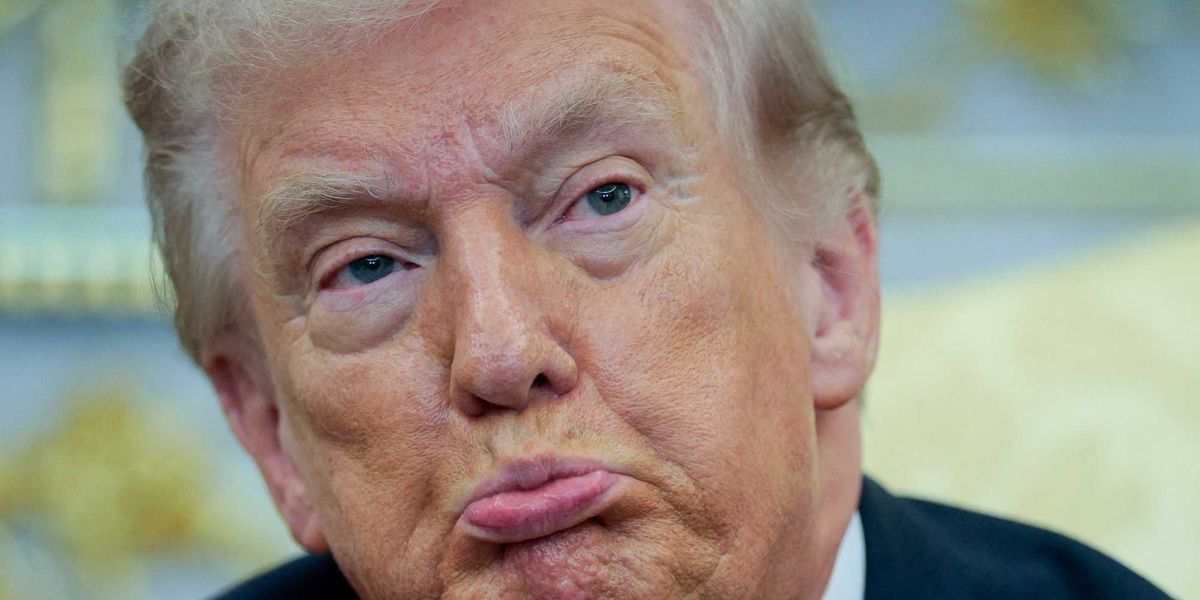
Trump’s comment that he does not think about Americans’ financial situation in the context of the Iran war is generating political backlash and reinforcing concerns about governance and economic prioritization. The segment highlights a worsening consumer backdrop, with gas prices cited at about $4.50 a gallon and public dissatisfaction with Trump’s handling of the economy. The direct market impact is limited, but the rhetoric adds to geopolitical and energy-price uncertainty.
The market implication is less about the headline and more about the signaling failure: when a policy driver becomes visibly disconnected from household pain, the next pricing layer is political risk premia across energy-sensitive assets. That typically shows up first in consumer sentiment, then in discretionary spend, and only after a lag in hard data; the initial trade is often a rotation out of the most gasoline-exposed retail and travel names, not a blanket macro selloff.
A sustained Iran escalation that keeps crude elevated for even 4-8 weeks would pressure lower-income consumers disproportionately, because fuel is a regressive tax and there is little offset in wage growth. The second-order effect is margin compression for retailers and logistics-heavy businesses that cannot fully pass through higher input costs without volume loss; the winners are upstream energy producers and, unusually, firms with strong pricing power and low variable freight intensity.
The contrarian read is that the political bluster may be the point: if officials are already attempting to de-emphasize the cost channel, the probability of an eventual walk-back or de-escalatory channel rises once gasoline moves into the range that starts showing up in polling. That creates a volatile but potentially short-lived trade on crude itself: upside can persist for days to weeks, but the pain threshold for consumers and policymakers often brings a reversal catalyst within 1-3 months.
For markets, the key question is whether this becomes a demand shock or just a sentiment shock. If it stays in the latter bucket, equities can look through it; if it feeds into weaker retail traffic and softer inflation expectations, rate-sensitive consumer names and small caps get hit harder than energy benefit. The cleanest expression is still relative value, not outright macro direction.
AI-powered research, real-time alerts, and portfolio analytics for institutional investors.
Request DemoOverall Sentiment
mildly negative
Sentiment Score
-0.35
