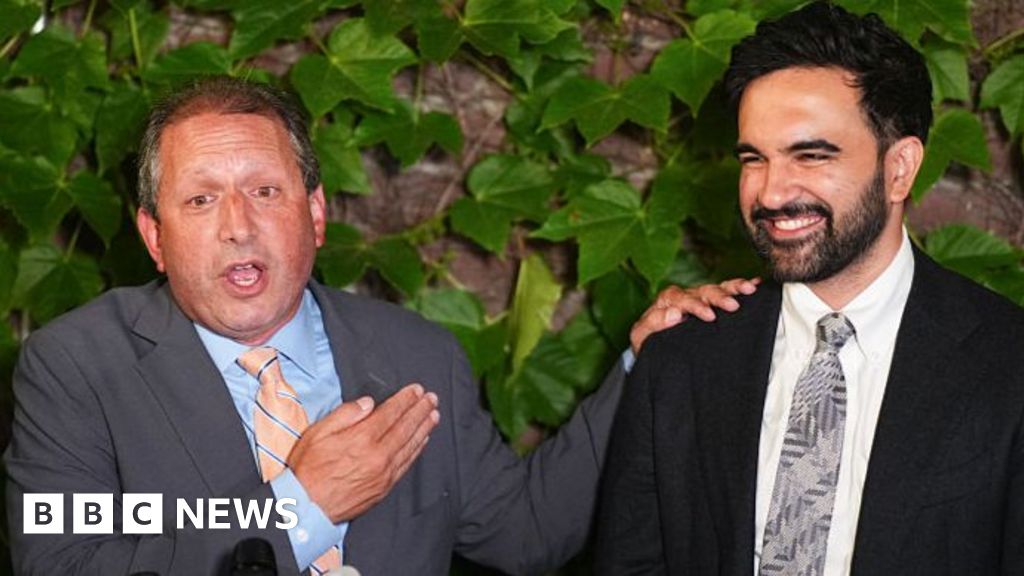
Progressive candidates backed by New York Mayor Zohran Mamdani swept several Democratic primary races, including Brad Lander's 65.7% to 34.1% win over incumbent Dan Goldman in New York's 10th district. Claire Valdez and Darializa Avila Chevalier also won, while Jack Schlossberg and George Conway lost in the 12th district. The races highlight Democratic divisions over Israel-Gaza, ICE, and taxing the rich, but the direct market impact is limited.
This is less about a single primary result than an emerging test of whether “progressive purity” can convert into institutional power in the largest media market in the U.S. The immediate market read-through is not sectoral but policy-path dependent: if this bloc continues to gain leverage, expect more aggressive rhetoric on housing, labor, policing, and anti-Israel positioning, all of which can widen the gap between New York City governance and national Democratic fundraising priorities.
The second-order effect is on donor allocation and candidate quality selection. A stronger left flank may improve turnout and volunteer intensity in deep-blue districts, but it also raises the probability of nominee heterogeneity in competitive districts where suburban and Jewish voters are pivotal. That creates a tail risk for House Democrats’ marginal seats in 2026 if national committees are forced to spend against internal primary damage control instead of building a general-election message.
The contrarian view is that this is being overread as a national realignment when it may simply reflect low-turnout, issue-sorted primaries in heavily Democratic enclaves. The more actionable signal is not ideology itself but the speed at which progressive brands are displacing legacy incumbency advantages; that implies a faster candidate-rotation cycle and more volatility in district-level policy agendas over the next 6-18 months.
For investable implications, the highest-probability trade is not directional beta but event-driven volatility around NYC policy-sensitive names. If these candidates gain municipal or congressional influence, the incremental risk sits in real estate, private education, for-profit healthcare, and consumer-facing firms dependent on affluent Manhattan/Brooklyn demand; however, the move likely remains more rhetorical than legislative over the next quarter unless it is reinforced in the fall cycle. The key reversal catalyst is any high-profile progressive overreach in a swing district, which would prompt a donor and media backlash and re-center the party around electability.
AI-powered research, real-time alerts, and portfolio analytics for institutional investors.
Request DemoOverall Sentiment
neutral
Sentiment Score
0.05
