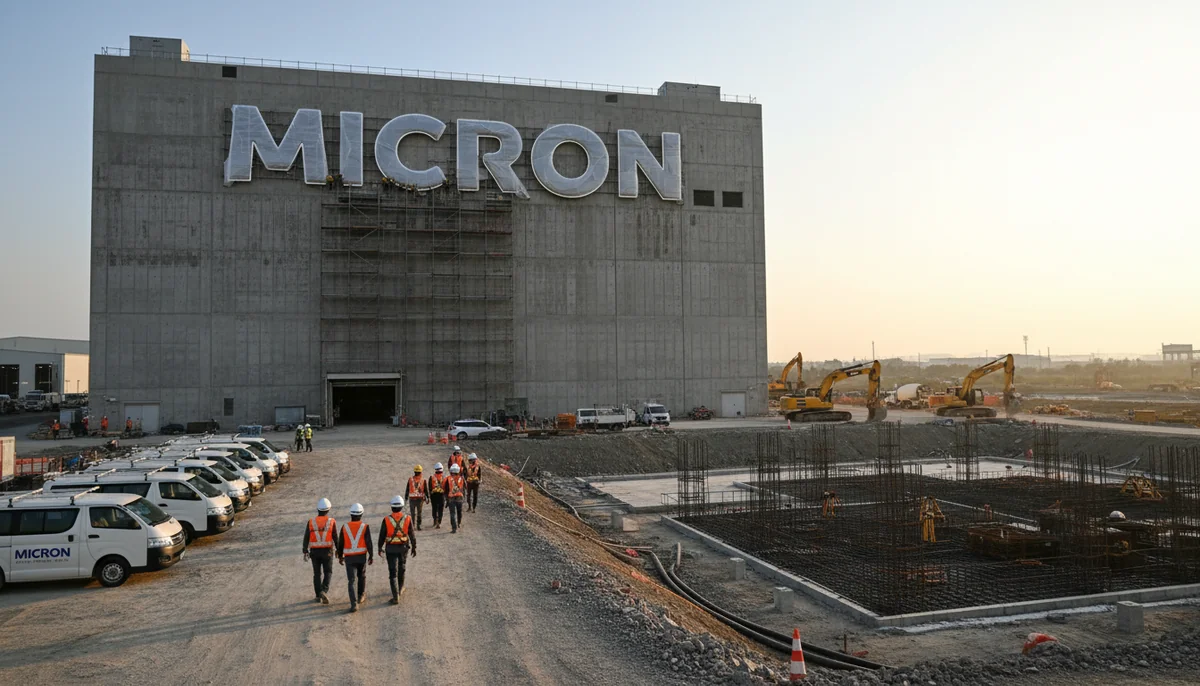
Micron completed the acquisition of PSMC’s Tongluo P5 fab on March 15, 2026, adding ~300,000 sq ft of 300mm cleanroom capacity with retrofits beginning immediately and meaningful product shipments expected in fiscal 2028. The company plans a second ~270,000 sq ft cleanroom with construction to start by the end of fiscal 2026; the deal follows a US$1.8B LOI and complements a separate US$24B Singapore fab project. Market reaction was positive—MU jumped ~4.3%, adding about $19.6B in market value—though the new capacity will not materially affect supply until the 2028 ramp. Investors should watch retrofit progress, construction timing for the second facility, and ramp execution against AI-driven memory demand.
This transaction materially de-risks Micron’s multi-year capacity roadmap by converting optioned square footage into an executable ramp pipeline; the value is convex because the revenue/EBITDA pickup compresses unit capital intensity when yields mature, but that convexity only crystallizes once yield curves and tool deliveries line up over the next 18–30 months. Equipment lead times and the sequencing of wafer starts mean the market will re-rate on a stream of binary execution milestones (tool install, wafer start, yield inflection) rather than the headline deed itself.
Second-order competitive effects favor hyperscalers and GPU OEMs: an eventual easing of HBM tightness will lower build costs for AI servers, increasing demand elasticity for larger memory configurations while capping ASP upside for incumbents once new volume hits. Incumbent DRAM rivals face a strategic choice — accelerate their own capex (raising near-term equipment demand and inflation for tools) or defend pricing, increasing industry margin volatility over 2027–2029.
Key risks that could reverse the bullish path are operational (sub-par yield ramp), supply-chain (critical tool or spare-part bottlenecks), and geopolitical (Taiwan contingency insurance raising costs or idling fabs). The most useful near-term indicators are equipment shipment confirmations, initial wafer fab-capacity utilization rates, and hyperscaler purchase commitments for HBM slots; monitor these on a monthly cadence.
For traders, the timeline implies option structures that span 12–30 months to capture FY28+ earnings leverage while controlling downside. Avoid riding short-dated momentum; instead scale into execution-confirmation events and use relative-value pairs to strip sector beta that has been noisy in response to idiosyncratic headlines.
AI-powered research, real-time alerts, and portfolio analytics for institutional investors.
Request DemoOverall Sentiment
moderately positive
Sentiment Score
0.55
Ticker Sentiment
