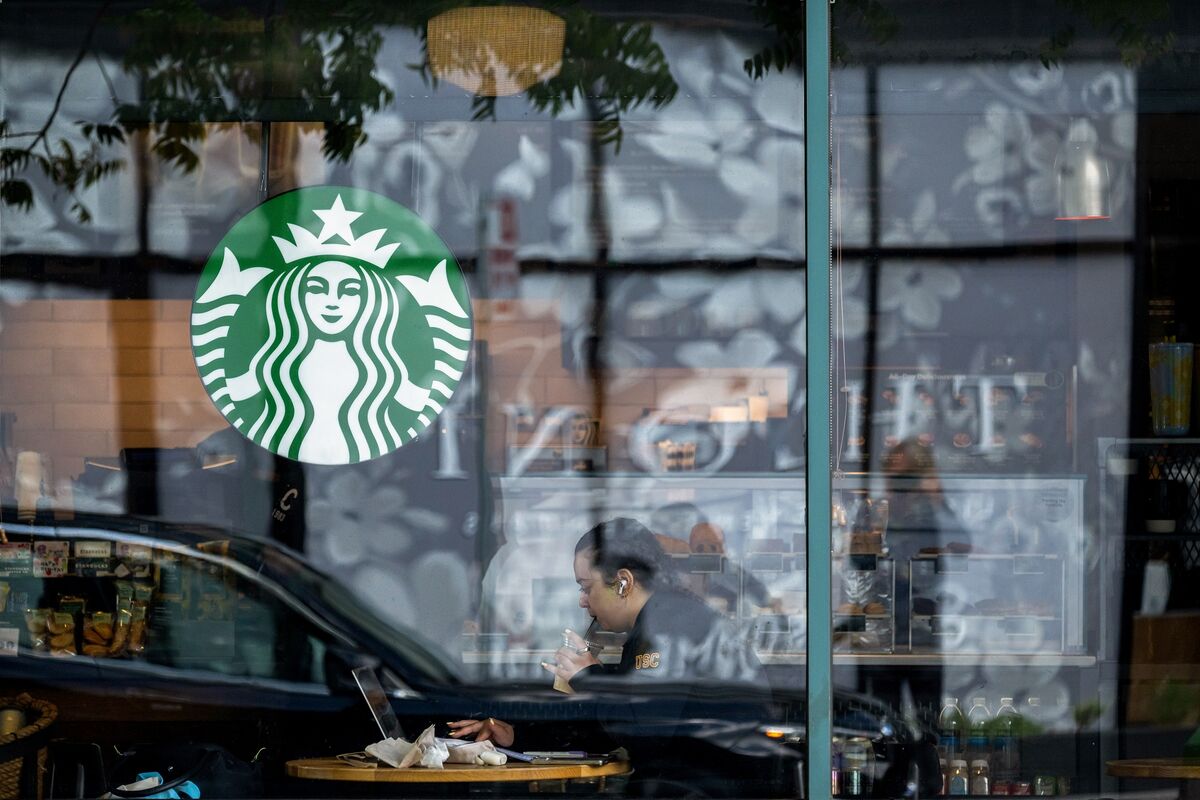
Starbucks raised its full-year comparable sales outlook to at least 5% from 3% or more, signaling a stronger-than-expected rebound in U.S. demand. The company also lifted its earnings-per-share guidance as store upgrades like cushier seats, improved pastry displays and faster service appear to be supporting traffic and sales.
This is less a one-quarter sales beat than evidence that unit economics are finally improving after a long period of demand leakage. The key second-order effect is that a better traffic mix plus faster throughput should expand operating leverage disproportionately, because the labor and occupancy base is largely fixed while ticket recovery and visit frequency can compound into margin upside over several quarters. That makes the move more durable than a simple pricing story, and it also implies stronger cash conversion if management resists over-investing the uplift away.
The competitive read-through is negative for the broader quick-service and fast-casual cohort that competes on convenience and morning/daypart frequency. If Starbucks is recapturing occasions via experience and service rather than discounting, rivals may have to choose between margin erosion or share loss, especially in breakfast and grab-and-go channels. Suppliers tied to premium beverage and bakery throughput should benefit modestly, but the bigger winner is Starbucks itself because better execution tends to drive a self-reinforcing flywheel: higher traffic improves store morale, which improves speed, which lifts repeat visits.
The main risk is that this remains a normalization trade, not a new secular growth leg. If consumer spend softens, Starbucks is exposed to premium discretionary frequency, which can roll over quickly in a 1-2 quarter window; the market could also over-extend the multiple on a guidance reset that may be partly catch-up rather than surprise. The catalyst path is execution over the next 2-3 reporting periods: if comp acceleration persists without incremental promo intensity, the stock can rerate; if the growth comes with higher labor or advertising spend, the margin story will fade.
Consensus may be underestimating how much this matters for sentiment rather than just fundamentals. After a long de-rating, even modest confirmation that the brand is regaining relevance can pull in discretionary and momentum buyers, while shorts anchored to the old operating narrative may be forced to cover. The risk/reward still looks asymmetric if the business can hold mid-single-digit comps into the next two quarters, because earnings revisions can outpace revenue revisions once operating leverage kicks in.
AI-powered research, real-time alerts, and portfolio analytics for institutional investors.
Request DemoOverall Sentiment
moderately positive
Sentiment Score
0.68
Ticker Sentiment
