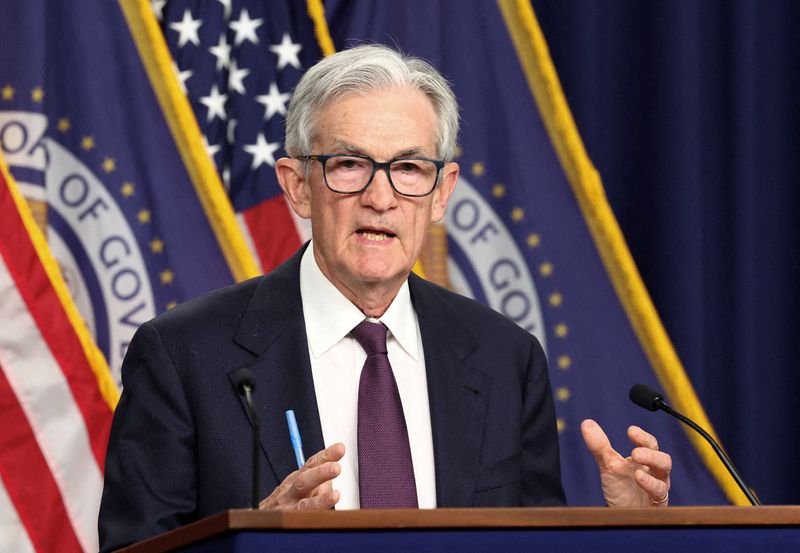
The Fed’s leadership transition is turning contentious: Jerome Powell will stay on as chair pro tempore after his term expired, while incoming chair Kevin Warsh is expected to be sworn in soon but no date has been set. The board vote was not unanimous, with Governors Stephen Miran and Michelle Bowman opposing the temporary extension, highlighting internal division at a sensitive moment for monetary policy. Powell also plans to retain his governor seat until a criminal investigation tied to the Trump administration is fully resolved, adding legal and governance uncertainty.
The market is likely underpricing the second-order effect of a visibly split Fed: not the policy rate path itself, but the erosion of signaling quality. When leadership continuity becomes contingent and factional, rate-cut or pause messaging gets less credible, which can keep term premium sticky even if front-end expectations soften. That tends to support longer-duration volatility, steepeners, and a more fragile risk-on tape rather than a clean single-factor "lower rates" reaction.
For growth stocks, the bigger issue is dispersion. The names most dependent on multiple expansion from falling discount rates are vulnerable if investors start paying for policy incoherence with a higher equity risk premium. That is a mild headwind for APP, whose valuation is more duration-sensitive and narrative-driven, while SMCI is less about rates per se and more about liquidity/AI capex appetite; both can still work, but they become less of a macro beta trade and more of a stock-specific execution trade.
Geopolitics and energy add a separate inflation impulse that complicates the Fed backdrop. If oil remains elevated, it preserves pressure on breakevens and reduces the odds of an easy disinflation glidepath, which in turn makes any leadership transition at the Fed more market-sensitive. The contrarian view is that the institutional drama may be louder than the policy impact: if the Board still operates normally, the near-term macro effect could be limited, and the real trade is in volatility rather than outright direction.
The cleanest expression is to buy optionality around the possibility that policy uncertainty and energy prices jointly reprice rates volatility over the next 1-3 months. I would avoid chasing high-beta growth on the headline alone unless the market sells off enough to reset positioning; otherwise, the better setup is to fade complacency in duration-sensitive assets and look for relative-value opportunities where earnings are less rate-dependent.
AI-powered research, real-time alerts, and portfolio analytics for institutional investors.
Request DemoOverall Sentiment
mildly negative
Sentiment Score
-0.10
Ticker Sentiment
